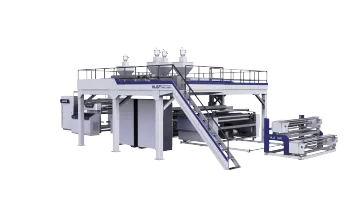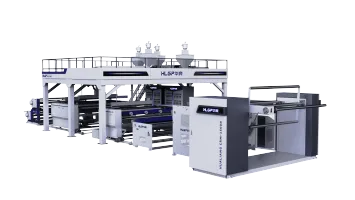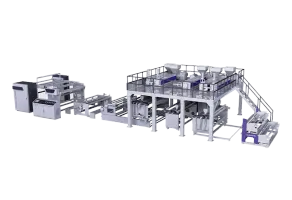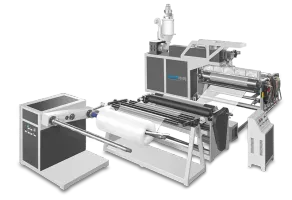

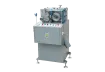
2-Layer Medium-Speed Bubble Film Machine
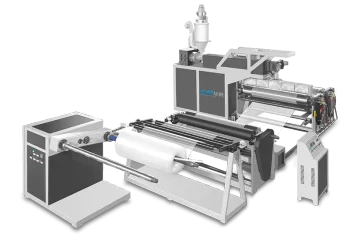
Certified by CE and ISO 9001:2015, the HLPE 2-Layer Bubble Film Machine integrates a P20H steel T-Die (± 3% thickness uniformity), a precise worm gear winder, and thick-walled barrels. Powered by a Permanent Magnet Synchronous Motor and Infrared Heating, it cuts energy usage by 20%, supports 50% recycled PE, and runs smoothly under 75 dB.
Executive Summary & Market Positioning for Global Procurement
The HLPE Series 2-Layer Co-Extrusion Bubble Film Machine represents a premier, industrial-grade engineering solution designed specifically for manufacturing premium protective packaging materials. In the highly competitive global logistics, transcontinental e-commerce, and precision electronic supply chains, procurement professionals must secure equipment that guarantees both uncompromising product quality and maximum operational cost-efficiency. The HLPE series addresses these critical market mandates by bridging the operational gap between underengineered, high-maintenance entry-level lines and overly complex, high-CAPEX alternatives.
By balancing advanced polymer extrusion science with heavy-duty mechanical engineering, this series delivers exceptional structural film integrity, uniform air-retention metrics, and a highly optimized total cost of ownership. For third-party logistics providers, heavy-duty industrial converters, and commercial packaging suppliers, the HLPE series provides a highly reliable asset designed for continuous twenty-four-seven manufacturing environments. This product introduction serves as an authoritative technical and commercial reference to guide international procurement teams through the technical infrastructure and financial benefits of integrating the HLPE system into their production portfolios.
Regulatory Compliance, Quality Standards, and Factory Auditing Mutual Trust
For international procurement departments and corporate compliance officers, the decision to invest in heavy production machinery hinges heavily on standard international certifications and rigorous quality control frameworks. The HLPE series is engineered and manufactured under a comprehensive quality management ecosystem, providing immediate compliance resolution for factory audits worldwide. The manufacturing infrastructure is fully certified under the GB/T 19001-2016 / ISO 9001:2015 Quality Management Systems standard. This registration ensures that every phase of production—from the initial raw steel sourcing and metallurgical inspection to the finishing precision tolerances of the extrusion screws and electrical assemblies—follows strict, traceable, and repeatable quality control protocols.
Furthermore, the entire HLPE machine line carries the CE Certification, confirming absolute compliance with European Union health, safety, and environmental protection directives. This compliance is apparent in the structural integration of enclosed low-voltage control cabinets, automated over-pressure emergency bleed systems, thermal protective insulation shields, and accessible emergency-stop loops across all main processing zones. Purchasing teams can confidently integrate this machinery into western industrial environments, knowing it meets international occupational safety standards, eliminates compliance friction, and expedites domestic manufacturing permits.
Comprehensive Product Series Technical Specifications
The HLPE series operates on a standardized, heavy-duty industrial power infrastructure calibrated for three hundred and eighty Volts, across three Phases and four Lines at fifty Hertz. The model variations are explicitly designed to align with distinct output goals, warehouse footprints, and finished roll width preferences.
The HLPE-1200 model features an optimized thirty-four to one Length-to-Diameter screw ratio with a high-performance screw diameter of seventy millimeters. It delivers a maximum mechanical linear speed of thirty-five meters per minute, producing a finished bubble wrap product width of twelve hundred millimeters. Driven by a twenty-two kilowatt extruder motor, the system generates a maximum output of eighty kilograms per hour, draws sixty-six kilowatts of total power, possesses a net chassis weight of five thousand kilograms, and requires an overall physical footprint of ninety-three hundred millimeters in length, twenty-nine hundred millimeters in width, and twenty-five hundred millimeters in height.
The HLPE-1600 model utilizes the standardized thirty-four to one Length-to-Diameter screw ratio, paired with an expanded eighty-millimeter screw diameter. Operating at a maximum mechanical linear speed of thirty-five meters per minute, it yields a finished protective film width of sixteen hundred millimeters. Supported by a thirty-kilowatt extruder motor, the machine achieves a stable output of one hundred and twenty kilograms per hour, with a total power consumption profile of eighty-six kilowatts. The physical structural mass weighs six thousand kilograms, and its overall dimensions measure ninety-six hundred millimeters in length, three thousand three hundred millimeters in width, and twenty-five hundred millimeters in height.
The heavy-duty HLPE-2000 model maintains the standardized thirty-four to one Length-to-Diameter screw ratio but scales up to a ninety-millimeter screw diameter. It operates at a maximum mechanical linear speed of thirty-five meters per minute, generating a broad protective material width of two thousand millimeters. Equipped with a forty-five kilowatt extruder motor, it reaches an output capacity of one hundred and fifty kilograms per hour while drawing one hundred and twenty-five kilowatts of total power. The entire installation weighs seven thousand kilograms, with overall dimensional boundaries spanning ten thousand millimeters in length, thirty-eight hundred millimeters in width, and twenty-five hundred millimeters in height.
Proprietary Component Architecture and Direct Procurement Advantages
The HLPE series sets a new industry standard through specialized engineering components designed to eliminate traditional extrusion failure modes, minimize electricity consumption, and enforce strict dimensional roll tolerances.
The HLPE series incorporates the proprietary Hualiang Precision Extrusion T-Die, forged exclusively from high-grade P20H/2311 mold steel. This advanced metallurgy provides high dimensional stability and deformation resistance under severe thermal and pressure loads. The internal flow geometry is calculated via advanced fluid dynamics to guarantee a uniform polymer melt delivery across the entire width, maintaining bubble film thickness uniformity within a strict tolerance of plus or minus three percent. Furthermore, the T-Die features an advanced internal heating design. By placing the heating elements directly within the die body, thermal energy is transferred immediately to the polymer melt, resulting in superior thermal retention and energy efficiency. In comparison, conventional manufacturers deploy standard number forty-five carbon steel T-Dies utilizing primitive external heating bands. While external heating enables fast initial warming, it exhibits poor heat retention, creates severe outer-to-inner thermal gradients, and accelerates energy loss to the factory atmosphere, causing gauge variations and frequent melt fractures.
Web handling and roll formation in the HLPE series are controlled via the Hualiang specialized winding system, which rejects traditional chain or belt architectures in favor of a heavy-duty worm gear drive. This rigid mechanical coupling provides an exceptional positioning accuracy up to plus or minus zero point one millimeters, ensuring perfectly flush roll edges and uniform internal stress distribution across the winding cycle. The enclosed worm gear design protects the transmission from environmental dust, eliminates slip-induced tension spikes, and extends the operational service life. Conversely, standard competitive machinery relies on friction-based belt drives. Belt drives are prone to structural wear, micro-slippage, and progressive inaccuracy, which distorts the winding tension, flattens the air bubbles near the roll core, and demands expensive mechanical interventions and replacements every six to eight months.
The thermal foundation of the HLPE extrusion process relies on a proprietary Thick-Walled Barrel and balanced High-Shear Screw design. The enhanced mass of the thick-walled barrel acts as a thermal flywheel, providing superior insulation that minimizes external heat dissipation. This thermal retention cuts overall power consumption by fifteen to twenty percent compared to thin-walled alternatives. More importantly, it provides a stable, uniform melt temperature with fluctuations locked within plus or minus five degrees Celsius. This thermal stability ensures uniform polymer viscosity, uniform bubble vacuum formation, and a consistent film thickness tolerance within plus or minus three percent. Thin-walled barrels used by other manufacturers allow rapid heat dissipation to the factory environment, forcing the heating bands to cycle on and off constantly, which increases energy waste by twenty-five to thirty percent. These rapid cycles cause severe internal temperature fluctuations of up to fifteen degrees Celsius, leading to uneven polymer melting, localized polymer degradation, and severe thickness variations ranging from plus or minus eight to ten percent.
To optimize mechanical torque transmission, the HLPE series replaces traditional induction motors with state-of-the-art Permanent Magnet Synchronous Motors. This motor technology reduces electrical energy consumption by twenty percent by eliminating rotor copper losses and maintaining a high power factor across all operational speeds. The motor delivers precise torque control accuracy within plus or minus one percent, enabling an instant start-stop response and seamless coordination with the primary traction and vacuum forming stations. In comparison, other manufacturers continue to install asynchronous induction motors characterized by high operational inertia, poor low-speed torque efficiency, and an inferior IE2 efficiency rating of ninety-four point two percent, which increases grid demand during acceleration phases.
The thermal processing zones of the HLPE series are equipped with the Hualiang proprietary Infrared Heating System. Unlike conventional conduction-based bands, the infrared system utilizes direct radiation to penetrate the bimetallic barrel structure, boosting thermal efficiency by forty percent and shortening the initial cold-start preheating cycle. The integrated high-density insulation jackets reflect stray radiation inward, cutting overall heating energy consumption by twenty percent. Standard competitive lines employ conventional mica or ceramic heating coils, which suffer from slow thermal conduction, inadequate external insulation, high power consumption, and constant heat loss to the ambient factory floor.
Material Optimization, Additive Integration, and Sustainable ROI
For procurement managers focusing on long-term raw material expenditures, the HLPE system offers substantial cost-reduction capabilities through advanced multi-layer processing and material modification. The dual-extruder layout decouples the primary bubble cushioning layer from the secondary base or carrier sheet, enabling the targeting of precise physical characteristics across the separate film components. The machinery possesses an advanced screw profile calculated to handle high percentages of secondary plastics, allowing manufacturing lines to utilize up to fifty percent post-industrial or post-consumer recycled polyethylene compounds within the base layer. This allows businesses to fulfill strict local environmental mandates and reduce raw resin expenditures without inducing bubble instability or mechanical failures.
Furthermore, independent temperature zones and specialized flow distribution allow for the localized application of high-value additives, avoiding the expensive practice of treating the entire film body. Manufacturers can selectively integrate specialized masterbatches, such as permanent anti-static agents, to generate an electrostatic discharge barrier that reads consistently within the needed ranges for protection. This feature is highly valued by purchasing departments handling electronic component contracts.
Additionally, moisture barrier enhancers can be localized to inhibit vapor transmission during long-distance oceanic storage, and concentrated color masterbatches can be localized to provide instant retail branding or opaque security profiles. By confining these additives to a single layer, material consumption drops dramatically, yielding a swift return on investment and a clear competitive advantage in international b2b pricing negotiations.
Ergonomics, Noise Abatement, and Long-Term Asset Protection
The long-term value of a capital equipment investment is determined not only by its maximum output metrics, but also by its ease of maintenance, factory-floor ergonomics, and resilience against sudden down-time events. The HLPE series is structurally optimized to foster safe and comfortable workplace environments. Traditional high-speed bubble film machinery frequently triggers workplace safety concerns due to excessive noise levels generated by uninsulated fans and loose mechanical drives. By integrating precision-ground helical transmission gears, vibration-absorbing structural frames, and acoustically isolated cooling fan housings, the HLPE series maintains a total operational noise output strictly under seventy-five decibels. This proactive noise abatement preserves operator health, guarantees full compliance with strict municipal industrial noise frameworks, and prevents worker fatigue.
From a maintenance perspective, the machine utilizes an intelligent centralized Programmable Logic Controller system paired with a highly intuitive touchscreen Human-Machine Interface. This computing unit monitors barrel pressures, heat indexes, line velocity, and winding tension variables via continuous closed-loop feedback algorithms. If parameters shift beyond safety boundaries, the controller automatically implements micro-adjustments or delivers immediate visual alerts, shielding the bimetallic screws and tool-steel die from unexpected mechanical strain. The integration of high-torque, hardened-tooth gearboxes featuring forced oil lubrication paths guarantees smooth torque distribution and ensures that standard diagnostic intervals are expanded, allowing management teams to protect their mechanical capital and maximize multi-year profitability.
Application
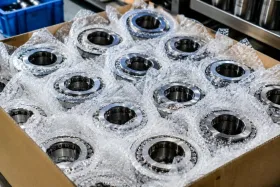
How Bubble Film Manufacturing Machines Serve Bearing Protection Needs
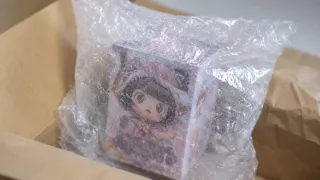
Bubble Film Manufacturing Machines for Blind Box & Toy Packaging
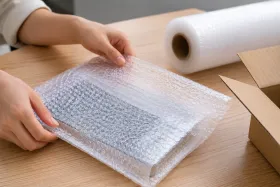
How Bubble Film Manufacturing Machine Revolutionize Lightweight Packaging Solutions

Application of Bubble Film in Fragile Goods Transportation

How Bubble Film Manufacturing Machine Protect Fragile Lighting During Shipping
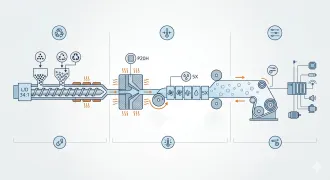
Breaking Traditional Limits: High-Efficiency & Stable Bubble Film Manufacturing Machines
Specifications
| Specification | HLPE-1200 | HLPE-1600 | HLPE-2000 | Unit |
| L/D | 34:1 | 34:1 | 34:1 | |
| Speed | 35 | 35 | 35 | m/min |
| Screw Diameter | φ70 | φ80 | φ90 | mm |
| Product Width | 1200 | 1600 | 2000 | mm |
| Extruder Motor | 22 | 30 | 45 | kw |
| Output | 80 | 120 | 150 | kg/hr |
| Power | 66 | 86 | 125 | kw |
| Power Supply | 380/3/4/50 | 380/3/4/50 | 380/3/4/50 | Volt/Ph/Line/Hz |
| Weight | 5000 | 6000 | 7000 | kg |
| Overall Dimensions | 9300×2900×2500 | 9600×3300×2500 | 10000×3800×2500 | (L×W×H)mm |
Product Comparison
| Comparison Item | Our Machinery | Other Manufacturers |
|---|---|---|
| Extrusion T-Die | Hualiang Precision Extrusion T-Die is made of P20H/2311 mold steel, ensures bubble film thickness uniformity within ±3%, and features an internal heating design for superior thermal retention and energy efficiency. 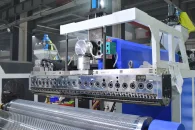 | #45 Steel T-Die features external heating that enables fast warming but exhibits poor heat retention. 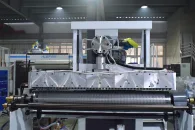 |
| Winding System | Hualiang winding system adopts a worm gear drive, ensuring positioning accuracy up to ±0.1mm and greatly extending service life. 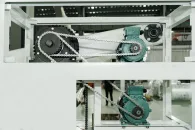 | Belt drives are prone to wear, slippage and inaccuracy, requiring frequent replacement every 6–8 months. 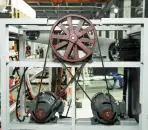 |
| Walled Barrel &Screw Design | Thick-Walled Barrel: Enhanced thermal retention minimizes heat loss, reducing power consumption by 15–20% compared to thin-walled barrels. Uniform Melt Temperature: Maintains stability within ±5°C, ensuring consistent bubble formation and achieving a thickness tolerance of ±3%. 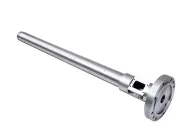 | Thin-Walled Barrels: Rapid heat dissipation requires constant reheating, resulting in 25–30% higher energy waste. Temperature Fluctuations: lead to uneven melting and thickness variations (±8–10%). 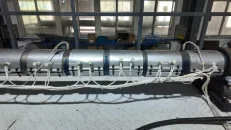 |
| Motor | The Permanent Magnet Synchronous Motor (PMSM) reduces energy consumption by 20%, delivers torque control accuracy of ±1%, and enables instant start-stop response. 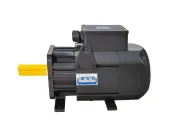 | Asynchronous motors feature higher operational inertia and an IE2 efficiency of 94.2%. 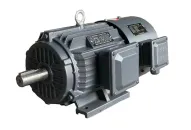 |
| Heating System | Hualiang Infrared Heating System boosts thermal efficiency by 40% and reduces overall energy consumption by 20%. 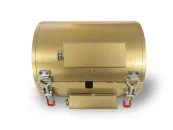 | Conventional heating coils feature slow heating, inadequate insulation, and high power consumption.  |