As packaging manufacturers continue to look for lighter, stronger, and more cost-efficient protective materials, polyethylene-based bubble film remains widely used for cushioning and surface protection. However, achieving a suitable balance between mechanical performance, process stability, and material cost depends on more than the extrusion equipment alone. The selection and blending of LLDPE and LDPE can have a significant influence on melt behavior, bubble stability, film strength, and the final characteristics of the finished film.
There is no universal LLDPE/LDPE ratio that can be considered the best for every bubble film product. The appropriate formulation depends on resin grade, molecular characteristics, target film thickness, bubble structure, production speed, and application requirements. A well-designed bubble film making machine should therefore provide sufficient process flexibility to accommodate different polyethylene formulations rather than being optimized around one fixed material ratio.
Why LLDPE and LDPE Are Used Together in Bubble Film Production
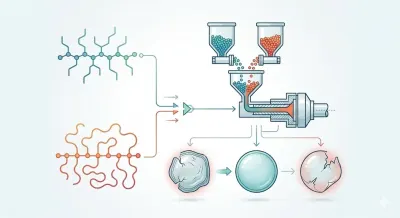
LLDPE and LDPE have different molecular structures and processing characteristics. LLDPE is commonly valued for its tensile strength, puncture resistance, and toughness, while LDPE generally provides good melt strength and processing characteristics that can be useful in blown-film applications.
Combining the two materials can allow manufacturers to balance these characteristics according to the intended product. For example, a formulation containing a higher proportion of LLDPE may be considered when greater mechanical strength is required, while LDPE can contribute to melt strength and bubble stability.
The actual result depends strongly on the specific resin grades. Two materials identified as LLDPE may have noticeably different melt flow rates and mechanical properties, just as different LDPE grades can behave differently during extrusion. For this reason, blend ratios should be established through formulation trials and production testing rather than treated as a fixed industry formula.
Problems Caused by an Improper Material Formulation
Changes in LLDPE/LDPE ratio can alter melt viscosity, melt strength, and draw-down behavior. If the material formulation and extrusion conditions are not properly matched, the production process may become more difficult to control.
One possible issue is unstable bubble formation. Bubble film production requires a consistent melt output and controlled cooling conditions. Changes in melt strength or viscosity can influence bubble dimensions, film thickness distribution, and the stability of the forming process.
Film breaks can also occur when the material and processing conditions are unsuitable for the target film thickness and production speed. However, a film break should not automatically be attributed to a high LLDPE content. Resin grade, contamination, excessive temperature, die conditions, cooling, take-off speed, and other factors can also contribute.
Extrusion pressure and motor load may change when the formulation is modified. A different blend can require adjustments to processing temperature and screw speed to maintain a stable output. Proper machine configuration and process control are therefore important when manufacturers work with multiple PE formulations.
Bubble Film Applications and Their Material Requirements
The required LLDPE/LDPE balance depends largely on where the bubble film will be used. Protective packaging for electronics, furniture, e-commerce products, and industrial components can have significantly different performance requirements.
For electronics and precision products, bubble film is often used to provide cushioning and surface protection during handling and transportation. When static-sensitive products are involved, antistatic additives or other functional materials may be incorporated into the formulation. These properties come from the complete material system rather than from the LLDPE/LDPE ratio alone.
Furniture, appliances, and decorative products may require flexible film that can conform to different surfaces while helping protect against scratches and minor impacts. A formulation that provides an appropriate combination of toughness and processability can be useful for these applications.
E-commerce and general logistics packaging often places greater emphasis on weight, cushioning performance, puncture resistance, and production cost. For heavier industrial components, manufacturers may require stronger film with improved resistance to tearing or puncture, depending on the product geometry and packaging conditions.
How a Bubble Film Making Machine Supports Different PE Formulations
A flexible extrusion system is important when manufacturers need to produce bubble film with different material formulations. Our bubble film making machine is designed to provide controlled extrusion conditions for polyethylene-based materials while allowing key production parameters to be adjusted according to the selected resin combination.
Temperature control is one of the basic requirements. Different PE grades can have different processing windows, so individual heating zones help operators establish a suitable temperature profile along the extrusion process. Stable temperature control contributes to consistent melting and material flow.
Screw design is equally important. The screw needs to provide effective conveying, melting, and mixing without imposing unsuitable shear or excessive thermal history on the polymer. Screw diameter, L/D ratio, compression characteristics, and mixing sections should be considered together with the resin grade and target output.
For multi-layer bubble film production, independent extrusion units can provide additional flexibility. Different materials can be assigned to different layers according to the required film structure, allowing manufacturers to separate certain functions rather than relying on one material throughout the film.
Finding a Suitable LLDPE/LDPE Blend Ratio
Instead of searching for one universal “golden ratio,” manufacturers should determine the blend according to the required balance between processing behavior and final film performance.
If greater toughness and puncture resistance are required, increasing the proportion of an appropriate LLDPE grade may be considered. However, the effect should be evaluated alongside melt strength, film thickness, bubble stability, and production speed.
LDPE can be useful when melt strength and bubble-forming behavior are important. A suitable LDPE grade may help establish stable processing conditions, particularly in blown-film applications where the molten tube must maintain its shape during cooling and stretching.
Testing should therefore begin with the resin manufacturer's recommended processing conditions and a controlled formulation trial. Operators can then evaluate bubble stability, extrusion pressure, film thickness, tensile properties, puncture resistance, and appearance before determining the production ratio.

Process Control Is as Important as Material Selection
Material formulation and machine settings need to be optimized together. A suitable resin blend can still produce inconsistent film if the extrusion temperature, screw speed, cooling, or take-off conditions are poorly matched.
Our bubble film making machine integrates temperature management and centralized process control to help operators monitor important production parameters. The PLC and HMI system can provide a convenient interface for adjusting and recording operating conditions according to different production requirements.
Extrusion output and take-off speed also need to remain coordinated. If the production rate changes without appropriate adjustment of downstream conditions, bubble dimensions and film thickness may become unstable.
The cooling system plays an important role as well. Consistent air cooling helps stabilize the bubble during film formation, while appropriate take-off and winding conditions contribute to the dimensional stability of the finished film.
Multi-Layer Structures for More Flexible Product Development
Multi-layer extrusion provides another way to optimize material usage. Instead of using the same formulation throughout the entire film, manufacturers can assign different materials to different layers.
For example, one layer can be designed primarily for mechanical performance while another contributes to processing or surface characteristics. The exact structure depends on the target product and the capabilities of the extrusion line.
Our bubble film making machine can be configured for different layer structures according to production requirements. Multi-layer extrusion can provide manufacturers with greater flexibility when developing standard cushioning film, stronger protective film, or products designed for specific packaging applications.
This approach can also support material optimization. When the required mechanical performance can be achieved through a more efficient layer structure, manufacturers can evaluate whether a thinner film is suitable for a particular application. Any down-gauging decision should be validated through actual packaging and mechanical testing rather than based solely on theoretical material savings.
Matching the Material Formula with the Machine
The performance of bubble film is the result of several connected factors rather than a single material ratio. LLDPE can contribute toughness and puncture resistance, while LDPE can provide useful melt strength and processing characteristics. The most suitable balance depends on the resin grades, product specification, extrusion conditions, and application.
Our bubble film making machine is designed to provide the process flexibility needed to work with different polyethylene formulations and multi-layer structures. Controlled extrusion, adjustable processing parameters, stable cooling, and centralized PLC management provide a practical foundation for manufacturers developing bubble film with different performance and cost requirements.
Rather than relying on a fixed “golden ratio,” manufacturers can use controlled formulation trials to identify the material balance that best fits their product. Combined with an appropriately configured bubble film making machine, this approach can help achieve more stable production, consistent film quality, efficient material utilization, and reliable protective performance across a wide range of packaging applications.