
Industry News
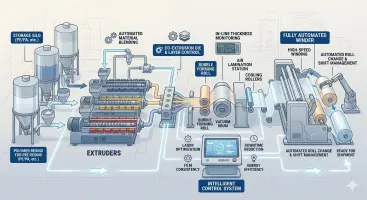
Labor-Saving Automation: How to Operate a Bubble Film Extrusion Machine with Fewer Staff
In today's competitive packaging industry, manufacturers face mounting pressure from high labor costs, operational complexity, and the demand for unwavering product consistency. Traditional extrusion lines often require constant...
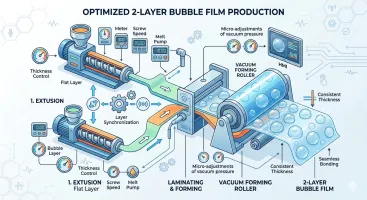
Advantages of Selecting PLC Touch Screen Control for 2-Layer Bubble Film Extrusion Machine
Traditional bubble film extrusion lines often struggle with inconsistent product quality, high waste rates, and significant reliance on skilled operators. These pain points directly impact profitability and ...
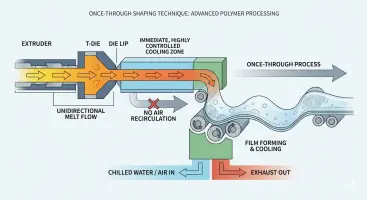
The Science Behind Once-Through Shaping Technique for Bubble Film Extrusion Machine
For B2B buyers of 3–5-Layer High-Speed and 7-Layer machines, the once-through shaping technique eliminates recirculation, cuts gauge variation, and boosts mechanical strength. Read how it transforms your production line…
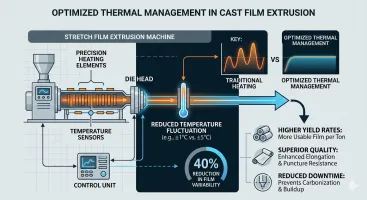
Why Precise Temperature Control Matters in Stretch Film Extrusion Machine
In the competitive packaging industry, stretch film extrusion machines—from 2-layer to 5-layer systems—face a critical challenge: maintaining uniform melt viscosity and polymer flow. Without precise temperature control, defects like gauge variation and pinholes compromise film clarity and strength. This article explores why advanced thermal management is non-negotiable for optimizing stretchability, puncture resistance, and production efficiency in both automatic and semi-automatic models.
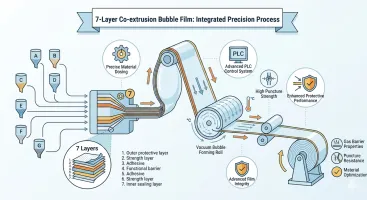
Technical Advantages of High Performance 7 Layer Bubble Film Extrusion Machine
In the high-stakes world of high-value industrial packaging and pharmaceutical logistics, traditional mono- or 3-layer barrier films increasingly hit a wall. Market demands for ...
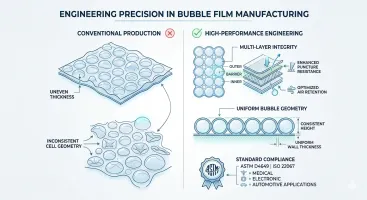
Why High-Performance Bubble Film Extrusion Machine Fits Export Markets
Export-driven manufacturers require bubble film that withstands long logistics chains without failure. High-performance extrusion lines—from 2-layer low-speed to 7-layer high-speed—deliver consistent thickne
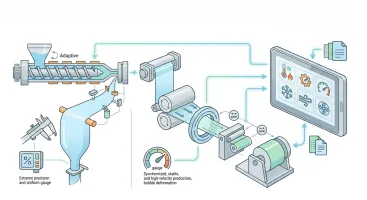
High Efficiency Industrial Bubble Film Extrusion Machine with Smart PLC
Industrial bubble film manufacturers face mounting pressure to reduce material waste and improve thickness uniformity while maintaining high-speed output. A new generation of smart PLC-controlled extrusion machines, including the 7-Layer High-Speed Bubble Film Machine and 2-Layer Medium-Speed B…
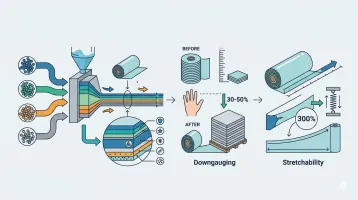
Multi-layer Stretch Film Extrusion Machine: 300% Stretch Cuts Costs
Modern multi-layer stretch film extrusion machines achieve up to 300% pre-stretch capability through advanced LLDPE formulations, precision die design, and balanced co-extrusion structures. High tensile strength and optimized cling performance allow thinner films to secure heavier pallet loads using less material. This significantly reduces resin consumption, transportation costs, and overall packaging expenses while maintaining load stability.
How to Reduce Per-Roll Cost in Mass Bubble Film Production
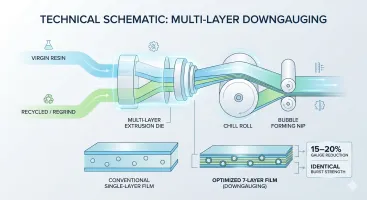
Reducing per-roll cost in mass bubble film production requires optimized resin consumption, stable bubble control, and energy-efficient extrusion systems. Multi-layer co-extrusion and downgauging technologies minimize material usage while maintaining cushioning performance. Advanced temperature management, automatic thickness control, and reduced start-up scrap improve productivity, lower energy consumption, and maximize output consistency in high-volume manufacturing.
Advantages of Semi-Auto Stretch Film Extrusion Machine
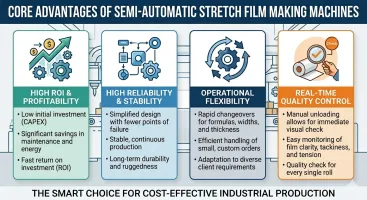
Semi-automatic stretch film machines offer high ROI through lower initial investment and reduced maintenance. The simplified design ensures high reliability and maximum uptime. Operators benefit from operational flexibility for custom orders, while manual core changes allow for real-time quality control of film clarity, tackiness, and winding tension.