
Technical Term
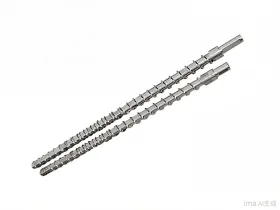
Difference Between Twin Screw and Triple Screw in Stretch Film Machine
In stretch film manufacturing, the extruder's screw configuration is the heart of quality and efficiency. This analysis reveals why triple-screw systems deliver over 50% higher output and superior film clarity compared to conventional twin-screw designs...
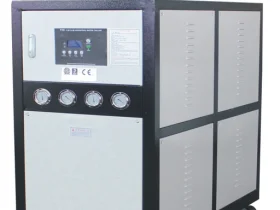
Function of Cooling Water System in Stretch Film Production
In stretch film extrusion lines, the circulating water cooling system is far from an auxiliary component—it is the pivotal element determining film performance and production stability. Through precise temperature control and efficient heat exchange, it directly addresses three core challenges: shear heat accumulation from high-speed extrusion, bridging risks in the feeding zone, and crystallization control...
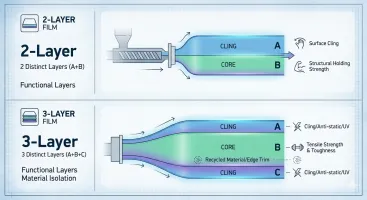
Structural Differences of Film Produced by 2-Layer and 3-Layer Stretch Film Making Machine
For B2B buyers, choosing between 2-layer and 3-layer stretch film machines is a strategic investment in product performance. The AB structure offers a balance, while the ABC architecture provides engineered layering for superior, application-specific performance...
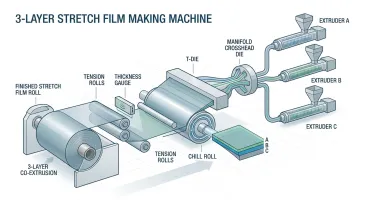
3-Layer Co-Extrusion Equipment of Stretch Film Making Machine
In the world of industrial packaging, the quest for the optimal stretch film—one that combines high strength, superior cling, and cost-effectiveness—presents a persistent challenge. Single-layer films force a compromi...
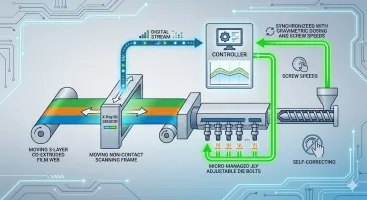
Online Thickness Measurement System for 3-Layer Stretch Film Making Machine
A breakthrough in film production: This integrated system utilizes non-contact X-ray/Infrared gauges for real-time monitoring and closed-loop control, automatically adjusting the die and extruder to en...
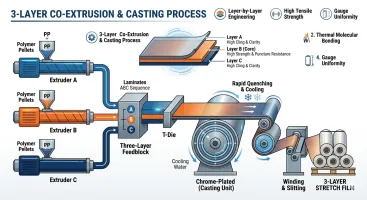
How A Stretch Film Making Machine Forms 3-Layer Cast Stretch Film
In an era of volatile logistics costs, conventional single-layer stretch film fails under stress. This technological breakdown leads to product damage, higher material consumption, and...
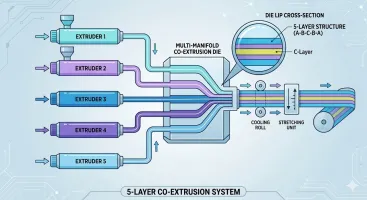
Multi-layer Co-extrusion System for 5-Layer Stretch Film Making Machine
Unlock unprecedented consistency and cost efficiency in industrial packaging. The multi-layer co-extrusion system in 5-layer stretch film machines transforms production by merging different polymers through a sophisticated die. This architecture directly addresses the critical pain points of breakage, load instability, and...
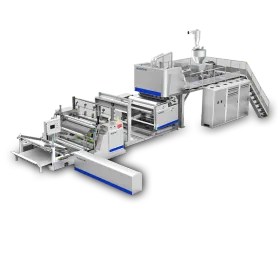
Differences Between Full-Automatic and Semi-Automatic Stretch Film Machines
In the fast-paced world of pallet packaging, the choice between fully automatic and semi-automatic stretch film machines can define your operational efficiency. Understanding the technological distinctions is crucial for making an informed investment that matches your volume needs, labor strategy, and long-term growth plans. This breakdown...
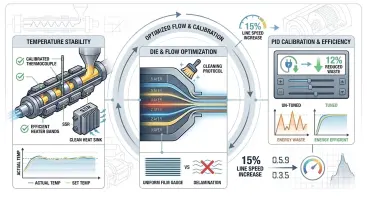
How to Maintain the Heating System of Stretch Film Making Machine for Better Efficiency
Efficient stretch film making machines rely on precise temperature control. Maintaining the heating system involves regular inspections of heater bands, thermocouples, and solid-state relays to prevent thermal fluctuations. Cleaning extrusion dies and calibrating PID...
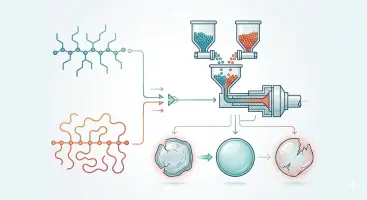
Optimizing LLDPE & LDPE Blending Ratios for Bubble Film Making Machine
In the competitive landscape of bubble film production, achieving optimal material blending is critical for maximizing output quality and reducing operational costs. This technical guide explores how fine-tuning the ratio of Linear Low-Density Polyethylene (LLDPE) to Low-Density Polyethylene (LDPE) directly impacts the performance of your bubble film making machine—whether it's a 2-Layer Low-Speed or a 7-Layer High-Speed system. By understanding the balance between processability and mechanical strength, manufacturers can produce film that meets the exacting demands of heavy-duty packaging while minimizing defects and downtime. Our approach emphasizes real-world benefits: enhanced puncture resistance, improved tensile strength, and superior bubble stability. This insight empowers procurement professionals to make data-driven decisions that yield a tangible return on investment, ensuring their equipment operates at peak efficiency in an increasingly demanding market. Discover how these blending techniques can transform your production line from a cost center into a competitive advantage.