Technical Encyclopedia
How Thick-Walled Barrels Achieve 15°C Precision Cooling in Bubble Wrap Machines
In high-speed bubble film production, precise temperature control at the feeding throat is critical. Our thick-walled barrel design with spiral cooling channels and industrial chillers maintains 15°C±0.5°C...
Why P20H/1.2311 Steel is the Top Choice for Precision Extrusion T-Dies?
Discover how P20H/1.2311 steel's pre-hardened structure and dimensional stability revolutionize T-die performance for extrusion lines, delivering flawless surface finishes and unmatched production efficiency...
Operating Principles of Permanent Magnet Synchronous Motors (PMSM)
A PMSM works by using three-phase AC power to create a rotating magnetic field in the stator. The rotor, equipped with permanent magnets, locks onto this field due to magnetic attraction. As a result, the rotor spins at the exact same speed as the magnetic field, ensuring high efficiency.
Power Requirements of Bubble Film Making Machine
The total installed power of an air bubble film machine is a critical factor in production planning and operational cost control. It typically ranges from 30kW to over 300kW, depending on the machine's configuration, such as the number of layers (2–7) and film width. This power consumption encompasses the combined needs of the extruder motors, heating zones, forming units, and auxiliary systems like cooling and winding. A well-calibrated power setup ensures...
Applications of a Medium-Speed Bubble Film Machine
In today's manufacturing landscape where efficiency meets practicality, medium-speed bubble film machines strike the perfect balance for growth-oriented businesses. This technology delivers consistent...
Applications of a Low-Speed Bubble Film Machine
For startups and small-scale operations, investing in the right packaging equipment is crucial. Low-speed bubble film machines offer a perfect balance of efficiency, flexibility, and cost-effectiveness. This technology is designed for businesses that prioritize...
Features of a High-Speed Bubble Film Machine
Engineered for large-scale industrial packaging, our high-speed bubble film machine delivers unmatched linear speeds over 40m/min. With full automation including automatic winding and precision tension control, its heavy-duty design ensures 24/7 reliability...
Features of a Medium-Speed Bubble Film Machine
This machine balances productivity and cost-efficiency, offering higher output than basic models with reliable stability. It features advanced automation, such as automatic winding and precise temperature control, for steady medium-scale production. It’s the perfect versatile solution for growing businesses seeking high-quality bubble wrap with manageable investment.
Features of a Low-Speed Bubble Film Machine
Discover how our low-speed bubble film machines provide cost-effective, reliable production for small-scale operations and startups. Featuring compact design...
Difference Between High-Speed and Low-Speed Bubble Film Machines
High-speed bubble film machines deliver maximum output with full automation for large-scale production. Low-speed models offer cost-effective, stable operation for smaller batches or startups. This guide explains the key differences to help you select the right machine based on your production volume and budget...
T-Die for Bubble Film Manufacturing Machine
Explore how our advanced T-Die technology ensures unparalleled uniformity and thickness control in bubble film production. Discover the engineering excellence behind consistent, high-quality film output for your protective packaging needs...
Winding System for Bubble Film Making Machine
The winding system ensures stable film collection with precise tension control and consistent winding speed. It produces smooth, uniform rolls without wrinkles or deformation. With automatic alignment and efficient operation, the system supports continuous production and adapts to different film sizes, improving overall performance and product quality.
One-Step Forming Process for Bubble Film Machine
Our exclusive One-Step Forming Process seamlessly integrates extrusion, vacuum forming, and laminating into a single automated line, achieving ultra-high-speed production exceeding 1000 meters/hour...
Difference Between Twin Screw and Triple Screw in Stretch Film Machine
In stretch film manufacturing, the extruder's screw configuration is the heart of quality and efficiency. This analysis reveals why triple-screw systems deliver over 50% higher output and superior film clarity compared to conventional twin-screw designs...
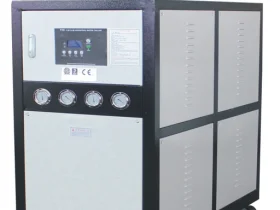
Function of Cooling Water System in Stretch Film Production
In stretch film extrusion lines, the circulating water cooling system is far from an auxiliary component—it is the pivotal element determining film performance and production stability. Through precise temperature control and efficient heat exchange, it directly addresses three core challenges: shear heat accumulation from high-speed extrusion, bridging risks in the feeding zone, and crystallization control...
Benefits of Using 38CrMoAl Steel in Wrapping Film Equipment
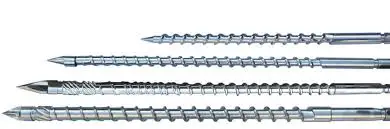
In the demanding world of stretch film production, equipment longevity and precision are paramount. The choice of material for core components like the screw and barrel directly impacts output quality, maintenance costs, and overall profitability. This article delves into the technical superiority of 38CrMoAl nitriding steel, explaining why it remains the undisputed industry standard for manufacturers seeking reliability and excellence. We will explore its exceptional wear resistance, thermal stability, and structural integrity, which collectively ensure your production line runs smoother, for longer...
Differences Between Full-Automatic and Semi-Automatic Stretch Film Machines
In the fast-paced world of pallet packaging, the choice between fully automatic and semi-automatic stretch film machines can define your operational efficiency. Understanding the technological distinctions is crucial for making an informed investment that matches your volume needs, labor strategy, and long-term growth plans. This breakdown...
Why LDPE and LLDPE Are Used for Plastic Film Production
In the world of plastic film manufacturing, two polyethylene resins stand as the undisputed champions for creating high-performance films...
Power Supply Instructions for Stretch Film Machines
Unlock peak performance in your stretch film production with our specialized 380V/3-phase/4-wire/50Hz power solutions. Designed specifically for multi-layer winding machines...
Why Wider Products Require Heavier Stretch Film Machines
In stretch film extrusion lines, the circulating water cooling system is far from an auxiliary component—it is the pivotal element determining film performance and production stability. Through precise temperature control and efficient heat exchange, it directly addresses three core challenges: shear heat accumulation from high-speed extrusion, bridging risks in the feeding zone, and crystallization control...
How Stretch Film Machines Produce Different Width Products
Discover how stretch film machines from 1.0m to 2.0m widths transform production efficiency and product flexibility. Learn why output scales non-linearly, how power requirements evolve, and what...
Difference Between Motor Power, Heating Power and Total Power in Stretch Film Machines
Understanding the distinct roles of motor power (mechanical drive), heating power (thermal processing), and total power (system load) is critical for optimizing stretch film production efficiency and cost...

Factors Determining the Output of Stretch Film Machines
Ever wonder why some machines pump out more film per hour? The secret lies under the hood: in the heart of the extruder. Your machine's true output capacity—and your profitability—is locked in the screw design and drive system...
What is Mechanical Design Line Speed in a Stretch Film Machine
In the high-stakes world of stretch film manufacturing, the Mechanical Design Line Speed isn't just a number on a spec sheet—it's the heartbeat of your profitability. This critical engineering metric defines the absolute ceiling of your machine's capability, dictating throughput, film quality, and long-term operational costs. Understanding it is the first step to unlocking...
Factors Affecting Product Thickness in Stretch Film Machines
In stretch film production, consistent thickness is the ultimate quality benchmark. This technical deep-dive reveals how synchronization, thermal control, and automated systems work in concert to achieve micron-level precision. Understanding these factors empowers smarter procurement decisions...
Factors Determining Product Width in Stretch Film Machines
Achieving optimal film width isn't just about die size. Learn how die configuration, neck-in effect, extrusion capacity, edge trimming, and quenching systems work together to determine your final product width and maximize production efficiency...
Meaning of L/D Ratio in Stretch Film Machine Parameters
Discover how our specialized timing belt technology ensures flawless synchronization and power transmission in your stretch film manufacturing line, delivering unmatched precision, durability, and operational efficiency for consistent, high-quality output...
Comparison of Screw Diameter Functions in Bubble Film and Stretch Film Machines
In plastic extrusion, the screw is the machine's heart. This analysis details how its diameter is strategically optimized for different demands: high-volume...
The Effect of Different Screw Diameters on Stretch Film Machine
Choosing the right screw diameter for your stretch film machine isn't just a technical detail—it's a strategic business decision impacting output, quality, and your bottom line. Let's explore how this critical dimension directly influences your production efficiency and the properties of the film you produce...
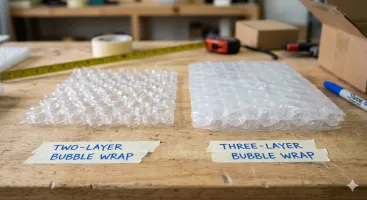
LDPE and LLDPE: Ideal Materials for Bubble Film Production
In wide-format stretch film production, machine stability is non-negotiable. This article delves into the core engineering principles—combating deflection, damping vibration, and ensuring torque/thermal stability—that mandate heavier, more robust machinery for superior film quality and consistent output. Discover why weight directly translates to reliability and precision in your operation...
L/D Ratio Meaning for Air Bubble Film Parameters
In the technical specifications of a bubble wrap machine, few parameters are as critical yet misunderstood as the L/D Ratio (Length-to-Diameter Ratio). Often expressed as a simple figure like 30:1 or 34:1, this ratio is the primary indicator...
Air Bubble Film Machine Power Supply Usage Guidelines
When reviewing the technical specifications of an industrial bubble wrap machine, one of the most critical parameters is the power supply requirement, often written as 380V/3P/4W/50Hz. This is not merely a regional electrical standard...
Key Differences Between Main and Auxiliary Motors in Dual-Motor Bubble Film Machines
In dual-motor bubble film machines, understanding the distinct roles of the main and auxiliary motors is crucial for efficiency and product quality. The main motor handles...
Key Factors Affecting Air Bubble Film Machine Production Speed
As a bubble film manufacturer, maximizing your production line's output is crucial. This in-depth technical analysis explains the four critical factors—extrusion capacity, cooling efficiency, material rheology, and automation—that dictate your machine's speed. Learn how advanced screw design, powerful vacuum systems, and perfect synchronization unlock higher yields and a better return on investment...
The Influence of Machine Weight on Bubble Film Production
In plastic extrusion, the weight of a bubble film machine is a critical indicator of its engineering quality. As production scales, higher output demands heavier mechanical structures to maintain precision, durability, and consistent performance. This article explores the direct link between machine mass and production success...
Factors Affecting the Output of Air Bubble Film Machines
Maximizing air bubble film machine output requires precise engineering synchronization across four core systems. This technical guide reveals how...
How Air Bubble Film Machines Produce Different Width Products
Discover the engineering precision behind modern air bubble film machines capable of producing widths from 1600mm to 3000mm. This technical analysis explores screw configuration, power systems, and structural innovations that deliver versatility without compromising efficiency or film integrity...
The Impact of Different Screw Diameters on Air Bubble Film Machines
In bubble film production, screw diameter is the unsung hero driving your ROI. This technical deep-dive reveals how strategic sizing from 1600mm to 3000mm lines transforms output quality and profitability. Learn engineering principles...
Infrared Heating System
Discover how the advanced Infrared Heating System transforms stretch and bubble film production. Offering rapid, uniform heating, it ensures superior film quality, cuts energy costs, and boosts output—essential for competitive manufacturing...
Permanent Magnet Synchronous Motor
Discover how Permanent Magnet Synchronous Motors (PMSM) deliver unparalleled precision, energy efficiency, and reliability in stretch film and bubble wrap machines. This advanced motor technology ensures consistent layer winding, prevents defects, and optimizes production efficiency for high-quality packaging materials.
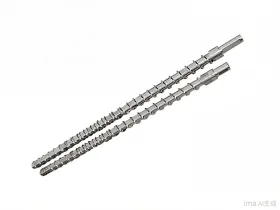
Thick-Walled Barrel & Screw Design
Discover how the Thick-Walled Barrel & Screw Design in our stretch film machines ensures durable, high-quality agricultural film production. This technology guarantees consistent plastic melt, stable output, and extended equipment life for cost-effective farming...
Timing Belt for Stretch Film Manufacturing Machine
Discover how cutting-edge timing belt technology drives precision and reliability in modern stretch film manufacturing. This article explores the critical role of high-performance belts in ensuring consistent layer control, enhanced film integrity, and operational efficiency for both agricultural and industrial packaging applications...
T-Die for Stretch Film Manufacturing Machine
As a core component in stretch film manufacturing machines, T-Die (T-type die) technology enables precise melt distribution and multi-layer co-extrusion, delivering breakthroughs in thickness uniformity, strength optimization, and functional customization for agricultural stretch films. This article explores its key technical advantages in farming applications...