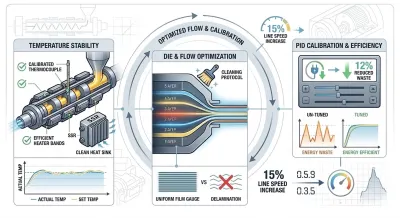
A stable heating system is essential for consistent stretch film production. In a modern stretch film making machine, polymer resin must be heated, melted, and conveyed under controlled temperature conditions before it reaches the die. If the heating system is unstable, temperature fluctuations can affect melt viscosity, extrusion stability, film thickness, and overall product consistency.
For manufacturers producing two-layer, three-layer, or five-layer stretch film, regular heating system maintenance is therefore an important part of preventive equipment management. Proper inspection of heater bands, thermocouples, temperature controllers, electrical components, and die heating zones can help maintain stable processing conditions and reduce the risk of unplanned downtime.
Why Heating System Stability Matters in Stretch Film Production
The heating system of a stretch film making machine does more than simply raise the barrel and die to the required temperature. It must maintain relatively stable temperatures across multiple processing zones while the extrusion system continuously processes polymer resin.
Different stretch film structures and resin formulations may require different processing conditions. LLDPE, LDPE, metallocene-based polyethylene, and other compatible materials can have different melt flow characteristics and recommended processing ranges. The actual temperature settings should therefore be determined according to the material supplier's recommendations, machine configuration, film structure, and production requirements.
When a heating zone cannot maintain its temperature properly, the resulting change in melt viscosity may influence extrusion pressure and material flow. In thin-gauge film production, even relatively small process variations can become more noticeable because the available thickness margin is reduced.
For this reason, temperature stability should be considered together with screw design, extrusion pressure, cooling conditions, haul-off speed, and winding performance rather than treated as an isolated parameter.
Common Heating System Problems and Their Production Effects
One of the most common problems is heater band deterioration. Heater bands can experience long-term thermal cycling, mechanical movement, contamination, or connection problems. A damaged or poorly fitted heater may transfer heat less effectively, causing a zone to respond more slowly or develop abnormal temperature fluctuations.
Thermocouples are another important inspection point. A thermocouple that is loose, damaged, incorrectly positioned, or producing an unstable signal can cause the temperature controller to receive inaccurate information. Since the controller responds to the measured temperature, an unreliable sensor can lead to unnecessary heating adjustments or temperature overshoot.
Temperature overshoot can also occur when PID parameters are not properly matched to the thermal characteristics of the equipment. A controller that responds too aggressively may repeatedly increase and reduce heating output, while poorly tuned control parameters can result in slower temperature recovery. Neither situation is ideal for stable extrusion.
Electrical components should also be included in preventive maintenance. Solid-state relays, contactors, terminal connections, and control cabinet cooling components operate continuously during production. Loose connections, excessive dust, or insufficient heat dissipation can affect electrical reliability and may eventually lead to component failure.
In addition, polymer residue or contamination around heating areas can interfere with heat transfer and make inspection more difficult. Cleaning procedures should always follow the machine manufacturer's safety requirements and should only be carried out after the relevant equipment has been safely shut down and cooled.
Heating Control in Multilayer Stretch Film Production
Multilayer stretch film production requires additional attention because several extrusion streams may be processed and combined before entering the die. A three-layer or five-layer stretch film line can use different material formulations for different functional layers, such as a core layer for mechanical strength and outer layers designed for specific surface or wrapping characteristics.
Stable temperature control helps each extrusion unit maintain a consistent melt condition before the materials enter the feedblock or multilayer die system. However, heating temperature alone does not determine interlayer bonding or final film performance. Resin compatibility, formulation, melt flow behavior, processing temperature, die design, and cooling conditions all contribute to multilayer film quality.
A well-designed stretch film making machine therefore uses independent temperature zones and suitable control components to maintain repeatable processing conditions. Operators can then adjust each zone according to the actual material and production requirements instead of relying on a single temperature setting for the entire extrusion system.
The die heating system is equally important. Uniform die temperature helps maintain stable melt flow through the die and supports consistent film formation. If one area of the die operates significantly differently from another, local variations in melt viscosity can affect the uniformity of the extruded film.
How Regular Maintenance Supports Better Production Efficiency
The purpose of heating system maintenance is not simply to prevent component failure. It also helps manufacturers maintain a more predictable production process.
When heater bands and temperature sensors operate correctly, the temperature controller can respond to actual process conditions more effectively. This reduces the need for operators to repeatedly compensate for abnormal temperature readings and makes established production parameters easier to reproduce.
Stable thermal conditions can also support more consistent film thickness. Thickness control depends on many factors, including extrusion output, die condition, cooling, line speed, and material properties, but maintaining a stable melt temperature provides a reliable foundation for these other controls.
Preventive maintenance can also reduce the possibility of unexpected production interruptions. Replacing a deteriorated heater or thermocouple during scheduled maintenance is generally easier to manage than dealing with a sudden component failure during a production order.
For manufacturers operating a stretch film making machine for extended production cycles, this approach can contribute to better equipment availability, more consistent quality, and more predictable maintenance costs.
Practical Heating System Maintenance Checklist
Routine inspection should begin with the temperature display and actual machine behavior during production. Operators can monitor whether individual zones reach their target temperatures normally and whether any zone shows unusual fluctuations, slow heating, or repeated overshooting.
During scheduled maintenance, heater bands should be inspected for visible damage, deformation, contamination, and secure installation. Electrical terminals and wiring should also be checked for signs of looseness, overheating, or deterioration.
Thermocouples should be inspected to ensure that they are correctly installed and securely connected. If the displayed temperature does not correspond with the expected process behavior, the sensor and its signal circuit should be checked before changing the process temperature.
The control cabinet should be kept clean and adequately ventilated. Dust accumulation around solid-state relays, cooling fans, and heat-dissipation areas can reduce cooling performance. Cleaning should be performed only under appropriate electrical safety conditions.
PID settings should be reviewed when the machine shows persistent temperature fluctuations or when major heating components, sensors, controllers, or other thermal-system components are replaced. Auto-tuning may be appropriate in some situations, but it should be performed according to the controller and machine manufacturer's recommendations rather than as an automatic fixed-period procedure.
The die heating system should also be inspected as part of planned maintenance. Any cleaning or disassembly should follow the die manufacturer's instructions because inappropriate tools or cleaning methods can damage precision die surfaces.
Maintaining Temperature Stability on a Stretch Film Making Machine
A reliable stretch film making machine depends on cooperation between the heating system, extrusion system, die, cooling unit, haul-off section, and winding system. Heating maintenance should therefore be considered part of the complete production process.
For example, if a temperature sensor begins producing unstable readings, simply changing the controller setpoint may temporarily hide the problem without correcting its cause. Checking the sensor installation, wiring, heater output, and controller response provides a more reliable way to identify the actual issue.
The same principle applies to energy efficiency. A machine should not be operated at unnecessarily high temperatures in an attempt to increase output. Processing temperatures should remain within the appropriate range for the selected resin and machine configuration. Stable heating allows the equipment to maintain the required process temperature without excessive corrective adjustments.
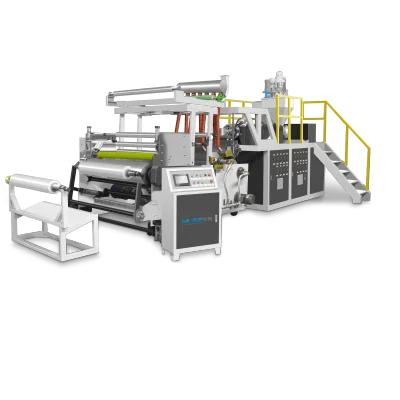
Our stretch film making machine is designed with coordinated extrusion and temperature control systems to support stable polymer processing across the production line. Depending on the machine configuration, independent temperature zones can be used for the extrusion barrels and die, allowing the heating parameters to be adjusted according to different materials and multilayer structures.
Preventive Maintenance Builds Long-Term Efficiency
The heating system is one of the fundamental operating systems of a stretch film making machine. Heater bands, thermocouples, PID controllers, solid-state relays, electrical connections, and die heating zones all contribute to maintaining stable processing conditions.
Regular inspection does not guarantee a specific production speed or energy-saving percentage, because actual performance depends on resin type, film thickness, layer structure, machine configuration, operating conditions, and maintenance practices. However, maintaining the heating system in good working condition can help reduce temperature-related process instability, improve production consistency, and lower the risk of unexpected downtime.
For manufacturers looking to achieve reliable long-term stretch film production, heating system maintenance should be incorporated into a broader preventive maintenance program covering extrusion, cooling, traction, and winding systems. With appropriate equipment configuration and disciplined maintenance, a stretch film making machine can provide a more stable foundation for consistent film quality and efficient daily production.