Bubble Film Extrusion Machines: Future Industry Trends & Market Insights
2026-06-30
The global protective packaging industry is undergoing a historic paradigm shift. Driven by strict global regulations on single-use plastics, expanding e-commerce logistics, and urgent corporate carbon-reduction mandates, plastic film manufacturers face an unprecedented challenge. Traditional mono-layer extrusion lines are rapidly becoming obsolete because they cannot run high percentages of recycled resins without a catastrophic loss in film strength.
Today, advanced multi-layer co-extrusion technology represents the definitive future of sustainable manufacturing. Modern bubble film extrusion machines allow factories to maintain exceptional puncture resistance, high optical clarity, and flawless bubble geometry while utilizing high percentages of post-consumer recycled (PCR) content or bio-based plastics.
The Evolution of Multi-Layer Co-Extrusion Technology
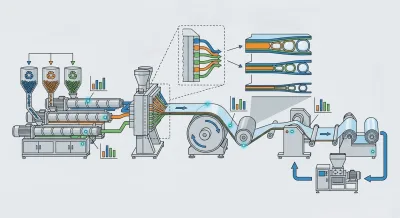
Traditional extrusion lines face severe material instability when processing eco-friendly alternatives. Using post-consumer recycled (PCR) content or bioplastics often leads to film tearing, surging melt pressure, and uneven bubble formation. Next-generation bubble film extrusion machines completely overcome these traditional boundaries through specialized mechanical engineering:
- Advanced Screw Geometry: Modern extruders utilize specialized screw profiles with dedicated barrier flights and distributive mixing sections. This ensures uniform shear stress and thermal homogeneity, blending polymers with vastly different Melt Flow Indices (MFI) seamlessly.
- Intelligent Extrusion Automation: Integrated continuous gravimetric dosing systems and closed-loop melt pump pressure controls automatically adjust screw speeds in real-time, preventing gauge variations.
- Precision Co-Extrusion Die Heads: Precision-engineered die heads feature optimized flow channels designed via computational fluid dynamics (CFD). This guarantees an exceptionally uniform layer distribution without weak points or delamination risks.
High-Efficiency 2-Layer Bubble Film Machines
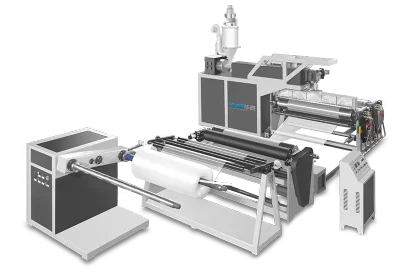
The 2-layer bubble film machine configuration is engineered explicitly for high-efficiency, cost-optimized production of standard protective wrapping materials. In this layout, the film is divided into a dedicated sheet layer vacuum-formed into bubbles, and a flat backing layer.
- Target Applications: Standard air bubble sheets, protective moving wraps, and lightweight padded mailer linings.
- Material Optimization: Works exceptionally well with standard LDPE, LLDPE, and clean post-industrial regrind or factory edge-trim scrap.
- Production Advantage: Low operational complexity, faster job changeovers, and a small equipment footprint. It delivers a highly competitive cost-per-kilogram ratio for high-volume commodity markets.
Flexible 3–5-Layer Bubble Film Machines
The 3–5-layer co-extrusion bubble film machine is a good choice for modern packaging manufacturers targeting industrial, commercial, and high-growth e-commerce sectors.
- Target Applications: Heavy-duty e-commerce shipping bags, laminated bubble mailers, and automotive component wrapping.
- Material Optimization: This layout allows factory managers to place cheaper, high-content PCR resins or highly variable bioplastics into the hidden inner core layers, safely encapsulated between outer skins made from premium virgin resins.
- Production Advantage: Features highly modular screw and barrel designs that adapt seamlessly to fluctuating melt flow indices while maintaining perfect heat-sealability and printability on outer surfaces.
Advanced 7-Layer Bubble Film Machines
The advanced 7-layer bubble film extrusion line represents the pinnacle of current plastics processing engineering, designed for high-end applications where standard polyethylene configurations fail to provide sufficient protection.
- Target Applications: Military hardware packaging, precision aerospace instrument shielding, and long-distance maritime container liners.
- Material Optimization: A 7-layer die architecture allows the precise integration of specialized barrier resins—such as EVOH or Polyamide (Nylon/PA)—alongside up to 60% recycled PCR content.
- Production Advantage: The inclusion of Nylon and EVOH layers prevents gas migration, meaning the extruded bubbles will not deflate even when subjected to intense pressure during months of ocean freight transit.
Materials Innovation: The Engineering Dynamics of Downgauging
The most critical operational metric in the modern protective packaging industry is downgauging—the engineering process of significantly reducing total film thickness while simultaneously maintaining or enhancing its structural performance characteristics.
Achieving Up to 35% Material Volume Reduction
By utilizing advanced multi-layer structures, engineers can place high-performance polymers (such as metallocene LLDPE) into specific structural layers. This allows a 3–5-layer bubble film machine to achieve up to a 35% reduction in raw material usage per square meter compared to traditional mono-layer films. Thinner films directly translate to lower resin procurement expenses and drastically reduced shipping fuel costs.
Passing Rigorous Drop-Test Standards for Global E-Commerce
Bubble film manufactured on next-generation 7-layer lines features an incredibly resilient multi-layer matrix. Even with a 20% reduction in overall plastic consumption, these advanced, downgauged films easily pass rigorous international drop-test standards (such as the ISTA 3A protocols). The multi-layer structure effectively absorbs and dissipates impact energy, ensuring that fragile electronics or glassware arrive completely intact.
IoT-Enabled Carbon Metrics and Energy Optimization
Modern multi-layer bubble film extrusion lines are equipped with sophisticated, internet-of-things (IoT) enabled control systems. The centralized software tracks and analyzes performance data in real-time, displaying critical operational metrics such as kilowatt-hours consumed per kilogram of finished film (kWh/kg). This maximizes thermodynamic efficiency, eliminates energy spikes, and provides manufacturers with certified data to support corporate sustainability audits.
Closed-Loop Processing and Green Manufacturing Operations
As the circular economy moves into a mandatory operational reality, the elimination of manufacturing waste is a top priority for factory managers. Next-generation bubble film extrusion lines are designed specifically to support completely self-sustaining, zero-waste, closed-loop production floors.
Fully Integrated Inline Recycling Systems
Modern 2-layer and 3–5-layer bubble film extrusion machines can be configured with integrated inline recycling systems. Continuous edge trim ribbons are pneumatically evacuated directly from the slitting station via a heavy-duty trim cutter blower system and instantly reduced into clean flakes.The re-granulated material is immediately conveyed via vacuum straight back into the secondary or core layer extruder hopper. Because the scrap material is captured immediately and never touches the factory floor, there is zero risk of contamination, preserving the perfect optical clarity and structural purity of the final film.
Regulatory Compliance and Global Market Outlook
The global market for protective packaging materials is experiencing a profound structural transformation driven by a wave of strict environmental legislation:
- The European Union’s PPWR: Mandates strict minimum percentages of post-consumer recycled content alongside aggressive legally binding targets for full product recyclability.
- United States EPR Laws: States like California and New York have enacted Extended Producer Responsibility laws that penalize packaging manufacturers who utilize non-recyclable structures.
- Global Single-Use Plastic Bans: Forcing a rapid pivot away from thick, non-recyclable mono-layer cushions toward highly engineered, recyclable multi-layer structures.
- Investing in advanced multi-layer co-extrusion machinery future-proofs your business. Because these machines are designed to run mono-material laminates (such as All-Polyethylene structures), the resulting film remains 100% recyclable while incorporating high PCR percentages, protecting packaging manufacturers from regulatory fines and market obsolescence.