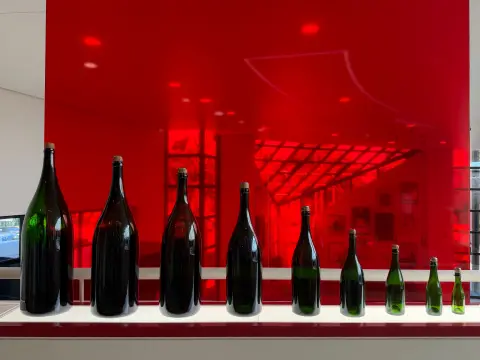
Protecting premium wine bottles during global transit requires advanced, high-performance packaging materials. Throughout the logistics chain, fragile glass bottles face severe thermal shock, high-impact drops, and abrasive label scuffing that can ruin commercial value. High-quality multi-layer bubble film provides the ultimate cushioning, structural integrity, and thermal insulation required to safeguard these luxury liquid assets from regional vineyards to overseas markets. Our specialized range of bubble film extrusion machinery is precision-engineered to meet the rigorous demands of the modern wine packaging and distribution sectors.
Advanced 7-Layer High-Speed Co-Extrusion Lines
Engineered specifically for premium export wines destined for extreme transit climates, this flagship manufacturing system co-extrudes multi-ply barrier film using advanced LDPE and PA (Nylon) resin blending. Operating at high-efficiency line speeds exceeding 120 m/min, the machine produces an ultra-strong barrier material that delivers 40% higher puncture resistance than standard dual-layer alternatives. This 7-layer structure acts as an exceptional thermal shield, insulating delicate vintages against sudden 15°C temperature swings encountered in scorching desert ports or freezing arctic hubs. Additionally, the superior structural integrity allows a single film wrap to absorb high-impact drops from up to 1.5 meters, eliminating breakage during rough handling.
Versatile 3–5-Layer Functional Extrusion Systems
Designed for manufacturing facilities that require highly customized packaging properties, these machines integrate multiple material feeds to introduce specialized functional layers into the bubble film. The flexible configuration easily accommodates thin PA tie-layers for moderate oxygen and gas barriers, specialized colored cores for vital UV-ray protection on sensitive rosés and white wines, and tacky outer layers for secure anti-slip palletizing.
- Low-Speed Models: Optimize flexibility, allowing quick mid-week die swaps for short custom production runs of 100–200 kg without generating material waste.
- Medium-Speed Models: Operate reliably at 60–80 m/min, utilizing an integrated PLC system that adjusts bubble height on the fly to match varying wine bottle diameters and case configurations.
- High-Speed Models: Incorporate advanced servo-driven unwind systems and heated corona treaters to maintain perfect surface tension, completely eliminating film delamination during high-volume, automated wrapping cycles.
Cost-Effective 2-Layer High-Efficiency Systems
Built to handle high-volume domestic distribution runs, standard case wine cushioning, and cost-effective outer carton liners, this dependable configuration focuses on maximizing yield while maintaining low operational costs. The 2-layer series is available in three distinct performance tiers to match specific factory floor requirements.
- Low-Speed Tier: Features an ultra-compact mechanical footprint designed to fit entirely inside a standard 20-foot shipping container, utilizing a user-friendly nip-and-wind setup that delivers a steady output of 800–1,200 kg per shift.
- Medium-Speed Tier: Serves as a heavy-duty production workhorse, increasing shift output without requiring heavy upfront capital investments.
- High-Speed Tier: Achieves impressive continuous speeds of 100 m/min by utilizing heavy-duty ball-bearing idlers and hardened-steel chill rolls, making it ideal for rapidly switching between 20µm taut wraps for internal box liners and 50µm soft bubble film for individual magnum bottle protection.
Proprietary Dual-Side Cooling & Heavy-Duty Tooling Engineering
Every machine across our entire product lineup is anchored by two critical engineering innovations that guarantee consistent, industrial-grade output. First, the proprietary grooved cooling station delivers uniform, rapid thermal management across the extrusion zone. This ensures perfectly symmetrical bubble formation on both sides of the moving film web, eliminating the warped roll effect and curly edges that frequently jam automatic high-speed case-packing and bagging machinery. Second, all critical extrusion dies and internal tooling components undergo a premium hard-chrome plating process. This heavy-duty surface treatment resists wear from continuous polymer friction, guaranteeing 5 million flawless production cycles and significantly reducing routine maintenance downtime.