Top Reasons Why Multi-Layer Bubble Film Extrusion Machines Fits Small Businesses
2026-06-30
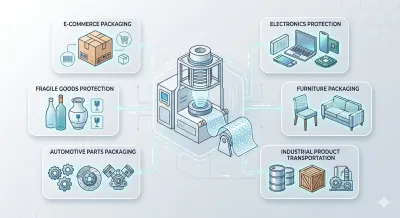
The explosive rise of worldwide e-commerce and logistics sectors has created an unprecedented global demand for high-quality protective packaging. For small businesses entering or expanding within the packaging manufacturing sector, the market presents a massive revenue opportunity alongside fierce competition.
Traditional single-layer manufacturing equipment often traps smaller enterprises in a cycle of high material expenses, rigid production capability, and low profit margins. Investing in modern multi-layer bubble film extrusion packaging technology acts as a strategic turning point. Empowered by advanced heavy-duty engineering, these systems allow small businesses to simultaneously decrease operational overhead and deliver premium-grade protective products that capture market share.
Technical Roadblocks of Legacy Single-Layer Extrusion Systems
Operating traditional single-layer bubble film extrusion machinery introduces severe operational and financial vulnerabilities for small packaging suppliers. A primary disadvantage stems from rigid raw material dependencies. Single-layer extrusion requires utilizing one hundred percent virgin plastic resin, such as Low-Density Polyethylene (LDPE) and Linear Low-Density Polyethylene (LLDPE), to guarantee basic film tensile strength and optical clarity. Because there is no mechanical separation of layers, attempting to incorporate low-cost recycled plastic scrap or industrial post-consumer regrind drastically compromises the final product quality. This forces small businesses to remain entirely vulnerable to volatile virgin resin commodity market prices.
Beyond raw material overhead, single-layer bubble films suffer from fundamental structural limitations. Without a layered polymer matrix, gas easily permeates through the single plastic wall, resulting in poor long-term air retention and premature bubble deflation during cross-border transit. The resulting protective film features weak puncture resistance and low tear strength, making it unsuitable for protecting fragile electronics, heavy automotive parts, or high-end cosmetics.
Furthermore, legacy manufacturing systems rely on outdated asynchronous induction motors and basic band heaters. These components consume massive amounts of electricity and display high reactive power losses. For smaller factories operating under localized industrial electrical grids, skyrocketing monthly utility invoices directly erode competitive margins, leaving little capital for business expansion or marketing.
Revolutionizing Production with Advanced Extrusion Engineering
To overcome these historical limitations, modern manufacturing lines leverage highly targeted component upgrades designed to maximize output efficiency and machine longevity. By isolating and re-engineering the critical points of material melting, shaping, and electrical drive management, these advanced multi-layer systems transform industrial bubble wrap production.
High-Precision Flat T-Die Head Technology
The core mechanical breakthrough of our high-performance extrusion system relies on an advanced, meticulously engineered flat T-Die head. Unlike traditional circular blown film dies or basic distribution manifolds, a premium T-Die ensures incredibly streamlined, laminar polymer melt flow distribution. The internal coat-hanger flow channel layout is CNC-machined to perfection, allowing distinct polymer streams from separate extruders to converge seamlessly right before the die lip.
This advanced mechanical configuration guarantees that multi-layer co-extrusion films maintain flawless cross-directional thickness uniformity across the entire web width. For small business owners, minimizing gauge variation limits material waste, eliminates uneven weak spots, and creates an exceptionally flat film surface that processes smoothly through downstream converting and laminating systems.
Ultra-Efficient Permanent Magnet Synchronous Motors
The integration of industrial Permanent Magnet Synchronous Motors (PMSM) across the primary extruder drives replaces outdated AC asynchronous motors. Driven by premium neodymium permanent magnets within the rotor, these advanced synchronous drives completely eliminate internal rotor copper losses and deliver an exceptionally high power factor across all operating speeds.
Whether running at low speeds during initial startup calibration or operating at maximum output capacity during a 24-hour manufacturing shift, a PMSM drive retains peak energy efficiency. When integrated with advanced variable frequency drives (VFD), this setup cuts comprehensive electrical power consumption by fifteen to thirty percent compared to legacy setups, drastically lowering monthly factory overhead.
High-Performance Mixing and Plasticizing Screws
To seamlessly process diverse polymer chemistries, our extrusion lines utilize custom-engineered barrier screws equipped with specialized dispersive and distributive mixing zones. These specialized screw profiles exert precise shear stress on the molten plastic, ensuring excellent thermal homogenization and uniform additive distribution. This superior plasticization capability allows factories to blend highly viscous materials, masterbatches, anti-static agents, and recycled regrind smoothly, ensuring the final extruded film remains clear of un-melted gels or structural imperfections.
Precision CNC Vacuum Bubble Forming Rollers
The final structural integrity of the protective bubble film depends heavily on the vacuum bubble forming section. The forming rollers feature deep CNC-machined internal water-cooling channels and mirror-finished surface cavities to ensure uniform bubble geometries and perfect thermal sealing. Backed by a high-pressure liquid ring vacuum system, the hot multi-layer film is drawn tightly into the cavities, forming uniform, robust air pockets with resilient, leak-proof perimeter seals that easily survive rigorous drop and pressure tests.
Why Our Multi-Layer Bubble Film Machine Fit Small Businesses
Transitioning to a multi-layer co-extrusion platform allows small packaging companies to implement an aggressive strategy for raw material cost reduction. Through advanced three-layer or five-layer co-extrusion technology, manufacturers can execute a clever "sandwich" material layout. The advanced T-Die head can distribute cheap recycled plastic regrind, post-industrial scrap, or calcium carbonate (CaCO3) mineral fillers into the core center layer, while encapsulating it between two thin outer layers of flawless, pristine virgin resin.
This manufacturing layout slashes raw material procurement costs by twenty to thirty percent. Despite the high recycled material content inside, the outer surfaces retains excellent heat-sealability, premium gloss, and smooth tactile quality. Small businesses can market a highly competitive, eco-friendly product line without sacrificing structural reliability.
At the same time, this multi-layer structure allows businesses to manufacture specialized protective films that command premium market prices. By running functional masterbatches through auxiliary satellite extruders, small shops can produce anti-static bubble wrap for high-tech circuit boards, UV-resistant bubble sheets for agricultural insulation, or specialized co-extruded films designed for immediate inline lamination with kraft paper, metalized aluminum foil, or expanded polyethylene (EPE) foam. This high versatility prevents small operations from being forced into low-margin price wars over generic packaging materials, enabling them to capture lucrative contracts from specialized electronics, medical device, and premium cosmetic brands.
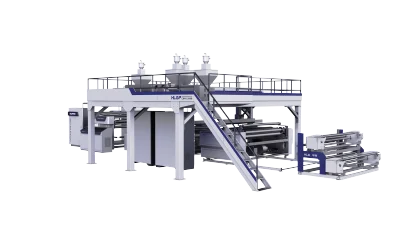
From an infrastructure perspective, these multi-layer extrusion lines are engineered with a compact, spacesaving footprint specifically optimized for small-scale industrial warehouses and regional fulfillment hubs. The integrated structural design minimizes physical factory space requirements, eliminating the need for massive facility expansions.
Furthermore, the entire extrusion line is managed through a centralized, high-speed PLC automation system featuring an intuitive graphical touch screen interface. Automated parameters for multi-zone PID temperature tracking, synchronized line speed matching, and precision tension control reduce human error and flatten the technical learning curve. A small production team of just one or two operators can comfortably manage the entire line from resin feeding to final roll winding, significantly reducing local labor expenses.
Finally, small businesses thrive on agility, and these multi-layer lines are uniquely optimized for fast, flexible manufacturing. The streamlined internal flow channels of the T-Die head and the high-torque responsiveness of the permanent magnet synchronous motors allow for exceptionally rapid material changeovers, color transitions, and gauge adjustments. Small factories can profitably accept short-run, highly customized local orders with tight delivery turnarounds—a flexible business model that massive, rigid conglomerates simply cannot replicate economically.
Upgrading to HLPE advanced multi-layer bubble film extrusion line is not merely an equipment expense; it represents a high-return strategic investment that addresses the exact vulnerabilities small enterprises face. By combining high-precision T-Die polymer distribution with the extreme energy savings of permanent magnet synchronous motors, these machines deliver a formidable blend of low production costs, top-tier product performance, and unparalleled operational flexibility.