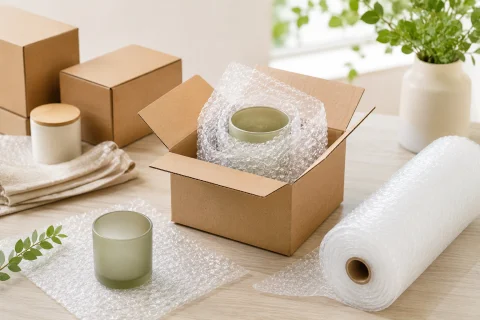
The global packaging industry is experiencing increasing demand for solutions that reduce material waste while maintaining reliable product protection. With the rapid growth of e-commerce logistics, international transportation, and industrial supply chains, packaging manufacturers need materials that provide effective cushioning performance, lightweight structures, and improved recyclability.
Traditional protective packaging methods often rely on excessive material usage or difficult-to-recycle structures, creating challenges for sustainable development. Bubble film has become an important solution for green packaging applications because of its lightweight air-cell structure, efficient impact protection, and compatibility with recyclable polymer materials.
A modern bubble film manufacturing machine provides the production foundation for creating high-quality sustainable bubble film products. Through advanced extrusion technology, multi-layer co-extrusion systems, and precise process control, manufacturers can produce protective packaging materials with stable performance while improving material efficiency and reducing production waste.
Environmental Problems of Traditional Protective Packaging Materials
Protective packaging plays an essential role in preventing damage during transportation and storage, but conventional packaging materials still face several environmental challenges. Many traditional cushioning solutions require large amounts of raw materials to achieve sufficient protection, increasing packaging weight and overall material consumption.
Rigid foam packaging and thick protective structures may provide strong impact resistance, but they often occupy significant storage space and create difficulties during recycling. Mixed-material packaging designs can also increase separation challenges, making it harder to establish efficient recycling processes.
In addition, unstable packaging performance may lead to higher product damage rates during transportation. When products are damaged, additional resources are consumed for replacement, return logistics, and secondary packaging. Therefore, the packaging industry requires materials that balance protection capability, resource efficiency, and environmental responsibility.
Bubble film addresses these challenges through its unique air-filled structure. Instead of relying only on solid plastic thickness, bubble film uses sealed air cells to provide cushioning protection. This structure allows manufacturers to reduce material consumption while maintaining effective shock absorption performance.
Bubble Film as an Efficient Material for Green Packaging Applications
Bubble film has become widely used in sustainable packaging applications because of its lightweight design and flexible protective performance. The air bubbles formed during extrusion create multiple cushioning points that distribute external pressure and reduce direct impact on packaged products.
Compared with traditional protective materials, bubble film offers several advantages for modern packaging requirements. Its lightweight structure helps reduce transportation weight, while its flexible surface allows it to wrap products with different shapes and sizes. This makes it suitable for industries including e-commerce logistics, furniture protection, electronics packaging, industrial transportation, and warehouse handling.
Another important advantage of bubble film is its compatibility with different environmentally friendly materials. Advanced bubble film production can utilize LDPE, LLDPE, recycled polyethylene materials, and biodegradable polymers such as PLA and PBAT depending on application requirements.
Recycled resin integration has become an important direction for sustainable packaging development. By incorporating post-consumer recycled materials or post-industrial recycled materials into suitable layers, manufacturers can reduce dependence on virgin polymers while maintaining necessary film strength and cushioning properties.

How Bubble Film Manufacturing Machine Improves Sustainable Film Production
A bubble film manufacturing machine plays a critical role in transforming sustainable material concepts into reliable packaging products. Modern extrusion systems are designed to provide stable material processing, accurate thickness control, and consistent bubble formation.
The extrusion system is one of the most important components affecting bubble film quality. Optimized screw designs improve polymer melting efficiency and ensure uniform material mixing. When processing recycled materials, stable melting conditions help reduce defects such as uneven thickness, poor bubble formation, and inconsistent mechanical properties.
Precise temperature control is also essential for sustainable bubble film production. Advanced heating and cooling systems maintain stable processing conditions throughout extrusion, helping manufacturers achieve uniform film thickness and reliable bubble structures. Stable temperature management reduces unnecessary material waste caused by production fluctuations.
Multi-layer co-extrusion technology further improves the flexibility of sustainable bubble film manufacturing. Different polymer materials can be combined into separate layers to achieve specific performance requirements. For example, outer layers can provide durability and sealing performance, while inner layers can incorporate recycled materials to improve environmental benefits.
This structure allows packaging manufacturers to optimize material usage without compromising product protection. By adjusting layer ratios and resin combinations, producers can develop bubble films suitable for different applications, from lightweight e-commerce packaging to demanding industrial transportation protection.
Intelligent Control Systems Enhance Production Efficiency and Material Utilization
Modern bubble film manufacturing machines integrate intelligent control technologies to improve production stability and reduce resource consumption. Automated temperature regulation, extrusion monitoring, and thickness control systems help maintain consistent product quality during continuous operation.
Automatic gauge control technology enables manufacturers to monitor film thickness variation and adjust production parameters in real time. Maintaining stable thickness helps reduce excessive material usage while ensuring that bubble film maintains sufficient cushioning performance.
Energy efficiency is another important consideration in sustainable packaging production. Optimized heating zones, efficient cooling systems, and improved mechanical structures help reduce unnecessary energy consumption during operation. Lower energy demand not only improves production economics but also supports manufacturers in achieving greener production goals.
Stable production processes also reduce raw material waste. When extrusion conditions remain consistent, fewer defective rolls are generated, improving overall material utilization and reducing production losses.
Applications of Sustainable Bubble Film Produced by Advanced Manufacturing Equipment
Bubble film produced by advanced extrusion equipment is widely applied across multiple industries where lightweight protection and environmental performance are required.
In e-commerce logistics, bubble film provides flexible protection for products such as consumer goods, household items, and fragile merchandise. Its lightweight structure helps reduce shipping weight while protecting products from vibration and impact during delivery.
For furniture and industrial product transportation, bubble film helps protect surfaces from scratches, dust, and handling damage. Large products often experience multiple loading and unloading processes, making reliable cushioning materials essential for maintaining product quality throughout the supply chain.
In electronics and precision product packaging, bubble film provides effective vibration resistance and surface protection. Multi-layer structures can be customized to improve mechanical strength and meet specific packaging requirements.
Medical equipment, pharmaceutical transportation, and food-related packaging applications also benefit from clean, lightweight protective materials. With appropriate material selection and production control, bubble film can support safe transportation while meeting modern packaging efficiency requirements.
Producing High-Quality Bubble Film with Advanced Manufacturing Technology
As a professional bubble film manufacturing machine manufacturer, we provide advanced production solutions designed to support green packaging development and efficient protective material manufacturing. Our bubble film machines integrate stable extrusion technology, multi-layer co-extrusion capabilities, precise temperature control, and intelligent production management systems to help customers achieve reliable film quality and optimized material utilization.
By supporting recycled materials, biodegradable polymers, and flexible resin formulations, our bubble film manufacturing machines provide a practical solution for manufacturers seeking sustainable packaging production. With consistent performance, efficient operation, and customizable configurations, our equipment helps global packaging producers manufacture high-quality bubble film products for modern environmental and transportation requirements.