Built to Last: Our 2012 Bubble Film Extrusion Machines Running Perfectly in Russia After 14 Years
2026-06-29
When heavy-duty plastic manufacturing operations invest in industrial packaging machinery, the single most critical parameter determining long-term commercial project viability is the return on investment driven by capital equipment durability. In early 2012, a major high-capacity protective packaging producer based in the Russian Federation commissioned our advanced multi-layer co-extrusion bubble film plant. Today, in 2026, that exact same production line continues to operate at peak nominal capacity, demonstrating zero critical component structural failures and delivering flawless structural film integrity for nearly a decade and a half of continuous multi-shift operation.
For modern plastic packaging manufacturers looking to source industrial hardware from a trusted Chinese bubble film machine manufacturer, this 14-year longitudinal operational case study stands as empirical validation. It shatters the persistent market misconception that cost-effective manufacturing machinery compromises structural lifecycle. By exploring the deep physical engineering principles, the three-screw mechanical configurations, and the real-world performance stability under extreme operational environments, we provide industrial engineers and procurement executives an objective technical breakdown of what it means to build heavy machinery that is truly built to last.
Equipment Features & Core Engineering Architecture
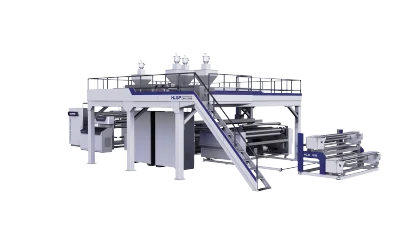
The foundational resilience of our high-speed co-extrusion bubble film manufacturing plant lies in its iterative architectural evolution. Developed through meticulous comparative analysis of elite global plastic processing machinery and real-world field-testing under extreme operational environments, our multi-layer co-extrusion high-speed stretch and bubble filmmaking plants are engineered for zero-deflection continuous stress processing.
High-Torque Three-Screw Extrusion Processing Engine
Unlike entry-level single-screw lines that suffer from poor thermal homogenization and limited polymer shear blending capabilities, our system features a specialized Three-Screw Extrusion System. These three separate processing screws operate in structural synchronization to melt, mix, and convey high-viscosity resin formulas at stable, pulse-free pressure outputs. The dedicated multi-screw setup allows for distinct thermal zone tracking, which ensures that complex linear low-density vs. low-density polyethylene configurations achieve perfect fluid-dynamic melt distribution without suffering localized molecular degradation.
Industrial production environments are highly sensitive to sonic hazards and mechanical fatigue. Our plant is engineered with high-precision helical gear reduction units and dynamically balanced screw assemblies, ensuring low noise output and ultra-stable mechanical running during maximum output operations. The design incorporates a sophisticated warm-up thermal system featuring high-efficiency ceramic heating elements combined with multi-zone forced-air cooling jackets. This layout achieves standard operational temperatures rapidly while mitigating thermal overshoot, preserving the long-term molecular structural integrity of the heavy-duty bimetallic barrels.
Advanced Automation and Structural Synchronization
The processing line is managed via an integrated Human-Machine Interface paired with an enterprise-grade programmable logic controller program. This control loop governs every thermodynamic and kinematic variable across the plant, including extruder motor rotational frequencies, melt pump pressures, die head thermal regulation, traction part velocity balancing, precision edge trimming slitting units, and synchronized winding part tension profiling.
By keeping the line under unified PLC closed-loop control, the machine completely avoids material binding or structural shock loads on mechanical drives during speed transitions. The roll collection terminal uses a heavy-duty finished roll automatic changing system configured on a dual-position double-workstage rotating winder. This enables continuous line operation; when a finished roll reaches its pre-programmed linear diameter, the pneumatic cutoff and automatic turret swap trigger instantly, keeping the upstream extrusion and forming stages at a perfect steady state.
Polymer Processing Fluid Dynamics & Material Compatibility
To deliver protective film sheets that meet international drop-testing and load-bearing metrics, the extrusion machinery must handle diverse rheological polymer profiles. Our machine series is specifically optimized to process complex formulations of Low-Density Polyethylene and Linear Low-Density Polyethylene.
Maximizing Melt Strength and Film Performance
Low-Density Polyethylene provides the high melt strength, elasticity, and excellent bubble-forming behaviors needed to shape clean, un-popped hemispherical air pockets. Meanwhile, Linear Low-Density Polyethylene supplies the raw tensile strength, high tear resistance, and puncture resistance needed for industrial shipping and heavy logistics.
By running these materials together through a multi-layer co-extrusion die, the machine creates a multi-layered film barrier. This combines the easy processability of LDPE with the high mechanical toughness of LLDPE. This technique also yields a one-side sticky effect during the lamination phase without requiring excessive high-cost tacky additives, providing a cost advantage for large-scale production.
Versatile Packaging Target Markets
Because the machine can tune film metrics on the fly via the HMI terminal, plants utilizing this hardware can produce protective materials for a wide variety of downstream commercial applications:
First, building and construction materials, including heavy-duty, large-bubble thermal isolation sheets, under-slab vapor barriers, and multi-layer reflective bubble foils used in modern climate-controlled industrial architectures.
Second, automotive aftermarket logistics, producing ultra-thick, puncture-proof bubble wraps designed to protect heavy steel components, alloy wheels, and painted body panels from scratching during long-distance transit across international trade corridors.
Third, precision hardware and electronics, making anti-static micro-bubble sheets engineered for delicate consumer electronics, logic boards, and highly polished metal assemblies that require comprehensive protection against electrostatic discharge and physical impact.
Industrial Case Study: The 14-Year Operational Analysis in the Russian Federation
To truly evaluate the performance of an industrial extrusion system, it must be tested over a long operational lifespan in demanding environments. In 2012, a high-capacity industrial packaging firm located in an industrial center within Russia integrated our co-extrusion line into their primary manufacturing facility to fulfill rising regional demands for protective shipping materials.
Resisting Extreme Cold and Long Thermal Cycles
Industrial plants in the Russian region face tough operating challenges, especially the large indoor-to-outdoor temperature swings of continental northern climates. Our machine barrels and heavy-duty structural steel bases are built using premium, stress-relieved structural alloys. This ensures the frame resists twisting or shifting, keeping the critical alignment between the main gearboxes, extruders, and the primary vacuum forming drum perfectly straight over years of use. By eliminating structural warping, the machine prevents uneven wear on the bearings and gears, keeping the line running smoothly since 2012.
Longitudinal Performance Metrics (2012 - 2026)
After 14 years of constant mechanical stress, the main extrusion die and forming components show zero measurable structural deviation. Real-world measurements of the finished film show that the machine maintains an exceptional thickness consistency across the entire web width. This demonstrates that the bimetallic screws and internal barrels have resisted long-term wear from polymer friction and pressure variations.
The factory's maintenance logs show the machine maintains an active operational availability score near perfection. Preventative maintenance is simple and straightforward, focused primarily on standard consumable parts like replacement heater bands, filter screen changers, and slitting blades, allowing the production line to remain highly productive month after month without experiencing costly mechanical overhauls.
Strategic B2B Global Procurement Guide
Maximizing Return on Investment (ROI)
When comparing manufacturing hardware vendors, smart procurement managers look beyond the initial purchase price to analyze the total lifetime cost of ownership. Buying an unoptimized, low-cost machine often leads to frequent downtime, expensive replacement parts, and high material waste. In contrast, investing in our high-end, heavy-duty co-extrusion plants delivers an optimal long-term financial return.
First, lower scrap rates because precise thermal and volumetric flow control keeps material waste to an absolute minimum during startup and changeovers. Second, reduced energy consumption as modern variable-frequency AC motor drives combined with high-insulation ceramic heaters lower overall power usage per ton of finished product. Third, decades of dependable service. As proven by our 14-year field study in Russia, our machinery is a durable asset that will continue producing high-quality film for decades, maximizing your plant's long-term profitability and expanding your competitive edge in the global market.