Why a China Customer Repurchased Our Bubble Film Extrusion Machine After 13 Years
2026-06-26
The global packaging industry operates on razor-thin margins and demanding delivery schedules. For high-volume and mid-volume packaging suppliers, the choice of capital equipment dictates long-term profitability. However, a persistent engineering bottleneck has plagued this sector for decades: the compromise between initial cushioning performance and production line longevity.
Many manufacturers fall into the trap of purchasing entry-level extrusion machinery from low-cost suppliers. These systems often deliver acceptable film quality during the initial commissioning phase. Yet, they degrade rapidly when subjected to continuous, heavy-duty industrial cycles. The consequences of utilizing substandard machinery are severe: frequent unplanned downtime, inconsistent bubble geometry, accelerated wear on critical components, and premature capital equipment failure within three to five years.
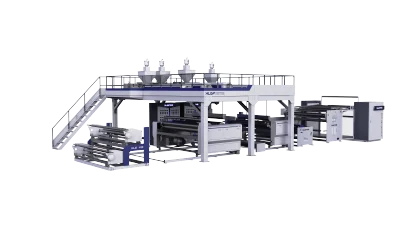
As a dedicated developer and manufacturer of high-end extrusion lines, we engineered our HLFPE Series Bubble Film Extrusion Machine precisely to eliminate this industry compromise. We treat machinery not as a temporary asset, but as an investment-grade foundation capable of sustaining production for over a decade.
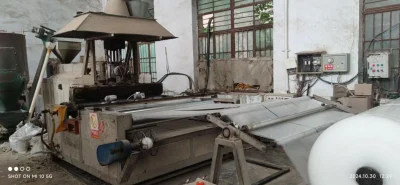
The value of this engineering philosophy is perfectly demonstrated by a prominent packaging supplier in Shandong, China. This client serves the high-stakes automotive and electronics sectors. When establishing their core production line, they prioritized absolute reliability and selected our HLFPE Series machine as their very first bubble film extrusion unit, which was successfully commissioned in 2012.
In 2025, after exactly 13 years of uninterrupted service from our first unit, this client returned to expand their capacity to meet soaring e-commerce and industrial demands. Having experienced firsthand the unmatched durability of our engineering, they bypassed competitor bidding entirely to purchase a second identical multi-layer composite HLFPE Series unit from us. This technical encyclopedia entry analyzes the precise engineering paradigms, metallurgical choices, and thermodynamic systems that enabled our machine to achieve this extraordinary operational lifespan and secure a repeat enterprise order.
SECTION 1: The Physics of Cushioning – Precision Co-Extrusion and Melt Flow Control
The primary function of our bubble film machine is to create an effective protective barrier. For sensitive automotive components and delicate electronic devices, the film must withstand localized impact, vibration, and prolonged compressive stress during cross-border logistics. Achieving this requires absolute control over polymer melt behavior.
1.1 Multi-Layer Co-Extrusion Synchronization
Our HLFPE Series machine utilizes an advanced multi-layer co-extrusion system. This system synchronizes the melt flow of up to three independent polymer layers (typically LDPE, LLDPE, and functional barrier resins). The core challenge in multi-layer co-extrusion is interfacial instability, which occurs when polymers of different viscosities and melt temperatures meet in the feedblock.
Our proprietary feedblock design ensures laminar flow conditions at the joining point. By eliminating turbulent mixing at the layer interfaces, our HLFPE Series maintains a perfectly distinct three-layer structure. This precise layering is critical for air retention: the outer layers are optimized for heat sealability and puncture resistance, while the core layer acts as a dense gas barrier, preventing air migration out of the bubble under load.
1.2 Eliminating Thickness Variations
Standard extrusion lines suffer from gauge variations, where the film thickness fluctuates across the die width. If the film wall is too thin at any point, the bubble will burst during the thermoforming or inflation stage, or fail prematurely under transit pressures.
We address this through a high-precision, T-style coat-hanger die. The internal geometry of our die is calculated using advanced computational fluid dynamics (CFD) to ensure equal residence time and uniform pressure distribution across the entire width of the manifold. This results in a uniform wall thickness with a variance of less than ±3%. This precision guarantees that every single bubble formed possesses identical structural integrity, eliminating weak points that could jeopardize delicate cargo.
1.3 Superior Air Retention and Micro-Geometry
The mechanical protection offered by bubble film relies entirely on the air pressure trapped inside the pockets. If the polymer molecules are improperly aligned during extrusion, micro-porosity develops, leading to rapid deflation over a 30-day shipping cycle.
Our control system regulates the precise blow-up ratio and vacuum forming pressure at the forming roller. This structural control optimizes molecular orientation along both the machine direction (MD) and transverse direction (TD). The resulting bubbles display superior air retention capabilities, meeting strict ISO 2248 drop-test standards even when carrying heavy, sharp-edged automotive brake components over thousands of miles of sea and rail freight.
SECTION 2: Heavy-Duty Metallurgical Engineering for 24/7 Continuous Operation
The standout achievement of the Shandong client’s first HLFPE Series unit is its 13-year operational lifespan without major structural or mechanical overhaul. This longevity is the direct result of our "zero-compromise" material selection and mechanical design philosophy.
2.1 High-Torque, Our Oversized Gearbox Architecture
The gearbox is the heart of the mechanical drive train, converting high-speed motor rotation into the high-torque output required to shear solid polymer pellets into a homogenous melt. Standard machines often use commercial-grade gearboxes operating near their thermal and mechanical limits, leading to gear pitting and bearing failure under continuous load.
We integrate an oversized, heavy-duty helical gearbox featuring case-hardened and ground gears (accuracy grade DIN 5 or better). The gearbox housing is cast from high-tensile strength iron to dampen micro-vibrations that cause structural fatigue. Crucially, our gearbox features an independent, dual-channel closed-loop oil lubrication and cooling system. This keeps oil temperatures well below degradation thresholds, ensuring the internal bearings never experience dry friction or thermal deformation during unbroken 24/7 manufacturing cycles.
2.2 Our Hardened Screw and Barrel Metallurgy
The extrusion screw and barrel are subjected to extreme abrasive wear from polymer friction and high-pressure chemical corrosion at elevated temperatures. To prevent the degradation that typically ruins entry-level extruders within 3 to 5 years, our screws undergo a rigorous multi-stage metallurgical treatment:
1. Base Material Selection: High-grade SACM 645 or 38CrMoAlA alloy steel is selected for its superior core toughness.
2. Precision Machining: The screw flights are milled to exact tolerances using CNC multi-axis machines.
3. Plasma Transferred Arc (PTA) Welding: A proprietary tungsten carbide or cobalt-based bimetallic alloy layer is deposited onto the flight crests, where friction is highest.
4. Deep Gas Nitriding: The entire screw and barrel assembly undergoes a nitriding cycle lasting over 72 hours, achieving a surface hardness exceeding HV 950.
This deep-case hardness ensures that after 13 years of shifting abrasive polymer blends, the clearance between the screw flights and the internal barrel wall of our machine remained well within nominal engineering tolerance. This eliminated the internal melt backflow that causes severe output drop-offs in older machinery.
2.3 Structural Frame Rigidity and Alignment Stability
Extrusion lines are long, heavy assemblies. Over time, the constant thermal expansion and contraction, combined with the weight of the steel rollers, can cause structural sag in weak chassis frames. Misalignment of even a fraction of a millimeter between the die, the vacuum forming roller, and the primary nip rollers introduces uneven tension, causing film wrinkles and winding errors.
Our HLFPE Series is constructed on a heavy, stress-relieved structural steel H-beam base. After welding, the entire chassis undergoes thermal stress relief to eliminate residual internal stresses. This guarantees that our machine frame remains perfectly straight and rigid for decades, keeping the critical forming components in precise geometric alignment regardless of floor vibrations or temperature shifts.
SECTION 3: Advanced Thermodynamics – Mastering Extreme Ambient Environments
Northern China experiences stark seasonal temperature variations. In the industrial zones of Shandong, summer ambient temperatures inside unconditioned factory floors frequently exceed 40°C, accompanied by high relative humidity. For conventional plastic extrusion lines, these conditions represent a thermodynamic nightmare, causing melt instability, cooling failures, and electronics overheating.
3.1 Our Oversized Vacuum Forming and Cooling Rollers
The conversion of a molten polymer sheet into structured, air-filled bubbles requires rapid, uniform heat extraction. If the cooling rate is too slow, the polymer remains amorphous and weak, causing the bubbles to collapse under their own internal pressure before solidifying.