Bubble Film Manufacturing Machine Applications in Supply Chain Management

2026-08-10

Modern supply chain operations require faster response times, lower inventory costs, and more flexible packaging solutions. As e-commerce fulfillment, industrial distribution, and global logistics continue to expand, companies are facing increasing pressure to optimize every stage of the packaging process. Traditional protective packaging methods that depend on pre-produced bubble film rolls often create challenges in storage, transportation, and material management.

Our bubble film manufacturing machine provides an efficient alternative by enabling companies to produce protective packaging materials directly at the point of use. This approach helps warehouses, fulfillment centers, and manufacturers improve packaging efficiency while reducing dependence on external suppliers.

Challenges of Traditional Protective Packaging in Supply Chain Operations

Supply chain management relies on smooth coordination between inventory storage, order processing, and product delivery. However, packaging material management is often overlooked as a key factor affecting operational efficiency. Many businesses still purchase large quantities of finished bubble film rolls and store them in warehouses until needed. Although this method appears convenient, it creates several long-term limitations.

One of the biggest challenges is excessive packaging inventory. Pre-made bubble film rolls require considerable storage space because the material contains a large volume of air within the cushioning structure. For warehouses handling thousands of products with different packaging requirements, storing multiple sizes and specifications of bubble film can occupy valuable floor space that could otherwise be used for product inventory or automated logistics equipment.

Another issue is limited packaging flexibility. Modern supply chains handle a wide variety of products, including electronics, household goods, automotive components, industrial parts, and fragile consumer products. A single standard bubble film specification may not be suitable for every application. Operators often need to cut, combine, or adjust packaging materials manually, increasing labor requirements and creating unnecessary material waste.

Transportation efficiency is also affected by relying on externally supplied bubble film. Because finished bubble film rolls contain a significant amount of air volume, shipping large quantities from packaging suppliers to warehouses can increase logistics costs. In addition, companies may experience delays when suppliers cannot quickly respond to sudden increases in packaging demand during seasonal peaks or large-scale production periods.

The Role of Bubble Film in Modern Supply Chain Protection

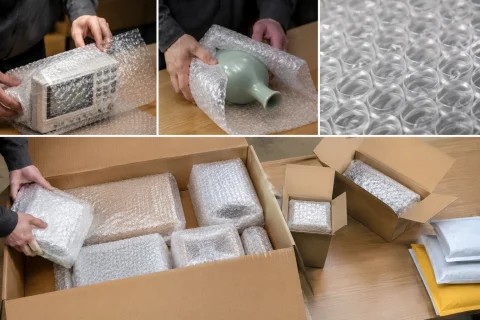
Bubble film remains one of the most widely used protective packaging materials because of its lightweight structure, cushioning performance, and adaptability. The air-filled bubble layer absorbs impact energy during transportation and helps protect products from vibration, compression, and surface damage.

In supply chain applications, bubble film is commonly used for protecting fragile products such as glass containers, electronic devices, precision components, and high-value consumer goods. The cushioning effect reduces direct contact between products and external surfaces, helping businesses minimize damage risks throughout storage, handling, and transportation processes.

Beyond basic protection, bubble film also supports more efficient packaging operations. Its lightweight characteristics help reduce the overall weight of shipping packages, while its flexible structure allows packaging teams to wrap products with different shapes and dimensions. When produced according to actual packaging requirements, bubble film can provide sufficient protection without excessive material consumption.

On-Demand Bubble Film Production for Fulfillment Centers

E-commerce fulfillment centers represent one of the most important application areas for bubble film manufacturing machines. These facilities process large numbers of orders every day, often involving products with different sizes, shapes, and protection requirements. Maintaining sufficient packaging materials for every possible product category can become a complex inventory management task.

Installing a bubble film manufacturing machine inside a fulfillment environment allows operators to produce protective film directly near packing stations. This reduces the need for large storage areas dedicated to packaging materials and enables faster response to changing order volumes.

For example, a fulfillment center handling electronics accessories, cosmetics, or household products can adjust production based on actual daily demand. Lightweight two-layer bubble film can be produced for standard parcels, while thicker multi-layer structures can be manufactured for products requiring enhanced cushioning protection.

This on-demand production model supports lean warehouse management by reducing packaging inventory levels and improving the utilization of available space. It also minimizes downtime caused by packaging material shortages, especially during high-volume sales periods.

ComparisonTraditional Bubble Film SupplyBubble Film Manufacturing Machine
Material SupplyDepends on external suppliersOn-demand in-house production
Storage RequirementRequires large inventory spaceReduces packaging storage needs
FlexibilityFixed sizes and specificationsAdjustable film structures
EfficiencyMore handling and waiting timeDirect supply to packing lines
Cost ControlHigher inventory and logistics costsBetter material utilization

Integration with Automated Logistics and Packaging Lines

Modern logistics facilities increasingly rely on automation systems, including conveyor lines, sorting equipment, and intelligent packing stations. Packaging materials must be available continuously to maintain stable production flow. A bubble film manufacturing machine can be integrated into these environments to provide a reliable source of protective packaging material.

By positioning the machine close to packing areas or conveyor exits, companies can shorten the distance between film production and packaging application. This reduces manual transportation of bulky bubble film rolls and improves overall workplace efficiency.

Advanced equipment configurations can support different production requirements, including two-layer, three-layer, five-layer, and seven-layer bubble film structures. Low-speed and medium-speed systems are suitable for small and medium packaging operations, while high-speed multi-layer machines can support large industrial logistics applications.

Stable extrusion control, precise temperature management, and consistent bubble formation ensure that every production batch maintains reliable cushioning performance. These characteristics are especially important for automated packaging environments where material consistency directly affects operating efficiency.

Customized Protective Packaging for Industrial Supply Chains

Industrial supply chains often involve products with higher protection requirements than standard consumer shipments. Machinery parts, automotive components, medical equipment, and precision instruments may require customized packaging solutions due to their weight, shape, or sensitivity.

Traditional bubble film supply methods may not always provide the ideal material specification for these applications. A bubble film manufacturing machine allows manufacturers to select suitable film structures according to different product requirements.

Two-layer bubble film is commonly used for lightweight products and general protection applications. Three-layer and five-layer bubble film structures provide enhanced strength and cushioning performance for heavier industrial components. Seven-layer bubble film machines are designed for applications requiring higher barrier performance and improved mechanical durability.

By producing different film thicknesses, widths, and layer configurations, companies can create packaging materials that match specific logistics requirements. This reduces over-packaging, improves material utilization, and helps achieve more sustainable supply chain operations.

Improving Supply Chain Efficiency Through Advanced Manufacturing Technology

The adoption of a bubble film manufacturing machine provides multiple operational advantages beyond simple material production. One major benefit is the reduction of packaging inventory costs. Companies no longer need to maintain excessive stocks of different bubble film sizes, allowing warehouse space to be allocated more efficiently.

Material optimization is another important advantage. Producing bubble film according to actual requirements helps reduce unused material and packaging waste. Advanced extrusion systems can maintain stable film thickness and bubble quality, ensuring consistent protection performance throughout production.

Energy efficiency and operational reliability are also important considerations for modern manufacturers. Industrial bubble film equipment is designed for continuous operation, with durable components, stable heating systems, and precise control technologies that support long-term production requirements.

For companies focused on improving supply chain visibility and reducing operational uncertainty, in-house bubble film production provides greater control over packaging availability. Instead of depending entirely on supplier schedules, businesses can create their own protective packaging supply according to production demand.

Powering Supply Chain Growth with High-Performance Bubble Film Manufacturing Machines

As a professional bubble film manufacturing machine manufacturer, we provide production equipment designed for the changing requirements of modern supply chains. From compact packaging stations to large-scale industrial operations, our machines offer flexible configurations for different film structures, production capacities, and application environments. Through stable extrusion performance and customized engineering support, we help customers establish an efficient in-house bubble film production process that reduces dependence on external supply and improves packaging responsiveness.

Bubble Film Manufacturing Machine Applications in Supply Chain Management

GET IN TOUCH NOW

*We respect your privacy. When you submit your contact information, we agree to only contact you in accordance with our Privacy Policy.