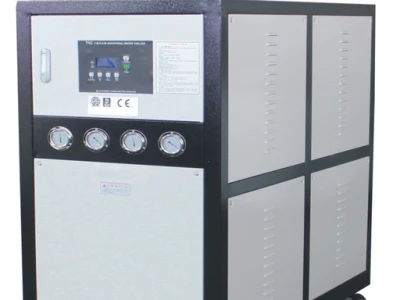
In high-speed stretch film machines, the circulating water cooling system plays an important role in controlling the cooling process of the molten polymer. This system uses a closed-loop design to regulate water temperature precisely, helping maintain stable processing conditions and consistent film quality during production.
During extrusion, the molten polymer leaving the die contains significant thermal energy generated from heating and shear inside the extruder. If cooling is unstable, the film may develop problems such as haze, uneven thickness, or reduced mechanical strength. A circulating water cooling system uses temperature sensors and PID controllers to keep the cooling water temperature within a narrow range, allowing the film to cool at a controlled and stable rate.
Controlled cooling is important for maintaining the internal structure of the film. The cooling rate influences how polymer molecules align and solidify during film formation. Stable temperature conditions help produce film with consistent clarity, strength, and mechanical performance across the entire roll.
The cooling system also supports stable material feeding in the extrusion process. In the feed section of the extruder, dedicated cooling circuits help prevent excessive heat transfer to the raw material hopper. This prevents plastic pellets from softening prematurely, ensuring smooth and continuous material feeding during production.
In addition, multi-stage cooling systems are commonly used in stretch film lines. The first chill roll removes heat rapidly from the molten film to stabilize its shape and thickness. Subsequent cooling stages gradually reduce the remaining heat and relieve internal stresses within the film. This staged cooling process helps maintain stable film structure and consistent performance throughout production.
Through precise temperature control and efficient heat removal, the circulating water cooling system supports stable extrusion, reliable film formation, and consistent stretch film quality in modern production lines.