Increasing Demands for Efficient Stretch Film Production
The global demand for stretch film continues to grow as industries such as logistics, warehousing, manufacturing, agriculture, and export packaging require more reliable protection solutions for goods transportation. Modern packaging operations are no longer focused only on producing basic wrapping film; manufacturers must deliver stretch film with consistent thickness, stable stretching performance, high puncture resistance, and reliable load-holding capability.
For stretch film producers, improving product quality while maintaining production efficiency has become a key challenge. Traditional production equipment often struggles to meet the requirements of high-speed manufacturing due to limitations in thickness control, mechanical stability, and energy management. These challenges directly influence production costs, material utilization, and the overall competitiveness of film manufacturers.
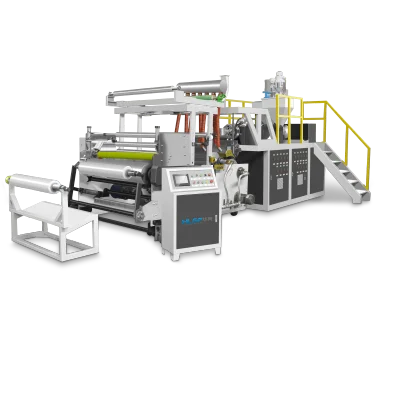
An advanced stretch film manufacturing machine is designed to overcome these production bottlenecks through precise control systems, optimized mechanical structures, and intelligent automation technologies, helping manufacturers achieve more stable and efficient film production.
Thickness Variation Challenges in Stretch Film Manufacturing
One of the most important challenges in stretch film production is maintaining consistent film thickness throughout the entire production process. As customers increasingly require thinner films with higher strength, even small thickness deviations can affect film performance during transportation and packaging applications.
Traditional stretch film production lines may experience unstable extrusion pressure, inconsistent material distribution, and limited die adjustment accuracy. These issues are especially noticeable in multi-layer co-extrusion production, where different polymer layers must be precisely controlled to achieve the required balance between strength, elasticity, and cost efficiency.
For example, excessive thickness variation can cause weak areas within the film structure. During pallet wrapping, these weak points may lead to film breakage, uneven tension distribution, or insufficient load stability. For industries handling heavy products, export goods, and automated packaging operations, inconsistent film quality can increase packaging failures and reduce operational efficiency.
High-quality stretch film plays an essential role in securing products during storage and transportation. In warehouse logistics, the film must maintain stable wrapping force to prevent pallet movement. In industrial packaging, it must provide reliable protection against dust, moisture, and handling damage. Therefore, producing uniform stretch film is directly connected with packaging reliability across different industries.
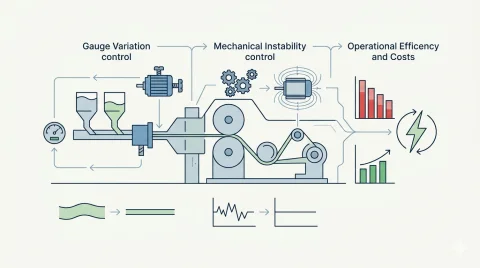
Our stretch film manufacturing machines address these issues by integrating advanced extrusion control and closed-loop thickness monitoring systems. Real-time feedback technology allows the machine to continuously monitor film thickness and automatically adjust production parameters when variations occur. With improved die control, extrusion stability, and multi-layer distribution accuracy, manufacturers can achieve more consistent film quality while reducing raw material waste.
Mechanical Stability Problems in High-Speed Stretch Film Production
As market competition increases, stretch film manufacturers are continuously looking for higher production speeds and greater output capacity. However, increasing line speed also creates higher requirements for machine structure, drive accuracy, and winding stability.
Traditional machines may encounter mechanical vibration, speed fluctuation, and unstable tension control during continuous operation. These problems often come from outdated transmission systems, insufficient drive precision, or mechanical wear after long-term production. When the extrusion, cooling, stretching, and winding processes cannot operate synchronously, the final film roll may experience uneven edges, loose winding, or telescoping problems.
For packaging industries using automatic wrapping systems, roll quality is particularly important. Poorly wound rolls can interrupt packaging lines, increase operator adjustment time, and reduce overall production efficiency. Even when the film itself meets quality standards, unstable winding performance can affect the customer experience and create additional production losses.
A reliable stretch film manufacturing machine improves production stability through optimized mechanical design and high-precision drive technology. Advanced drive systems, including PMSM (Permanent Magnet Synchronous Motor) solutions, provide more accurate speed control and smoother operation compared with traditional motor systems. Their lower vibration characteristics help maintain synchronization between extrusion, pulling, and winding units.
In addition, precise tension management allows the machine to produce uniform rolls with better edge alignment. This is especially valuable for manufacturers producing industrial stretch film, machine-grade stretch film, and high-performance multi-layer films where consistent roll quality is essential.
By improving mechanical stability, modern stretch film production equipment enables manufacturers to operate at higher speeds while maintaining reliable film performance and reducing production interruptions.
High Energy Consumption and Rising Operating Costs
Energy consumption and maintenance costs are also major concerns for stretch film manufacturers. Since stretch film production is a continuous extrusion process, even small improvements in energy efficiency can significantly affect long-term operating expenses.
Many traditional production lines rely on standard drive components that may generate higher energy losses during operation. Older systems often require more frequent manual adjustment and maintenance due to mechanical wear, resulting in increased downtime and labor costs.
For manufacturers producing thousands of tons of stretch film annually, inefficient equipment can create significant cost pressure. Higher electricity consumption increases production costs per kilogram of film, while unexpected machine downtime can affect delivery schedules and customer satisfaction.
Stretch film applications continue expanding in areas such as e-commerce logistics, food packaging, industrial transportation, and export supply chains. To meet these growing demands, manufacturers need production equipment that not only increases output but also improves cost efficiency.
A modern stretch film manufacturing machine integrates energy-saving drive technology, intelligent control systems, and optimized mechanical components to reduce operating costs. PMSM motors provide high efficiency and improved power utilization, helping reduce unnecessary energy consumption during different production conditions.
Meanwhile, PLC automation systems allow operators to monitor and adjust production parameters more efficiently. Automated control reduces dependence on manual intervention, improves process consistency, and helps maintain stable operation during long production cycles.
Through improved energy management and intelligent automation, advanced stretch film production equipment helps manufacturers lower operating expenses while maintaining competitive production capacity.
Improving Stretch Film Production Through Advanced Manufacturing Technology
The challenges faced by stretch film manufacturers are closely connected with product quality, production efficiency, and long-term profitability. Thickness inconsistency, mechanical instability, and rising operational costs can limit the growth potential of traditional production lines.
Advanced equipment solutions provide a practical approach to overcoming these challenges. A high-performance stretch film manufacturing machine combines precision extrusion technology, intelligent automation, and efficient drive systems to support stable and continuous film production.
For manufacturers producing different types of stretch film, including standard wrapping film, industrial packaging film, and multi-layer high-performance film, equipment reliability directly influences product competitiveness. Stable production parameters help ensure consistent film properties, while automated control systems improve efficiency and reduce unnecessary waste.
By upgrading production technology, film manufacturers can achieve better quality control, higher productivity, and improved cost management. These advantages are becoming increasingly important as customers demand more reliable packaging materials and faster supply chain performance.
Innovative Stretch Film Manufacturing Machine Technology for Industrial Packaging Applications
Choosing the right production equipment is a critical decision for stretch film manufacturers seeking long-term growth. A reliable machine must provide not only high output capability but also stable operation, accurate control, and efficient resource utilization.
Our stretch film manufacturing machines are developed with advanced extrusion control, precision drive systems, intelligent PLC automation, and energy-efficient components to help manufacturers overcome common production challenges. From improving thickness uniformity to enhancing mechanical stability and reducing operating costs, our solutions support consistent and efficient stretch film production.
With flexible configurations for different production requirements, our machines help customers produce high-quality stretch film for logistics, industrial packaging, export transportation, and other demanding applications. By combining engineering expertise with practical manufacturing experience, we provide reliable equipment solutions that help film producers improve productivity and strengthen their market competitiveness.