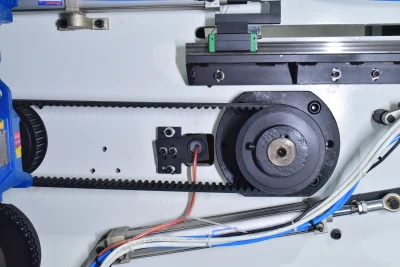
In stretch film manufacturing, stable transmission is essential for maintaining consistent film quality and reliable machine operation. In 2-layer, 3-layer, and 5-layer stretch film machines, the timing belt plays an important role in ensuring accurate and synchronized power transmission throughout the production process. It connects key drive components and helps coordinate the movement of different parts of the production line.
The primary function of the timing belt is to provide precise synchronous motion between critical components such as the extrusion system, cooling rollers, and winding unit. These components must operate at carefully controlled speeds to maintain stable film formation. In multi-layer stretch film production, particularly in 5-layer systems, accurate synchronization helps ensure proper layer alignment and uniform film thickness. Stable transmission reduces the risk of uneven film structure, weak points, and fluctuations in mechanical properties, which are important factors in maintaining consistent film performance.
High-performance timing belts are typically constructed with reinforced tensile cords and durable, wear-resistant materials. This structure allows the belt to maintain dimensional stability under continuous load. It minimizes stretching and prevents slipping during operation, ensuring accurate speed control and reliable power transfer between machine components.
Timing belts are also designed to perform reliably in demanding production environments. Stretch film machines often operate for extended periods and at elevated temperatures. Timing belts provide stable operation under these conditions while maintaining low vibration and low noise levels. Compared with traditional chain drive systems, timing belts require less lubrication and maintenance, which helps reduce downtime and supports efficient, continuous film production.