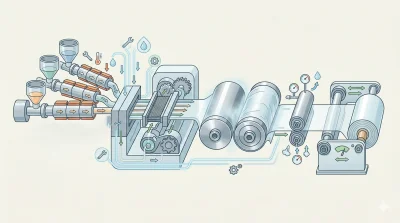
Stretch Film Machine Holiday Shutdown & Maintenance Guide
2026-07-02
Proper holiday shutdown procedures are critical for ensuring long-term stability, mechanical protection, and consistent product quality in modern stretch film production. For manufacturers operating advanced stretch film extrusion machines, especially multi-layer co-extrusion lines, an unplanned or poorly executed shutdown can lead to severe polymer degradation, equipment wear, and unstable film performance upon restart.
Challenges During Holiday Shutdown in Stretch Film Production
In high-speed film extrusion environments, even short interruptions require carefully controlled shutdown strategies. When production stops for several days or weeks, residual polymer, trapped heat, and unprotected mechanical components can create long-term damage.
One of the most critical issues is thermal degradation of stagnant resin inside the extruder barrel. When polymer materials remain exposed to elevated temperatures without flow, they begin to oxidize and carbonize. This leads to black specks, gels, and contamination that directly reduce film transparency and mechanical consistency.
Multi-layer systems introduce additional complexity. In 2-layer, 3-layer, and 5-layer Stretch Film Extrusion Machines, each extruder and feed channel may contain different materials with different thermal sensitivities. If these layers are not independently purged, cross-contamination can occur, resulting in unstable layer ratios and reduced performance in stretch, puncture resistance, and cling properties.
Another major challenge comes from improper cooling and temperature control. Many traditional shutdown practices leave heating zones at elevated temperatures for too long, which accelerates polymer degradation and causes unnecessary wear on heater bands and thermocouples.
Mechanical systems such as melt pumps and screen changers are also vulnerable. Residual pressure or trapped polymer can harden inside these components, leading to blockage, startup torque overload, or even mechanical seizure after cooling.
Finally, pneumatic and electrical systems face environmental risks during long shutdown periods. Moisture accumulation in air lines can cause corrosion in valves and actuators, while improper electrical isolation may expose sensitive servo components to long-term stress.
Limitations of Traditional Shutdown Practices
In many production environments, shutdown procedures still rely heavily on operator experience rather than standardized automation. This creates inconsistency and increases the risk of equipment damage.
Without integrated control systems, temperature reduction is often performed manually, leading to uneven cooling across different heating zones. This increases the likelihood of localized overheating and polymer charring inside the barrel or die head.
Multi-layer co-extrusion lines are particularly vulnerable to incomplete purging. Operators may focus on the main extruder while neglecting secondary feed systems, adapters, or distribution blocks. This results in hidden residual material that contaminates the next production cycle.
Manual cleaning of melt pumps and screen changers is another weak point. Incomplete removal of polymer residues from dead zones can significantly reduce flow stability during restart. Similarly, pneumatic systems are often left pressurized, increasing the risk of internal condensation and long-term corrosion.
Protective measures for rollers and shafts are also frequently insufficient. Precision chrome-plated surfaces used in chill rolls and winding systems require proper anti-corrosion treatment, yet in many cases they are only lightly cleaned or left exposed to ambient humidity.
These limitations highlight the need for more advanced, standardized shutdown systems integrated directly into modern Stretch Film Extrusion Machines.
Intelligent Advantages of Modern Stretch Film Extrusion Systems
Modern Stretch Film Extrusion Machines are increasingly equipped with intelligent PLC-based control systems that significantly improve shutdown safety and repeatability.
One of the most important advancements is automated thermal profiling. Instead of manually adjusting temperatures, operators can execute pre-programmed shutdown curves through the HMI interface. Heating zones are reduced in a controlled sequence, typically lowering barrel zones to a safe transitional range around 140–160°C and die head zones to 130–150°C depending on material specifications. This controlled cooling minimizes thermal shock and prevents carbon buildup.
Multi-layer synchronization is another key advantage. Each extrusion unit can be purged individually while maintaining system coordination. This ensures that all layers, including adhesive layers and functional barrier layers, are fully cleared without cross-contamination. For high-end 5-layer Stretch Film Extrusion Machines, this synchronized purging is essential for maintaining film structural integrity.
Advanced melt pump and screen changer systems also improve shutdown performance. Controlled low-frequency operation allows complete material displacement before full shutdown, reducing internal stress and preventing blockage. Continuous screen changers can cycle through multiple strokes to eliminate stagnant zones, improving restart stability.
Pneumatic systems in modern machines are designed with integrated depressurization functions. Filter-regulator-lubricator units can be drained automatically, reducing moisture retention and protecting valve systems from corrosion. Electrical systems with servo drives are also equipped with controlled discharge functions to eliminate residual capacitor energy safely.
In addition, precision rollers and shafts are treated as critical components requiring specialized protection. Anti-corrosion coatings combined with anti-static wrapping materials help preserve surface quality during long shutdown periods, ensuring consistent optical performance of the produced film after restart.
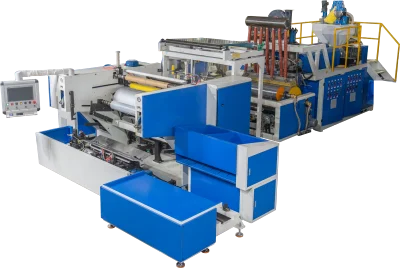
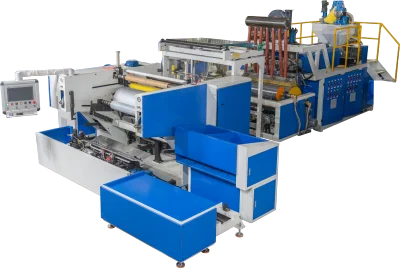
Structured Shutdown Workflow for Extrusion Line Protection
A properly designed shutdown process for Stretch Film Extrusion Machines should follow a structured and automated sequence that ensures all subsystems are safely stabilized.
The first stage involves controlled purging of all extrusion barrels. High-stability purging compounds are introduced at normal processing temperatures to fully displace production resin. Each extruder in a multi-layer system must be purged individually to eliminate cross-channel contamination.
Once purging is complete, thermal zones are gradually reduced through programmed control. This ensures uniform cooling across the entire system and prevents localized overheating. Automated systems allow this process to be executed consistently without operator variation.
The melt delivery system is then stabilized. Melt pumps operate at minimal frequency until all remaining material is expelled from the die head. Screen changers are opened or cycled to remove residual polymer from filtration elements and prevent solidification inside flow channels.
After material systems are cleared, pneumatic circuits are fully depressurized. Air lines are drained to eliminate moisture, and all actuators are returned to a relaxed mechanical state. Electrical systems are safely discharged according to manufacturer guidelines to prevent long-term stress on sensitive components.
Finally, mechanical surfaces are protected. Chill rolls, guide rollers, and winding shafts are cleaned and coated with non-silicone anti-corrosion agents. These surfaces are then sealed using protective polyethylene or anti-static wrapping to isolate them from humidity and airborne contaminants.
Benefits of Standardized Shutdown on Long-Term Production Stability
Implementing a standardized holiday shutdown procedure delivers significant long-term benefits for manufacturers operating Stretch Film Extrusion Machines.
First, it dramatically reduces startup waste. Clean barrels and properly purged systems eliminate the need for extended material flushing during restart, saving both time and raw material costs.
Second, it improves product consistency. By preventing polymer degradation and cross-layer contamination, manufacturers can maintain stable film gauge, clarity, and mechanical performance from the first production roll after restart.
Third, it extends equipment lifespan. Controlled thermal cycling, proper depressurization, and anti-corrosion protection reduce wear on heaters, sensors, pumps, and precision mechanical components.
Finally, it improves operational safety and efficiency. Automated shutdown routines reduce dependency on manual intervention, minimizing human error and ensuring repeatable results across production cycles.
Conclusion
For modern packaging manufacturers, especially those using advanced Stretch Film Extrusion Machines, holiday shutdown is not simply a pause in production but a critical maintenance phase that directly impacts long-term efficiency and product quality.
A properly engineered shutdown strategy combining controlled purging, automated thermal management, system depressurization, and surface protection ensures that extrusion lines remain stable, clean, and ready for immediate high-quality restart.
As production systems continue to evolve toward higher speeds and more complex multi-layer structures, intelligent shutdown automation will become an essential standard for ensuring consistent performance, reduced downtime, and sustainable manufacturing efficiency.