Stretch Film Losing Cling? Troubleshooting Guide for Extrusion Machines
2026-07-02
In modern packaging production, consistent film self-cling is one of the most critical performance indicators for stretch film. Poor self-cling directly affects pallet stability, reduces wrapping efficiency, and can even interrupt fully automated packaging lines. For manufacturers using stretch film extrusion machines, the challenge is not only to produce film efficiently, but also to maintain stable tack performance across long production runs. The root cause is usually an imbalance between raw material formulation and processing conditions inside the extrusion system.
Importance of Self-Cling in Industrial Stretch Film Applications
Self-cling determines how effectively stretch film layers adhere to each other during pallet wrapping. Stable adhesion ensures load integrity during transportation, improves stacking safety, and supports uninterrupted operation in automatic wrapping systems. When cling performance becomes unstable, the result is uneven wrapping tension, loose pallet loads, and increased material waste. In high-speed logistics environments, even small fluctuations in cling performance can lead to significant operational inefficiencies.
Primary Factors Influencing Cling Performance
Tackifier Dosage and Material Precision
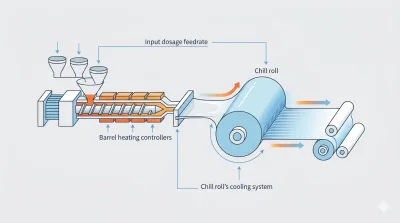
One of the most important factors affecting cling is the accurate dosing of tackifying agents such as Polyisobutylene (PIB) and ULDPE plastomers. These materials must be precisely controlled to ensure uniform distribution throughout the polymer melt. When dosing is inconsistent, tackifier concentration varies across the film, resulting in uneven surface adhesion. Modern stretch film extrusion machines often integrate gravimetric feeding systems to maintain stable additive ratios and improve production consistency.
Thermal Control and Additive Stability
Temperature stability inside the extrusion barrel has a direct impact on additive performance. If melt temperatures exceed the optimal processing window, typically between 180°C and 230°C, thermal degradation of PIB can occur. Once degraded, the tackifying effect is permanently reduced and cannot be recovered downstream. Multi-zone heating control is therefore essential in stretch film extrusion machines to maintain a stable thermal environment and protect functional additives throughout the extrusion process.
Cooling Dynamics and Crystallization Behavior
After extrusion, the molten polymer is rapidly cooled on a chill roll. This cooling stage determines the crystallization structure and directly influences tackifier migration to the film surface. If cooling is too rapid or uneven, additives become trapped within a dense crystalline structure, reducing surface adhesion. Stable chill roll temperature control is essential to ensure controlled crystallization and proper tackifier blooming, which directly improves cling performance.
Limitations of Conventional Stretch Film Extrusion Machines
Traditional extrusion systems often lack precise control over key processing parameters. Volumetric feeding systems may cause inconsistent additive dosing, while unstable heating zones can lead to overheating and additive degradation. In addition, insufficient chill roll temperature control results in uneven crystallization across the film surface. High shear stress from conventional screw designs further contributes to thermal instability, reducing overall film quality and consistency in cling performance.
Advanced Engineering Solutions in Modern Stretch Film Extrusion Machines
Multi-Zone Temperature Control for Thermal Stability
Advanced extrusion systems incorporate multi-zone heating control to maintain stable melt conditions throughout the barrel. By keeping processing temperatures within the optimal range, thermal degradation of functional additives is minimized. This improves both material efficiency and long-term stability of cling performance.
Precision Cooling Systems for Uniform Crystallization
High-performance chill roll systems with precise temperature regulation ensure consistent cooling rates across the film width. Maintaining a stable cooling profile allows controlled crystallization and proper migration of tackifying agents to the surface. This significantly improves film uniformity and reduces variation in self-cling performance.
Low-Shear Screw Design and Melt Optimization
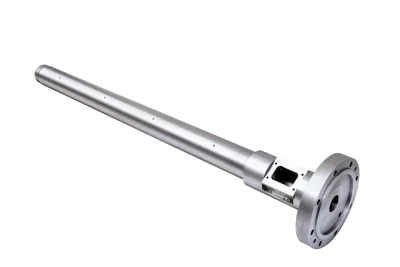
Optimized barrier screw designs reduce shear stress and prevent localized overheating inside the extrusion system. Lower shear conditions help preserve additive integrity and improve melt homogeneity. This is particularly important in high-output stretch film extrusion machines where thermal buildup can easily degrade functional materials.
Surface Treatment Systems for Enhanced Adhesion
Corona treatment systems are used to increase surface energy and improve adhesion characteristics. Properly controlled surface treatment ensures stable unwinding behavior and prevents film blocking during storage. This is essential for maintaining consistent performance in automated packaging applications.
Process Optimization in Different Machine Configurations
2-Layer Stretch Film Extrusion Machines
In 2-layer systems, temperature stability is the primary factor affecting cling performance. Maintaining melt temperatures within 180°C to 230°C helps prevent PIB degradation and ensures stable baseline adhesion. Gravimetric dosing further enhances consistency by ensuring accurate additive distribution across both layers.
3-Layer Stretch Film Extrusion Machines
Three-layer systems provide improved structural control but require stricter cooling management. Maintaining chill roll temperature stability within ±1°C ensures uniform crystallization behavior. Proper surface energy control through corona treatment also enhances unwind performance and reduces adhesion inconsistencies.
5-Layer Stretch Film Extrusion Machines
In 5-layer systems, shear heating and structural complexity significantly increase process sensitivity. Reducing screw speed or using optimized barrier screw designs helps minimize thermal stress. Controlled cooling prevents the formation of dense micro-crystalline layers that can block tackifier migration and reduce surface adhesion effectiveness.
Integrated System Advantages of Modern Stretch Film Extrusion Machines
When all process systems are properly integrated, modern stretch film extrusion machines deliver significant performance improvements. These include more stable self-cling behavior, improved compatibility with automated packaging systems, reduced material waste, and enhanced multi-layer film uniformity. High-speed production stability is also greatly improved, allowing manufacturers to meet demanding industrial output requirements.
Self-cling instability in stretch film is the result of multiple interacting factors, including material formulation, thermal processing, cooling behavior, and machine design. Modern stretch film extrusion machines address these challenges through integrated control systems that manage every stage of production.
By combining precise additive dosing, stable thermal management, controlled cooling dynamics, and optimized mechanical design, manufacturers can achieve consistent film quality and reliable self-cling performance. This not only improves packaging efficiency but also enhances load stability and reduces operational costs in industrial applications.