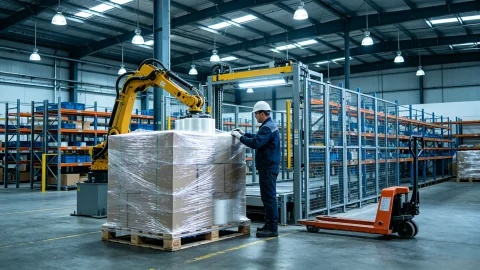
In high-throughput manufacturing facilities, in-plant logistics efficiency depends on more than transportation equipment and warehouse management systems. The stability of pallet loads, the consistency of packaging materials, and the reliability of the wrapping process all directly influence production continuity and material handling performance.
Many factories still face hidden packaging bottlenecks caused by inconsistent stretch film quality, excessive material consumption, and unstable pallet protection. When packaging materials fail to provide sufficient holding force or when film production cannot maintain stable output, problems can quickly spread from the packaging area to storage zones and shipping operations.
Our modern stretch film manufacturing machine provides a reliable solution by improving film quality consistency, optimizing material utilization, and supporting automated production processes. Through advanced extrusion technology, multi-layer film structures, and intelligent control systems, manufacturers can produce high-performance stretch film that helps create a smoother and more efficient in-plant logistics workflow.
Packaging Challenges Affecting In-Plant Logistics Efficiency
Unstable Pallet Loads Caused by Inconsistent Stretch Film Performance
Pallet stability is a critical factor in modern internal transportation systems, especially in industries using automated warehouses, forklifts, conveyor lines, and high-speed distribution operations. Poor-quality stretch film with unstable thickness, insufficient elasticity, or inconsistent adhesive performance may cause pallet loads to shift during movement.
Traditional film production methods with limited process control can result in uneven film properties across the roll. During wrapping operations, some areas may provide insufficient holding force while other areas may create excessive tension, affecting packaging efficiency and increasing the risk of product damage.
High-performance stretch film produced by an advanced stretch film manufacturing machine is designed to provide balanced mechanical properties. Controlled thickness distribution, stable stretching performance, and optimized resin formulations help ensure that pallets remain secure during handling, storage, and transportation.
Material Waste Caused by Limited Film Control Capability
Material efficiency has become an important consideration for manufacturers seeking to reduce packaging costs and improve sustainability. Simply increasing film thickness is no longer an effective approach because modern packaging applications require better performance with lower material consumption.
Conventional stretch film production may experience problems such as uneven gauge distribution, unstable edge quality, and limited pre-stretch capability. These issues often result in higher material usage because operators need to apply additional film layers to achieve the required load stability.
A stretch film manufacturing machine with precise extrusion control and automatic adjustment technology helps manufacturers achieve better film uniformity and production consistency. Advanced cast film systems can support accurate thickness control, stable cooling conditions, and optimized winding performance, allowing thinner films to maintain reliable packaging strength.
By combining appropriate resin selection, such as LLDPE and metallocene materials, with optimized layer structures, manufacturers can achieve down-gauging opportunities while maintaining required performance for industrial packaging applications.
Packaging Interruptions Affecting Continuous Manufacturing Operations
For factories operating continuous production lines, packaging reliability is closely connected with overall manufacturing efficiency. A sudden shortage of qualified stretch film, unstable film rolls, or frequent material replacement can interrupt downstream packaging operations.
One common issue is unstable winding quality. If film tension is not properly controlled during production, rolls may have uneven edges, loose structures, or inconsistent unwinding performance. These problems can increase changeover frequency and reduce the efficiency of automatic wrapping equipment.
Modern stretch film manufacturing machines integrate servo-controlled winding systems and precise tension management technology to improve roll consistency. Stable winding performance ensures smoother film feeding, reduces production interruptions, and supports continuous packaging operations in demanding industrial environments.
The Role of High-Performance Stretch Film in Modern In-Plant Logistics
Enhancing Pallet Stability During Internal Transportation
Stretch film plays an essential role in securing goods throughout the internal logistics process. Whether products are transferred between production areas, stored in warehouses, or prepared for shipment, the packaging film must maintain sufficient holding force to prevent load movement.
High-quality stretch film provides several important advantages, including strong tensile performance, excellent puncture resistance, and stable cling properties. These characteristics allow manufacturers to protect different types of palletized products, including industrial components, consumer goods, construction materials, and export packages.
A well-designed stretch film structure balances strength and flexibility. The inner layer can provide strong grip performance, while the middle layer improves mechanical strength and the outer layer helps control surface characteristics. This multi-layer approach allows manufacturers to achieve reliable packaging performance without unnecessary material consumption.
Reducing Packaging Costs Through Advanced Film Structures
Modern stretch film production focuses on performance optimization rather than simply increasing film thickness. Multi-layer co-extrusion technology allows manufacturers to assign different functions to different layers, creating films with improved efficiency.
For example, a 3-layer or 5-layer stretch film structure can combine different polyethylene materials to achieve better load retention, higher puncture resistance, and improved processing performance. The inner layer can enhance pallet adhesion, while the outer layer can reduce unwanted blocking between packaged products.
This approach supports lightweight packaging strategies by enabling thinner films to deliver comparable or improved performance. For large-scale manufacturing operations, even small improvements in film consumption can create significant long-term cost savings.
How Stretch Film Manufacturing Machine Improves Logistics Performance
Servo-Controlled Winding System for Stable Film Quality
The winding system is one of the key components affecting final stretch film quality. During continuous production, maintaining stable tension across the entire film width is essential for producing uniform rolls.
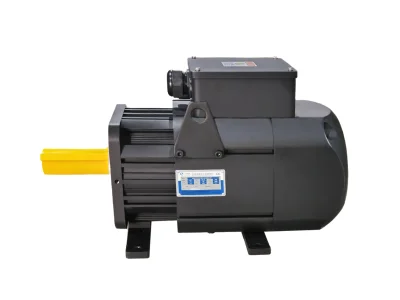
Advanced stretch film manufacturing machines use servo-driven winding systems to provide accurate speed control and consistent tension adjustment. Compared with traditional mechanical control methods, servo technology allows smoother operation, better synchronization between extrusion and winding processes, and improved roll formation.
Stable winding quality benefits downstream logistics by ensuring that stretch film rolls can be installed and used efficiently on automatic or semi-automatic wrapping equipment. This reduces material handling interruptions and supports more predictable packaging operations.
Multi-Layer Co-Extrusion Technology for Customized Packaging Requirements
Different industries have different packaging requirements. Heavy industrial products may require higher puncture resistance, while automated warehouse applications may require excellent holding force and smooth unwinding performance.
Multi-layer co-extrusion technology enables the stretch film manufacturing machine to produce customized film structures for specific applications. Through precise layer distribution, manufacturers can optimize the balance between strength, elasticity, cling, and surface performance.
Three-layer and five-layer configurations are widely used for industrial stretch film production. These systems allow manufacturers to improve packaging performance while maintaining efficient resin usage. By selecting suitable materials and layer combinations, factories can produce films that meet various requirements from warehouse storage to international transportation.
Intelligent Control System for Higher Production Efficiency
Automation has become an important trend in modern film production. A stretch film manufacturing machine equipped with PLC control systems, automatic monitoring functions, and recipe management capabilities helps manufacturers maintain stable production parameters.
Intelligent control technology can monitor key production factors such as extrusion temperature, line speed, and winding conditions. This improves repeatability between production batches and reduces dependence on manual adjustment.
For manufacturers producing multiple film specifications, recipe storage functions allow operators to quickly switch between different production settings. This improves production flexibility and helps reduce downtime during product changes.
Integration with Smart Manufacturing Systems
As factories continue moving toward digital manufacturing, production equipment is increasingly connected with factory management systems. Advanced stretch film manufacturing machines can support communication with industrial automation platforms to improve production visibility and scheduling efficiency.
Integration with MES or factory data systems allows manufacturers to monitor production information, analyze equipment performance, and optimize material planning. This creates better coordination between film production, packaging operations, and warehouse management.
Through intelligent manufacturing concepts, companies can improve not only film production efficiency but also the overall performance of their internal logistics systems.
Building More Efficient In-Plant Logistics Through Advanced Film Manufacturing
In modern manufacturing environments, packaging performance has a direct impact on logistics efficiency. Stable pallet protection, optimized material usage, and reliable film supply are essential factors for maintaining smooth internal transportation and warehouse operations.
Our high-performance stretch film manufacturing machine enables manufacturers to produce consistent, durable, and cost-effective stretch film while supporting automation and smart production requirements. By improving packaging materials from the source, companies can achieve better operational efficiency and create a stronger foundation for future manufacturing development.