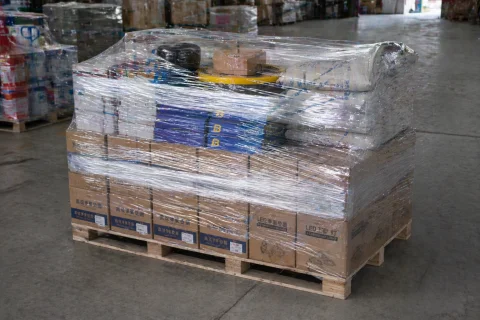
Modern industrial logistics relies heavily on palletized transportation to improve handling efficiency, storage utilization, and supply chain management. From chemical materials and building products to food ingredients and industrial components, bulk cargo is frequently transported over long distances by road, rail, and sea. During these transportation processes, pallets are exposed to continuous vibration, sudden impact, humidity changes, and handling pressure, making load stability a critical requirement.
Traditional packaging methods often struggle to maintain sufficient holding force while controlling material consumption. For packaging film manufacturers, the challenge is not only producing stretch film with high strength and reliable cling performance but also achieving this performance with reasonable production costs. This has increased the demand for efficient and flexible film production solutions, especially the 2-layer stretch film manufacturing machine, which provides a practical balance between film performance, equipment investment, and operating efficiency.
Limitations of Conventional Stretch Film for Heavy-Duty Pallet Packaging
Bulk pallet stabilization requires packaging materials that can maintain consistent tension and prevent product movement throughout the transportation cycle. However, many conventional stretch film solutions face limitations when applied to heavy-duty industrial packaging.
One major challenge is load shifting during transportation. Bulk goods often have uneven surfaces, different package shapes, or high pallet stacking heights. When pallets experience vibration during truck transportation or repeated impacts during loading and unloading, insufficient film strength or unstable holding force can cause cargo displacement, package damage, or even pallet collapse. These problems increase product loss risks and create additional costs for logistics operators.
Another limitation comes from traditional single-layer stretch film production. A single polymer structure must provide both internal cling performance and external mechanical strength, which creates difficulties in balancing different functional requirements. Increasing film thickness can improve strength, but it also increases material consumption and packaging costs. For industrial users requiring large volumes of packaging film, excessive material usage directly affects operational efficiency.
At the same time, advanced multi-layer film production systems with five or more layers can provide excellent film performance but may not always match the investment requirements of every packaging film manufacturer. More extruders, complex layer control systems, and higher maintenance requirements increase equipment costs and operational management pressure. Many medium-sized film producers require a more economical solution that can deliver professional industrial film quality without unnecessary complexity.
The Role of Stretch Film in Industrial Pallet Stabilization
High-performance stretch film plays an essential role in maintaining pallet integrity during storage and transportation. By applying controlled stretching force around the pallet, the film creates a compact packaging structure that helps hold individual products together as a stable unit.
For bulk pallet applications, quality stretch film needs to provide several key characteristics. High tensile strength helps the film withstand external forces during transportation, while elastic recovery allows the film to maintain wrapping tension over time. Reliable cling performance ensures that multiple film layers remain connected, improving overall load containment.
In addition to improving cargo stability, efficient stretch film also helps reduce packaging consumption. Films with optimized mechanical properties can achieve effective load securing with fewer wrapping cycles or lower film weight. This allows logistics companies and manufacturers to reduce packaging costs while maintaining transportation safety.
However, producing stretch film with these balanced properties requires advanced manufacturing technology. The performance of the final film depends greatly on the extrusion process, layer structure design, thickness control, and production stability of the equipment. This is where the 2-layer stretch film manufacturing machine provides a targeted solution for industrial packaging applications.
How 2-Layer Stretch Film Manufacturing Machine Solves Bulk Packaging Challenges
The 2-layer stretch film manufacturing machine uses co-extrusion technology to create a functional A/B layer structure, allowing each layer to perform a specific role. Compared with single-layer film production, the two-layer structure provides manufacturers with greater flexibility in controlling film performance while maintaining a simpler production system compared with complex multi-layer lines.
The inner layer can be optimized for high cling performance, improving the adhesion between film layers and enhancing pallet holding force. This is especially important for bulk cargo that requires strong unitization during long-distance transportation. The outer layer can be designed for higher tensile strength and puncture resistance, helping the film withstand sharp edges, irregular package shapes, and mechanical stress.
This functional separation allows manufacturers to produce industrial-grade stretch film with a balanced combination of strength, elasticity, and stability. For example, when packaging bagged powders, chemical products, or construction materials, the film can provide strong wrapping force without requiring excessive thickness. This helps reduce material consumption while maintaining reliable pallet stabilization performance.
Another advantage of the 2-layer stretch film manufacturing machine is its cost efficiency. Compared with five-layer or seven-layer production systems, two-layer co-extrusion equipment generally requires fewer extrusion units and a simpler control structure. This reduces initial investment requirements and lowers maintenance complexity. For film manufacturers targeting industrial packaging markets, this creates a faster return on investment while still meeting customer expectations for high-quality stretch film.
The machine design also supports stable production quality through precise extrusion control and optimized processing parameters. Modern systems can be equipped with automatic temperature control, accurate thickness adjustment, and reliable winding systems to maintain consistent film output. Stable film thickness distribution is especially important for bulk pallet applications because uneven film quality may lead to weak points during stretching and wrapping.

Stretch Film Production for Different Bulk Cargo Applications
The application range of 2-layer stretch film produced by this type of equipment covers various industrial packaging fields. In the chemical industry, the film is commonly used for securing drums, bags, and containerized materials where stable transportation performance is required. In building material industries, it helps protect heavy products such as bagged materials, panels, and industrial components during storage and delivery.
For food ingredient and agricultural supply chains, stretch film provides clean and efficient pallet wrapping solutions for bulk bags, cartons, and packaged raw materials. In manufacturing industries, it supports the transportation of metal parts, electronic components, and other industrial products that require protection against movement and handling damage.
Export logistics is another important application area. International shipments often experience longer transportation distances and more complex handling conditions. High-performance stretch film produced by a reliable stretch film manufacturing machine helps maintain pallet stability throughout the entire logistics process, reducing the risk of damaged goods and improving supply chain reliability.
Efficient Two-Layer Co-Extrusion Technology for High-Performance Stretch Film Production
As industrial packaging requirements continue to increase, film manufacturers need production equipment that combines performance, efficiency, and reasonable investment costs. The 2-layer stretch film manufacturing machine provides an effective solution by delivering optimized film structures, stable production quality, and flexible application possibilities for bulk pallet stabilization.
With advanced co-extrusion technology, precise processing control, and efficient operating performance, our stretch film manufacturing machine helps customers produce high-strength and cost-effective stretch film for demanding industrial markets. The equipment is designed to support manufacturers seeking reliable production capacity, reduced operating costs, and competitive advantages in the global packaging industry.
By choosing a professional stretch film manufacturing machine solution, packaging film producers can achieve consistent film quality, improve production efficiency, and provide dependable pallet stabilization products for logistics, manufacturing, and export applications.