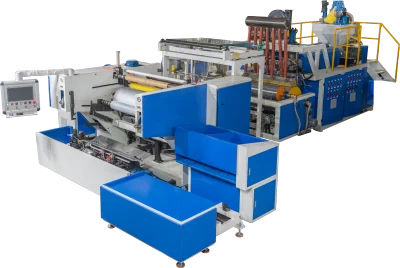
Operating Instructions for a 2-Layer Stretch Film Machine
2026-08-26
Consistent, repeatable operation is what separates a stretch film production line that delivers reliable output from one that constantly fights quality variation. A 2-layer stretch film machine combines two functional layers into a single co-extruded film, but how that machine is operated day to day has just as much influence on final film performance as the equipment design itself. As more packaging producers look to scale output while reducing dependence on operator experience, understanding how a modern, PLC-controlled 2-layer stretch film machine actually runs, step by step, makes it much easier to see where the real efficiency gains come from.
The Problem with Manual, Non-PLC Operation
Older stretch film lines that lack PLC-based intelligent control depend almost entirely on operator judgment to keep the process running correctly. Preheating timing, layer ratio adjustments, and tension control are all handled manually, which means the quality of the output depends heavily on the individual running the machine that day rather than on a standardized, repeatable process.
Without a PLC system tying these functions together, temperature, tension, and layer ratio all have to be adjusted separately and by hand, with no automatic feedback linking one parameter to another. This makes the startup sequence more error-prone, since steps like system checks, staged preheating, and simultaneous dual-layer feeding rely on the operator remembering and correctly sequencing each stage rather than the machine enforcing it automatically.
The bigger problem shows up once production is running. When thickness variation or tension instability develops, a manual operation has no way to detect it until an operator happens to notice, by which point a meaningful length of film may already be out of specification. Shutdown and cleaning suffer from the same issue. Without an automated staged shutdown sequence, uneven cooling and inconsistent cleaning between runs gradually wear down equipment and increase the risk of startup issues on the next run. On top of the quality risk, this operating model is expensive to sustain, since skilled operators take time to train and any turnover in experienced staff introduces immediate instability into production. As downstream industries demand more consistent film and faster changeovers, manual, non-PLC operation increasingly becomes the limiting factor rather than the machine itself.
Where Stretch Film Machines Are Used Across Industries
Stretch film produced on a 2-layer machine serves a wide range of industries, each with its own performance priorities. Logistics and warehousing operations rely on it to secure palletized goods for transport and storage, where puncture resistance and consistent cling are critical to load stability. Food and agricultural applications depend on strong moisture resistance, dust protection, and UV stability for products stored over extended periods. Building materials and metal goods producers need film capable of securing heavy, irregularly shaped loads without tearing, while e-commerce and fast-moving consumer goods operations need film that performs consistently across frequent changeovers and varied packaging specifications.
Even though these industries value different specific properties, they share a common requirement: production has to be stable, efficient, and consistent from one roll to the next. That shared requirement is exactly what a well-designed, intelligently controlled operating process is built to deliver.
How a 2-Layer Stretch Film Machine Operates with PLC Intelligent Control
A PLC-controlled 2-layer stretch film machine replaces manual judgment with a coordinated, automated sequence at every stage of production.
System Check
Rather than relying on an operator to manually inspect each subsystem, the PLC system automatically checks power, heating, and cooling systems before startup, catching issues that a manual walk-through might miss.
Intelligent Preheating
Each temperature zone follows a preset gradual heating program, bringing the system up to target temperature in a controlled sequence. Once target temperature is reached, the system signals or automatically initiates extruder startup, removing the need for an operator to repeatedly check and confirm temperature manually.
Extruder Startup and Dual-Layer Feeding
The PLC coordinates both material streams so that the two layers are fed simultaneously and in proper proportion, eliminating the feeding mismatches that occur when each layer is adjusted independently by hand.
Die Forming and Cooling
Molten material is formed into a uniform film through the die, while the cooling roller system provides real-time feedback to maintain consistent thickness, adjusting automatically rather than waiting for a manual inspection to catch deviation.
Layer Ratio and Parameter Adjustment
Operators set layer ratios and processing parameters directly through the PLC interface, and the system executes and holds those settings automatically, replacing the repeated manual fine-tuning that non-PLC systems require.
Automatic Tension Control
The winding system continuously monitors and adjusts tension in real time, keeping rolls uniform and free of wrinkles or breakage without relying on an operator's judgment of how tight a roll should feel.
Intelligent Staged Shutdown
At the end of a run, the system follows a preset sequence to gradually reduce heating and stop the extruders in the correct order, protecting equipment from the wear that abrupt or improperly sequenced manual shutdowns cause.
Maintenance and Cleaning Prompts
The system can flag cleaning and maintenance intervals automatically, supporting a more consistent maintenance routine than one left entirely to operator memory.

How Intelligent Operation Improves Efficiency Across Industries
The shift from manual to PLC-controlled operation delivers measurable benefits that extend well beyond a single production run. Automated execution of key parameters reduces dependence on highly experienced operators, lowering training time and reducing the production instability that comes with staff turnover, a particular advantage for logistics and fast-moving consumer goods operations with higher workforce turnover.
Real-time monitoring and adjustment of thickness and tension catch deviations immediately rather than after the fact, reducing scrap rates in applications like food and agricultural storage packaging where film consistency directly affects product protection. A visual, PLC-based interface for setting layer ratios and processing parameters also simplifies changeovers, which matters most for e-commerce and consumer goods producers running frequent specification changes throughout the day. Meanwhile, automated tension control and staged shutdown sequences reduce mechanical wear over time, extending equipment life and cutting unplanned downtime, a meaningful advantage for building materials and metal packaging operations running heavy, continuous production loads.
Built for Consistent, Efficient Operation
Moving from manual, experience-dependent operation to a PLC-controlled process is one of the most direct ways to improve consistency, reduce waste, and lower long-term operating costs on a stretch film production line. Our 2-layer stretch film machine is engineered around this kind of intelligent control, with automated system checks, programmed preheating sequences, synchronized dual-layer feeding, real-time tension and thickness monitoring, and a staged automatic shutdown process built into standard operation. Whether your production supports logistics, food and agricultural storage, building materials, or fast-moving consumer goods, this level of automated control helps deliver the consistency and efficiency modern packaging operations require.Discover a stretch film extrusion machine solution designed to match your film structure, output, and production requirements.