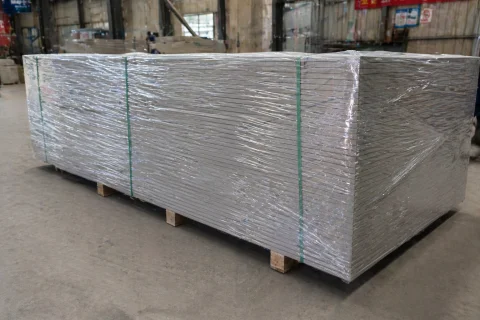
Lightweight building materials such as EPS insulation panels, gypsum boards, and aluminum profiles require packaging films that can provide reliable protection without damaging product surfaces. However, traditional stretch films often struggle to balance flexibility, strength, and durability during transportation and storage. Our two-layer stretch film manufacturing machine provides an advanced solution by producing films with different functional layers, allowing manufacturers to achieve both gentle protection and strong load stability.
Problems of Traditional Stretch Film Solutions for Building Material Packaging
Single-layer stretch film has been widely used in industrial packaging, but it has limitations when applied to lightweight construction materials. Because all performance requirements must be achieved within one material layer, manufacturers often need to choose between softness, strength, and cost efficiency.
For fragile materials such as insulation boards and decorative panels, excessive wrapping force can create unnecessary pressure on the product surface. Increasing film thickness may improve durability, but it also increases packaging costs and material usage. On the other hand, reducing thickness without improving film structure can result in insufficient holding force, causing unstable loads during transportation.
Another challenge is maintaining package stability for large but lightweight products. Building materials are often stacked into high-volume pallets, and their low weight-to-size ratio makes them more sensitive to vibration and movement during truck transportation. Conventional films with limited elastic recovery may lose tightening force after stretching, reducing the overall stability of the package.
Outdoor storage conditions also create additional requirements. Construction materials may be temporarily stored at warehouses or construction sites where they are exposed to dust, humidity, and sunlight. Standard stretch films without enhanced outer protection may experience reduced durability, especially when contacting sharp metal edges or rough surfaces.
These challenges demonstrate that traditional single-layer stretch film solutions may no longer fully meet the requirements of lightweight building material packaging. A two-layer stretch film manufacturing machine solves these problems by separating different performance requirements into independent layers.
Advanced Two-Layer Co-Extrusion Technology for Better Film Performance
The main advantage of a two-layer stretch film manufacturing machine is its ability to process two different resin formulations simultaneously. Unlike traditional single-layer extrusion systems, the machine allows manufacturers to design each layer according to its specific function.
The inner layer is optimized for flexibility, adhesion, and controlled stretching performance. By using suitable polyethylene materials such as high-performance LLDPE or metallocene-based resins, the inner layer can provide excellent elastic recovery and stable cling pro
perties. This soft-contact layer is especially suitable for fragile building materials because it creates a secure wrapping force without causing unnecessary surface damage.
For EPS and XPS insulation panels, this flexible inner layer helps maintain package stability through elastic recovery rather than excessive compression. The film can tightly secure lightweight products while reducing the risk of deformation on corners and edges.
The outer layer focuses on mechanical protection. By incorporating high-strength polymers and functional additives, the outer layer improves puncture resistance, tear resistance, and environmental durability. This protective layer works as a barrier against external impacts during transportation and handling.
For aluminum profiles and light steel keels, the reinforced outer layer helps the film maintain integrity when wrapping products with sharp edges or irregular shapes. Instead of relying on thicker film, manufacturers can achieve better protection through optimized layer structures.
Precision T-Die Design Ensures Stable Film Quality
The performance of a two-layer stretch film depends not only on resin selection but also on the precision of the co-extrusion system. A high-quality stretch film manufacturing machine uses an advanced T-die system to ensure uniform material distribution and consistent film thickness.
Precise melt flow control helps prevent weak points caused by uneven thickness. This is especially important for building material packaging because the film must maintain strength after stretching during wrapping operations. With stable thickness control, the film can achieve reliable performance even when stretched at approximately 200% to 300% elongation.
The co-extrusion die also ensures strong bonding between the two layers. During production, different resin materials are combined through controlled temperature and pressure conditions, creating a stable composite structure without additional lamination processes. This allows manufacturers to produce thinner films with improved performance compared with conventional single-layer alternatives.
The combination of accurate temperature control, stable extrusion pressure, and optimized layer distribution contributes to consistent film quality for continuous industrial production.
Applications in Lightweight Building Materials Packaging
EPS and XPS Insulation Panel Packaging
EPS and XPS insulation panels are widely used in energy-efficient buildings, but their lightweight structure makes them vulnerable during transportation. Large panel sizes can create unstable pallet loads, while fragile edges may be damaged by excessive pressure.
The two-layer stretch film produced by a stretch film manufacturing machine provides a balanced packaging solution. The elastic inner layer offers gentle holding force, while the stronger outer layer improves load stability. This combination helps reduce pallet movement during transportation and protects insulation panels from impact damage.
Gypsum Board and Prefabricated Panel Packaging
Gypsum boards and prefabricated construction panels require protection against moisture, dust, and surface contamination. Even minor damage or environmental exposure can affect product appearance and installation efficiency.
By using high-cling resin formulations, the inner layer provides reliable wrapping performance around stacked boards. The outer layer improves resistance against external conditions, helping maintain cleaner and more stable packaging during storage and transportation.
Aluminum Profile and Light Steel Keel Packaging
Aluminum profiles and light steel keels present different packaging challenges because their sharp edges can easily damage conventional stretch films. During transportation, contact between metal surfaces and packaging materials may create puncture points.
The two-layer film structure addresses this issue by combining flexibility with high puncture resistance. The inner layer allows the film to conform closely to product shapes, while the reinforced outer layer provides additional protection against sharp edges and mechanical impact.
This makes two-layer stretch film suitable for industrial construction materials that require secure wrapping and reliable protection.
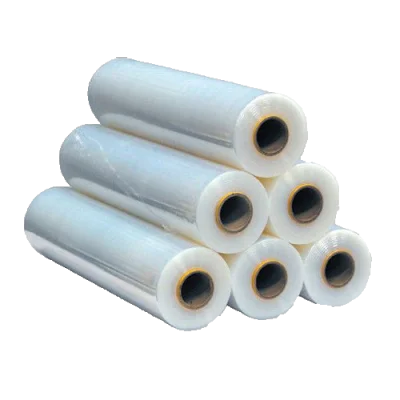
Advantages of Stretch Film Manufacturing Machine for Building Material Producers
A stretch film manufacturing machine designed for two-layer production provides manufacturers with greater flexibility in film development. Different layer combinations can be adjusted according to product requirements, allowing users to produce packaging films for various construction applications.
The high elongation capability improves material efficiency by enabling thinner films to achieve strong wrapping performance. With optimized resin selection and stable extrusion control, manufacturers can reduce unnecessary material consumption while maintaining package security.
The machine also supports the addition of functional masterbatches, including UV-resistant additives and performance-enhancing materials. This allows producers to develop films suitable for outdoor storage environments where additional weather resistance is required.
Energy-efficient extrusion components and precise process control further improve production stability. Features such as accurate temperature management, reliable screw performance, and automated operating systems help maintain consistent output quality during long-term manufacturing operations.
Improve Packaging Performance with Our Stretch Film Manufacturing Machine
Lightweight building material packaging requires films that combine protection, efficiency, and material savings. With advanced co-extrusion technology, precise T-die control, and flexible resin configuration, our two-layer stretch film manufacturing machine helps manufacturers produce high-performance films for EPS panels, gypsum boards, aluminum profiles, and other industrial applications. Explore our stretch film manufacturing machine solutions to improve production efficiency and achieve more reliable film performance.