In the competitive world of industrial bubble film production, energy consumption plays a critical role in both profitability and market competitiveness. The Specific Energy Consumption (SEC)—measured in kWh per kilogram of film produced—ranges from 0.35 to 0.52 kWh/kg for 2-layer bubble film making machines, directly affecting energy costs and factory carbon footprints.
An efficient machine can significantly reduce energy costs while maintaining high-quality production. High-speed machines, with advanced servo-drive systems and precision thermal management, can achieve high output. However, without optimized heating and cooling controls, these systems may waste energy. Conversely, medium-speed machines typically offer a better balance, maintaining a SEC around 0.40 kWh/kg by using variable-frequency drives (VFDs) and rapid temperature control zones, reducing heat loss and improving energy efficiency.
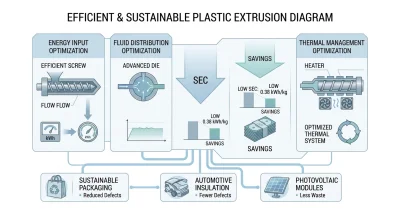
Key technological features that optimize SEC include:
- Efficient extruders with barrier screws: These reduce mechanical energy losses during the extrusion process.
- Advanced die designs: These ensure uniform polymer flow, reducing the need for compensatory heating and cooling.
- Optimized heating and cooling systems: These ensure that energy is used efficiently throughout the production process.
The benefits of a low SEC machine extend across industries. In applications like sustainable food packaging, reducing the SEC from 0.50 to 0.38 kWh/kg can significantly lower annual energy costs, improving the overall ROI. For sectors like automotive insulation or photovoltaic module production, lower energy consumption results in superior thermal stability, fewer defects, and reduced waste.
As the industry progresses, the integration of IoT sensors and AI-driven analytics will enable real-time adjustments to parameters, further reducing SEC. This technology will future-proof production systems, making them more efficient and sustainable. Low SEC machines are a strategic investment for companies aiming to stay competitive while meeting rising energy costs and sustainability regulations.
By focusing on the energy consumption ratio, companies can enhance operational efficiency, reduce production costs, and ensure consistent product quality, turning energy efficiency into a key competitive advantage in the packaging industry.