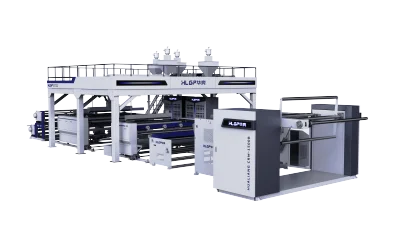
Precautions for Using a 2-Layer Bubble Film Machine
2026-08-21
Packaging manufacturers are under increasing pressure to protect products more effectively while controlling material, labor, and transportation costs. During storage and shipment, fragile products can be exposed to vibration, impact, compression, and handling damage. At the same time, heavier traditional packaging materials can increase shipping weight and storage requirements, making cost control more difficult for manufacturers and logistics companies.
Two-layer bubble film provides a practical solution for many of these applications. Its air-filled bubble structure offers cushioning and separation while keeping the packaging material lightweight and flexible. It can be used for furniture, glass products, electronic components, household goods, ceramics, and many other products that require additional protection during transportation.
However, producing consistent bubble film depends not only on the quality of the raw material but also on correct machine operation. Proper temperature control, stable extrusion, accurate cooling, suitable winding tension, and regular maintenance all influence bubble formation and finished film quality. For manufacturers operating a bubble film extrusion machine, following the correct operating precautions is therefore essential for maintaining stable production.
Common Problems in Traditional Packaging
One of the main challenges in conventional packaging is insufficient cushioning performance. Some rigid or thin packaging materials provide limited protection against vibration and impact, particularly when products are transported over long distances or handled multiple times. Without an effective cushioning layer, fragile products can be more vulnerable to scratches, dents, and breakage.
Material cost is another important consideration. Heavy packaging increases the total weight of finished shipments, which can affect transportation expenses. Excessive use of packaging materials also creates additional storage and handling requirements. Bubble film offers a lightweight alternative because its structure contains air-filled bubbles that provide cushioning without requiring a large amount of solid material.
Production efficiency is equally important for modern packaging operations. Poorly manufactured bubble film may have uneven bubble sizes, unstable thickness, wrinkles, or poorly wound rolls. These problems can create difficulties during cutting, wrapping, feeding, or automated packaging operations. For high-volume users, inconsistent rolls can result in more material waste and unnecessary production interruptions.
This makes the stability of the bubble film manufacturing process particularly important. A properly configured and maintained bubble film extrusion machine can help manufacturers produce rolls with more consistent structure and better suitability for downstream packaging applications.
The Role of Bubble Film in Modern Packaging
Bubble film is widely used because its air-filled structure can absorb and distribute part of the impact energy experienced during handling and transportation. When used correctly, the bubbles create a cushioning layer between the packaged product and external surfaces, helping reduce direct contact and friction.
Another advantage is its lightweight structure. Compared with many rigid protective materials, bubble film can provide cushioning with relatively low material weight. This characteristic is valuable for e-commerce packaging, warehouse operations, export packaging, and other applications where transportation weight and packaging volume need to be considered.
Flexibility also makes bubble film suitable for products with different shapes and surface structures. It can wrap around irregular products more easily than rigid protective materials and can be combined with cartons, bags, stretch film, or other packaging materials according to application requirements.
For manufacturers, however, the quality of the finished film remains critical. Bubble diameter, film thickness, layer bonding, winding quality, and roll uniformity should remain within the required production range. These characteristics are strongly influenced by the operating conditions of the bubble film extrusion machine.
Proper Preheating Before Starting Production
Temperature stability is one of the first factors operators should check before starting a two-layer bubble film production line. The extruder, barrel, adapter, and die should be heated according to the recommended temperature settings for the selected resin and film structure.
Starting extrusion before the system reaches a stable thermal condition can result in unstable melt flow. Temperature differences within the extrusion system may contribute to uneven film thickness, unstable bubble formation, or poor layer bonding. Allowing sufficient heating and stabilization time helps the machine reach a more consistent operating condition before production begins.
Actual temperature settings should be determined according to the processing characteristics of the selected material, rather than using one fixed temperature for every production application. LDPE and LLDPE-based formulations, for example, may require different processing conditions depending on resin grade, film thickness, additives, and production speed.
Operators should also check whether the die, cooling section, air system, and other relevant components are ready before increasing production speed.
Maintain Stable Extrusion and Production Speed
Stable line speed is another important precaution when operating a two-layer bubble film machine. Rapid speed changes can affect melt distribution, cooling conditions, bubble stability, and winding performance.
During startup, production speed should normally be increased gradually after the extrusion system reaches a stable condition. This gives operators time to observe bubble formation, film thickness, layer bonding, and cooling performance before moving toward the target production speed.
The appropriate production speed depends on machine configuration, film width, film thickness, raw material, and product requirements. A practical operating range should therefore be established according to the specific production line rather than simply pursuing maximum speed.
If the bubble structure begins to become unstable, the operator should check extrusion output, air pressure, cooling conditions, material supply, and temperature settings before making further speed adjustments. Stable production is generally more valuable than operating continuously at an unsuitable maximum speed.
Control Winding Tension Carefully
Winding quality has a direct effect on the usability of finished bubble film rolls. Excessive winding tension can compress the bubble structure or create deformation, while insufficient tension may produce loose, uneven rolls.
A suitable winding tension should therefore be selected according to film thickness, bubble size, roll width, and winding diameter. During production, operators should monitor the roll surface and edges to identify wrinkles, telescoping, loose winding, or uneven alignment at an early stage.
A stable winding system helps produce rolls that are easier to transport, store, cut, and use on downstream packaging equipment. For customers supplying bubble film to automated packaging lines, consistent roll dimensions and winding quality can also help reduce feeding problems.
Keep the Die and Cooling Components Clean
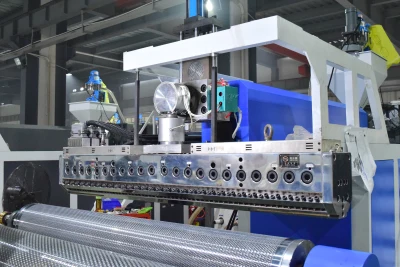
Regular cleaning is essential for maintaining stable film production. Resin accumulation around the die lip can interfere with melt flow and contribute to uneven film thickness or surface defects. Operators should inspect the die regularly and follow appropriate cleaning procedures based on the machine manufacturer's recommendations.
Cooling rollers and related components should also be kept clean. Contamination or material buildup can affect film contact and cooling uniformity, which may influence bubble structure and finished film appearance.
Maintenance should be performed when the equipment is in a safe condition and according to the machine's maintenance requirements. Regular inspection of heaters, temperature sensors, bearings, belts, pneumatic components, electrical connections, and other wear parts can also help identify potential problems before they cause extended downtime.
Build a More Stable Bubble Film Production Line
Following proper operating precautions can significantly improve the consistency of bubble film production. Stable preheating, gradual speed adjustment, suitable winding tension, clean extrusion components, and regular maintenance all contribute to reliable daily operation. These practices can help reduce avoidable defects, material waste, and unnecessary production interruptions.
For manufacturers seeking to improve protective packaging production, our bubble film extrusion machine provides a reliable foundation for two-layer bubble film manufacturing. With a practical machine configuration, stable extrusion performance, controlled cooling, and efficient winding, it is designed to support consistent production across a range of packaging applications.
Welcome to choose our 2-layer bubble film extrusion machine to build a more stable and efficient protective packaging film production line. Our equipment can be configured around your film specifications, material requirements, production capacity, and factory conditions, helping you achieve dependable bubble film quality and more efficient long-term production.