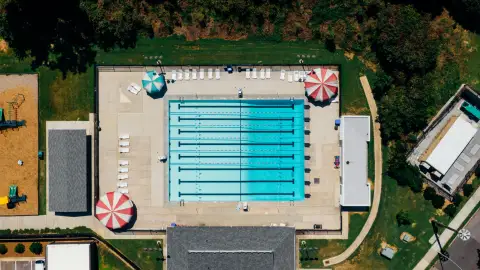
The demand for energy-efficient and water-saving swimming pool solutions is increasing in residential, commercial, and hospitality applications. Pool owners and maintenance companies are looking for reliable thermal blankets that can reduce evaporation, maintain water temperature, and simplify daily maintenance. Behind these high-performance pool covers, the bubble film manufacturing machine provides the advanced production technology required to manufacture durable, lightweight, and thermally efficient bubble film materials.
By combining precision extrusion, stable bubble forming, multi-layer material technology, and automated winding systems, modern bubble film production lines enable manufacturers to produce specialized pool thermal blankets with consistent quality and customized performance for different environmental conditions.
Challenges in Traditional Swimming Pool Cover Solutions
Swimming pool operation requires continuous management of heat retention, water consumption, and maintenance efficiency. Traditional pool covers made from basic plastic sheets or low-performance materials often struggle to provide sufficient insulation and durability in outdoor environments.
One of the main challenges is heat loss caused by water evaporation. During nighttime operation, especially in regions with lower temperatures or strong winds, a large amount of heat escapes from the water surface. Swimming pools that rely on heating systems may require additional energy input to maintain comfortable water temperatures, increasing operational costs.
Water evaporation is another important issue for pool operators. As water continuously evaporates from the exposed surface, additional water supply is required. At the same time, evaporation can affect chemical balance, requiring more frequent adjustment of chlorine and other treatment chemicals. For commercial pools, hotels, and public aquatic facilities, these maintenance requirements can increase labor costs and resource consumption.
Traditional covering materials may also face durability problems during long-term outdoor use. Continuous exposure to sunlight, chlorine, moisture, and temperature changes can cause material aging, cracking, or loss of mechanical strength. In addition, different pool designs, including large commercial pools, irregular landscape pools, and private swimming pools, require flexible materials that can be easily customized into different sizes and shapes.
These challenges have increased the demand for advanced bubble film solutions that provide better thermal insulation, weather resistance, and production flexibility.
The Role of Bubble Film in Swimming Pool Thermal Blanket Applications
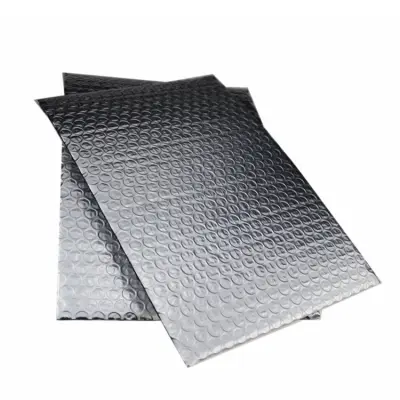
Bubble film has become an effective material for swimming pool thermal blankets because of its unique air-cell structure. The sealed air bubbles create multiple insulation layers between the water surface and the external environment, helping reduce heat transfer and slow down temperature loss.
Compared with traditional flat plastic films, bubble film provides improved thermal performance through thousands of independent air chambers. Each bubble works as a small insulation unit, reducing direct heat exchange between the pool water and surrounding air. This structure helps maintain water temperature stability and supports more efficient pool heating management.
The lightweight design of bubble film also provides practical advantages during daily use. Pool covers manufactured from bubble film are easier to install, remove, and store compared with heavier covering materials. Large-width rolls produced by professional manufacturers can cover extensive water areas while maintaining convenient handling characteristics.
In addition to thermal insulation, bubble film provides surface protection for swimming pools. When placed on the water surface, the film can reduce the entry of leaves, dust, and other debris. This helps decrease the workload of filtration systems and supports cleaner water management. For commercial pool operators, this protective function can contribute to more efficient maintenance processes.
Modern bubble film materials can also be customized for different climates and application requirements. By selecting appropriate polyethylene materials and adding functional additives, manufacturers can improve resistance against ultraviolet radiation, oxidation, and chemical exposure. Multi-layer structures allow different layers to perform specific functions, such as surface protection, mechanical reinforcement, and bubble stability.
Advanced Bubble Film Manufacturing Machine for High-Quality Pool Covers
The performance of a swimming pool thermal blanket depends heavily on the production capability of the bubble film manufacturing machine. A well-designed production line ensures stable bubble formation, consistent film thickness, and reliable material properties throughout continuous manufacturing.
The extrusion system is one of the most important components of the production process. High-precision extruders are designed to process polyethylene materials with stable melting conditions and uniform pressure control. Accurate temperature management helps maintain consistent material flow, which directly influences bubble quality and film performance.
During bubble forming, precise vacuum control creates uniform air cells with consistent dimensions. Stable bubble size and shape are important because irregular bubbles may reduce insulation efficiency and affect the appearance of the final product. Advanced bubble film production lines use optimized forming structures to maintain reliable production quality at different operating speeds.
Multi-Layer Technology for Enhanced Outdoor Performance
Swimming pool thermal blankets often require stronger weather resistance than ordinary packaging bubble film. For this reason, many manufacturers choose multi-layer bubble film production technology.
A 3-layer or 5-layer bubble film manufacturing machine allows manufacturers to combine different polymer characteristics within one structure. The outer layer can be optimized for UV resistance and surface protection, while the middle layer provides mechanical strength and the inner layer supports stable bubble formation.
By adjusting material combinations, manufacturers can produce bubble films suitable for various climate conditions. For example, UV stabilizers can be added to improve outdoor durability in areas with strong sunlight exposure. Anti-oxidant additives help slow material degradation during long-term use, while optimized polyethylene formulations improve flexibility and puncture resistance.
Color customization is another advantage of advanced bubble film production. Blue, silver, and black surface designs can be manufactured according to different market requirements. Reflective layers may help reduce solar heat absorption in hot climates, while darker surfaces can support solar heating effects in cooler regions.
Automatic Production Control Improves Manufacturing Efficiency
Modern bubble film manufacturing machines are equipped with automation systems to improve production stability and reduce operational difficulties. PLC-based control systems allow operators to monitor and adjust key parameters, including extrusion temperature, production speed, film thickness, and winding tension.
Automatic thickness control helps maintain consistent product quality during long production runs. This is especially important for pool thermal blankets, where uniform material structure directly influences insulation performance and service life.
The winding system also plays an important role in finished product quality. Precision winding technology ensures that bubble film rolls remain compact, stable, and easy to transport. For pool cover suppliers, high-quality rolls simplify storage, cutting, and distribution processes.
In addition, automatic slitting systems enable manufacturers to produce different roll widths according to customer requirements. Whether supplying small residential pool covers or large commercial swimming pool projects, flexible converting capability allows manufacturers to respond efficiently to different market demands.
Supporting Sustainable Pool Management with Bubble Film Solutions
Energy efficiency and water conservation have become important considerations in modern swimming pool management. By producing high-performance thermal blankets, the bubble film manufacturing machine supports more sustainable pool operation.
A properly designed bubble film cover can significantly reduce evaporation from the water surface. This helps decrease water replacement requirements and supports more efficient resource management. At the same time, maintaining stable water temperature can reduce the operating time of heating equipment, helping pool operators manage energy consumption more effectively.
Stable water conditions can also reduce frequent chemical adjustments. By limiting evaporation and protecting the water surface from external contaminants, bubble film covers contribute to more consistent pool maintenance routines.
For manufacturers of swimming pool covers, investing in advanced bubble film production technology creates opportunities to supply durable and value-added products. With customized structures, reliable production quality, and efficient manufacturing capabilities, modern bubble film manufacturing machines help producers meet the growing demand for professional thermal blanket solutions.
Our bubble film manufacturing machine provides the foundation for producing high-quality pool thermal blankets through precision extrusion, multi-layer design, automated control, and flexible customization. By enabling manufacturers to create reliable bubble film products for residential and commercial aquatic applications, advanced production equipment supports more efficient pool management while helping businesses develop competitive solutions for the growing thermal insulation market.