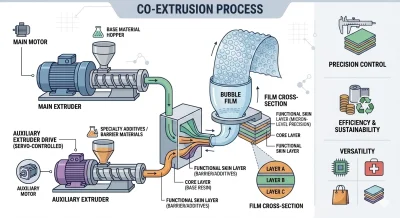
In modern plastic packaging production, the performance of a bubble film making machine depends not only on the extrusion capacity of the main drive system but also on the precision control of each functional layer during multi-layer co-extrusion. As packaging requirements continue to evolve, manufacturers increasingly use specialized materials such as barrier resins, recycled polymers, and functional additives to improve film performance.
In a multi-layer bubble film production line, the auxiliary extruder motor plays an important role in controlling these additional material layers. Unlike the main extruder, which mainly provides the basic structure and thickness of the film, the auxiliary extruder is responsible for supplying specific functional layers. Stable operation of the auxiliary motor directly affects layer distribution, material utilization, and the overall consistency of the finished bubble film.
Challenges in Multi-Layer Bubble Film Co-Extrusion
Multi-layer co-extrusion technology allows manufacturers to combine different materials within one film structure. Each layer can provide different functions, such as improved sealing performance, enhanced toughness, better printability, or increased protection against external conditions.
However, achieving stable layer distribution during production requires precise control of extrusion speed, pressure, and material flow. If the auxiliary extruder does not operate consistently with the main extrusion system, variations may occur in the thickness and proportion of functional layers.
One common challenge is unstable layer ratio control. In a multi-layer bubble film making machine, even small fluctuations in auxiliary material output can affect the balance between different layers. This may result in inconsistent film performance, especially when producing films with thin functional layers.
Another challenge comes from processing different types of polymers. Materials such as recycled polyethylene, modified resins, and functional masterbatches may have different melting characteristics and viscosity behaviors compared with standard raw materials. Without accurate speed and torque control, unstable feeding conditions can influence melt uniformity and final film quality.
In addition, improper control of additive-containing layers may lead to inefficient material usage. Since many functional additives are relatively expensive, accurate metering through the auxiliary extrusion system helps manufacturers maintain the required performance while reducing unnecessary material consumption.
Role of the Auxiliary Extruder Motor in Film Quality Control
The auxiliary extruder motor provides independent power control for secondary extrusion units in a multi-layer bubble film machine. Its main function is to maintain stable screw rotation speed and ensure consistent material output throughout the production process.
Modern extrusion systems commonly use variable frequency drives or servo control technology to achieve more accurate speed regulation. Through communication with the machine’s PLC control system, the auxiliary motor can adjust operating parameters according to production requirements and maintain synchronization with the main extrusion system.
This synchronized operation is especially important during high-speed production. When the machine speed changes, the auxiliary extruder must respond quickly to maintain the designed layer structure. Stable coordination between the main and auxiliary extrusion units helps prevent layer thickness fluctuations and improves overall film consistency.
The auxiliary motor also contributes to stable torque output. During extrusion, changes in material viscosity can influence screw resistance. A motor with suitable torque characteristics can maintain smooth screw operation under different processing conditions, helping the extruder achieve more stable melt delivery.
Improving Material Efficiency Through Precise Layer Control
One of the major advantages of an accurately controlled auxiliary extrusion system is improved material efficiency. In multi-layer bubble film production, functional materials are usually applied only where their properties are required.
For example, a manufacturer may use a special resin or additive in an outer layer to improve surface performance while using more economical materials in other layers. Precise auxiliary extrusion control ensures that each layer receives the correct material proportion, helping reduce excessive consumption of high-cost materials.
This capability is also valuable for sustainable film production. As recycled materials and environmentally friendly polymers become more widely used, manufacturers need better control over processing conditions. Recycled materials often have variations in viscosity and melt characteristics, making stable extrusion control increasingly important.
By maintaining consistent auxiliary extrusion performance, a bubble film making machine can better handle material variations and support the production of films containing recycled or modified materials while maintaining acceptable quality standards.
Supporting Advanced Bubble Film Applications
The development of multi-layer bubble film technology has expanded its applications beyond traditional protective packaging. Today, bubble films are used in logistics packaging, electronics protection, industrial transportation, and specialized packaging solutions where consistent performance is required.
For example, bubble films used for electronic products may require additional functional layers to improve protection against static electricity or moisture. In these applications, accurate auxiliary extrusion control helps maintain uniform distribution of functional materials across the film width.
For industrial packaging, stronger and more durable bubble films often require the combination of different polymer layers. A stable auxiliary extrusion system allows manufacturers to optimize layer structures according to specific requirements, improving puncture resistance and overall mechanical performance.
In applications where appearance is important, such as retail packaging or printed protective films, consistent surface quality is also essential. Stable layer control helps reduce film defects and provides a more uniform surface for further processing.
Precision Auxiliary Control in Bubble Film Making Machine
The auxiliary extruder motor is an important component in determining the performance of a multi-layer bubble film making machine. By providing independent and precise control of functional layers, it supports stable co-extrusion processes, efficient material usage, and consistent film quality.
For manufacturers investing in advanced bubble film production equipment, the design of the auxiliary extrusion system should be considered together with extrusion capacity, control technology, and application requirements. A well-integrated auxiliary motor system helps the machine achieve reliable long-term operation while meeting the demands of modern film production.
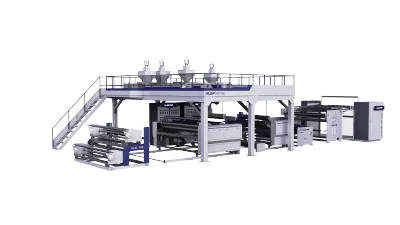
Our bubble film making machines are designed with advanced multi-layer co-extrusion technology and optimized auxiliary extrusion systems to support stable production of 3-layer, 5-layer, and 7-layer bubble films. With precise motor control, synchronized extrusion performance, and flexible layer configuration, our machines provide reliable solutions for manufacturers seeking improved film quality, production efficiency, and material utilization.