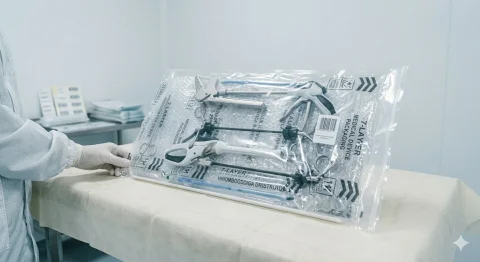
The transportation and storage of sensitive medical instruments, orthopedic implants, diagnostic equipment, and electronic medical devices require reliable protective packaging solutions. In these applications, cushioning performance, material stability, and contamination control are essential factors that influence product safety during logistics.
With the development of advanced extrusion technology, modern bubble film manufacturing machines enable manufacturers to produce 7-layer bubble films with improved mechanical strength, customized barrier properties, and consistent quality. Through multi-layer co-extrusion and precise process control, these films provide enhanced protection for medical device packaging applications where traditional cushioning materials may not meet performance requirements.
Critical Packaging Challenges in Medical Device Distribution
Medical devices often pass through complex supply chains involving manufacturers, sterilization facilities, warehouses, and healthcare providers. During transportation, products may experience vibration, compression, impact, and environmental changes that can affect their performance and reliability.
Precision components such as surgical instruments, diagnostic cartridges, and electronic medical devices require packaging materials that can absorb external forces while maintaining structural stability. Conventional single-layer protective films may provide basic cushioning but often have limitations in terms of puncture resistance, durability, and long-term protection.
Another important challenge is maintaining a clean packaging environment. Static electricity generated during handling and transportation can attract dust particles, which may create concerns for sensitive medical products and clean manufacturing environments. Anti-static additives incorporated into multi-layer films can help reduce surface charge accumulation and improve packaging cleanliness.
Moisture and gas protection are also important considerations for certain medical products. Multi-layer structures allow manufacturers to combine different polymer materials, creating films with improved barrier performance compared with standard polyethylene cushioning films.
Functional Advantages of 7-Layer Bubble Film for Medical Applications
7-layer bubble film provides manufacturers with greater flexibility in designing protective packaging materials. By combining different resin layers, the film structure can be optimized for cushioning performance, mechanical strength, and specialized packaging requirements.
Improved Barrier Properties for Sensitive Products
The multi-layer structure of 7-layer bubble film allows the integration of functional polymers with enhanced barrier characteristics. Materials such as EVOH or other barrier resins can be incorporated into specific layers when required, helping reduce moisture and oxygen transmission compared with conventional PE films.
This structure is beneficial for protecting moisture-sensitive components, diagnostic products, and other medical items that require stable storage conditions during transportation.
Reliable Shock Absorption and Cushioning Performance
The air-filled bubble structure provides effective impact absorption by distributing external forces across multiple contact points. During transportation, the trapped air cushions help reduce the influence of vibration, compression, and accidental impacts.
For products such as surgical instruments, precision assemblies, and diagnostic equipment, this cushioning performance helps reduce the risk of scratches, deformation, and transport-related damage.
Anti-Static Protection for Medical Electronics
Many modern medical devices contain electronic components that require additional protection against static electricity. By adding anti-static agents into selected layers, 7-layer bubble film can help minimize static charge accumulation during packaging and handling.
This feature is particularly valuable for electronic medical devices, monitoring equipment, and precision components that require a cleaner packaging environment.
Compatibility with Various Packaging Requirements
Medical packaging materials may need to withstand different storage and transportation conditions. Properly designed multi-layer bubble films can provide stable mechanical performance while maintaining flexibility and durability.
Depending on the material combination, manufacturers can develop films suitable for different applications, including protective wrapping, inner cushioning layers, and transportation packaging.
How Our Bubble Film Manufacturing Machines Support Medical Packaging Production
Producing high-quality 7-layer bubble film requires precise extrusion control and stable manufacturing conditions. Advanced bubble film manufacturing machines are designed to manage multiple polymer layers while maintaining consistent thickness, bubble formation, and winding quality.
Precise Multi-Layer Extrusion Control
Modern 7-layer bubble film production lines use multiple extruders and advanced die-head systems to distribute different materials accurately across the film structure. Stable melt flow control helps improve layer uniformity and ensures consistent film performance during continuous production.
This technology allows manufacturers to produce customized bubble films with different functional layers according to specific application requirements.
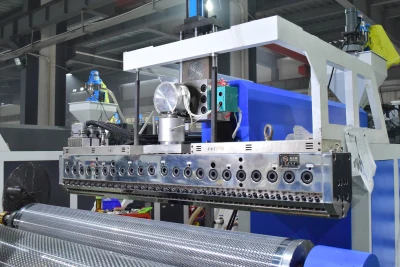
Automated Thickness Control for Consistent Film Quality
Film thickness consistency is an important factor affecting cushioning performance and packaging reliability. Advanced production systems integrate automatic control technologies to monitor extrusion conditions and maintain stable thickness throughout the production process.
With optimized temperature management, pressure control, and material feeding systems, manufacturers can achieve improved film uniformity and reduce material variation.
Stable Bubble Forming and Cooling Technology
The quality of bubble formation directly influences cushioning performance. Modern bubble film manufacturing machines use controlled vacuum forming and cooling systems to create uniform bubble structures with consistent dimensions.
Stable bubble geometry helps improve compression resistance and ensures reliable protective performance during transportation.
Efficient Production with Intelligent Automation
Medical packaging suppliers require efficient production systems that can maintain consistent output quality. High-speed bubble film production equipment integrates automation features such as tension control, automatic winding systems, and production parameter management.
These technologies help operators improve production efficiency while reducing manual adjustment requirements and maintaining stable product quality.
Maximizing Packaging Integrity Through Precision Bubble Film Manufacturing Machines
As medical device supply chains continue to develop, packaging manufacturers require reliable equipment capable of producing high-performance protective materials. A well-designed bubble film manufacturing machine provides the precision, flexibility, and automation needed for producing 7-layer bubble films used in demanding applications.
With advanced multi-layer extrusion technology, accurate thickness control, and stable production performance, our bubble film manufacturing machines help manufacturers develop protective packaging solutions for medical devices, electronics, and other sensitive products.
By investing in modern extrusion equipment, manufacturers can improve production efficiency, expand their product capabilities, and meet the growing demand for reliable protective packaging materials.