
With the continuous development of packaging technology and application requirements, bubble film has evolved from a simple cushioning material into a more specialized protective solution. Today, different types of bubble film are designed for specific transportation and packaging scenarios, providing improved protection for fragile goods with various shapes, values, and sensitivity levels.
Supported by advanced bubble film manufacturing machines, manufacturers can produce customized bubble film structures with optimized thickness, strength, and cushioning performance. This technological evolution has brought new possibilities to fragile goods packaging, helping industries achieve safer and more efficient transportation solutions.
Challenges in Fragile Goods Transportation
Impact and Vibration Damage During Logistics Operations
Fragile products often experience multiple handling processes before reaching the final customer. From factory packaging to warehouse storage, loading, unloading, and delivery, products may encounter repeated external forces.
Common transportation risks include:
- Sudden impact caused by dropping or collision
- Continuous vibration during road, rail, or air transportation
- Compression pressure from stacked packages
- Internal movement caused by insufficient cushioning
For products with delicate structures, even small external forces can create hidden damage. For example, precision instruments may experience calibration issues, while glass products and ceramic items may develop cracks during transportation.
A protective packaging material must not only absorb immediate impact energy but also maintain stable cushioning performance throughout the entire transportation cycle. Bubble film achieves this by using sealed air pockets as a flexible buffer layer between the product and external forces.
Limitations of Traditional Protective Packaging Materials
Many traditional packaging materials, such as paper fillers, foam sheets, and rigid separators, provide basic protection but may have limitations when used for modern logistics applications.
Some common challenges include:
- Limited shock absorption capability
- Difficulty adapting to irregular product shapes
- Higher storage volume requirements
- Increased packaging weight
For businesses handling fragile goods, packaging performance directly affects customer satisfaction, return rates, and brand reputation. A packaging solution that fails during transportation can lead to product replacement costs and reduced customer confidence.
Bubble film provides an alternative solution by combining lightweight construction with effective cushioning performance. Its air-filled structure helps distribute external pressure and reduce direct contact between fragile products and surrounding packaging materials.
The Role of Bubble Film in Fragile Goods Protection
Air Cushion Structure Creates Effective Shock Absorption
The main protective function of bubble film comes from its unique air-cushion structure. Each bubble acts as an independent cushioning unit that absorbs and disperses impact energy.
Compared with simple wrapping materials, bubble film provides several advantages:
- Creates a protective distance between the product and external impact
- Reduces vibration transmission during transportation
- Provides flexible cushioning for different product surfaces
- Maintains lightweight packaging performance
This makes bubble film suitable for various applications, including e-commerce packaging, export transportation, industrial component protection, and high-value product shipping.
For fragile goods transported over long distances, stable air retention is especially important. High-quality bubble film produced by advanced bubble film manufacturing machines can maintain consistent bubble formation and sealing quality, helping the protective layer perform reliably from warehouse storage to final delivery.
Flexible Wrapping for Products with Complex Shapes
Many fragile goods have irregular structures that require packaging materials with excellent flexibility. Products such as decorative glass, ceramic artwork, electronic devices, and precision components often contain curved surfaces, delicate edges, or sensitive finishing.
Rigid packaging materials may leave gaps around these products, allowing movement during transportation. Excessive internal movement increases the possibility of collision damage.
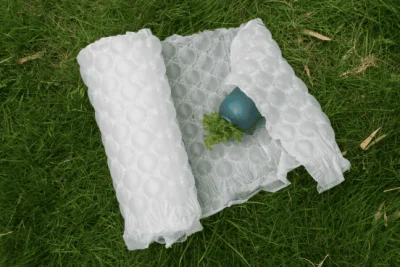
Bubble film provides a soft and adaptable wrapping layer that can closely follow different product shapes. This helps:
- Reduce empty spaces inside packages
- Prevent direct surface contact with hard materials
- Protect polished and sensitive surfaces from scratches
The flexibility of bubble film makes it an effective solution for industries where appearance quality and product integrity are both important.
Multi-Layer Bubble Film for Different Protection Requirements
Different fragile goods require different levels of protection. A lightweight consumer product and a high-value industrial component do not need the same packaging structure.
Modern bubble film manufacturing machines can produce multi-layer bubble film structures to meet various application requirements.
Standard two-layer bubble film is commonly used for general protective packaging where lightweight cushioning is required.
Three-layer to five-layer bubble film provides enhanced mechanical strength and improved puncture resistance. It is suitable for applications such as electronic products, industrial parts, and export packaging.
Seven-layer bubble film structures are designed for demanding applications that require higher durability, better air retention, and stronger protection performance.
Through advanced extrusion technology, manufacturers can adjust layer combinations, material ratios, and film thickness according to the requirements of different transportation environments.
How Bubble Film Manufacturing Machines Improve Protective Packaging Production
Advanced Extrusion Technology for Customized Bubble Film
The performance of bubble film depends heavily on production technology. Modern bubble film manufacturing machines use advanced extrusion systems to process polymer materials into stable and functional protective films.
Depending on production requirements, these machines can support different material combinations, including polyethylene-based materials commonly used for flexible packaging applications.
Multi-layer extrusion technology allows manufacturers to optimize film properties, including:
- Mechanical strength
- Flexibility
- Puncture resistance
- Air retention performance
This flexibility enables packaging manufacturers to develop specialized bubble film solutions for different fragile goods industries.
For example, products requiring higher impact resistance may use thicker structures and reinforced layers, while lightweight packaging applications can focus on material efficiency and cost control.
Precision Vacuum Forming for Uniform Bubble Quality
The bubble-forming process is one of the key factors affecting protective performance. A high-quality bubble film manufacturing system requires accurate vacuum forming technology to create uniform air pockets.
Stable bubble formation helps ensure:
- Consistent bubble size
- Reliable air sealing
- Even film thickness distribution
- Stable cushioning performance
If bubble structures vary significantly, some areas may provide weaker protection during transportation. Precision forming technology allows manufacturers to produce bubble film with improved consistency, helping maintain reliable protection across every roll.
Automated Winding and Slitting for Efficient Production
Modern packaging industries require not only high-quality materials but also efficient supply capability. Large-scale logistics operations need continuous availability of protective packaging materials.
Advanced bubble film manufacturing machines integrate automated systems for:
- Film winding
- Roll changing
- Edge trimming
- Width adjustment
These functions help improve production efficiency while reducing material waste. Automated control systems also contribute to more stable operation and consistent product quality during long production cycles.
Applications of Bubble Film in Different Fragile Goods Industries
Laboratory Equipment and Medical Device Transportation
Laboratory instruments and medical equipment often contain precision components that are sensitive to vibration and impact.
Bubble film provides a lightweight protective layer that helps reduce mechanical stress during transportation. For these applications, manufacturers can produce bubble film with enhanced cushioning performance through optimized machine configurations.
Glassware and Ceramic Product Packaging
Glass bottles, ceramic products, and decorative items are highly vulnerable to cracking and surface damage.
Bubble film helps protect these products by creating a soft barrier that absorbs external impact while preventing direct contact between items and packaging surfaces.
Electronic Components and Precision Instruments
Electronic products require protection against vibration, collision, and surface scratches.
Bubble film is commonly used for packaging components such as circuit boards, small devices, and precision instruments. Customized bubble structures can provide suitable cushioning while maintaining lightweight packaging advantages.
Artwork and Luxury Product Protection
High-value products require packaging materials that protect both structural integrity and appearance quality.
Bubble film allows flexible wrapping around irregular shapes while reducing the risk of scratches and transportation damage. This makes it suitable for artwork, collectibles, premium consumer goods, and decorative products.
Bubble Film Manufacturing Machines for Transportation
The transportation of fragile goods requires packaging solutions that combine protection, flexibility, and efficiency. Bubble film has become an important material for modern protective packaging because its air-cushion structure provides reliable impact absorption and surface protection.
Behind every high-performance bubble film solution, our multi-layer bubble film manufacturing machines provide the technology needed to produce consistent, customized, and durable packaging materials. Through multi-layer extrusion, precision bubble forming, and automated production systems, these machines help manufacturers meet the increasing demands of global logistics and fragile product transportation.