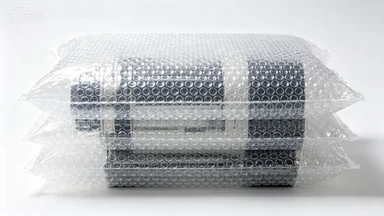
Protecting precision instruments during transportation requires packaging materials that can handle complex logistics conditions. Products such as medical equipment, aerospace components, optical devices, and electronic testing systems often include sensitive parts that may be affected by shock, vibration, compression, or long-distance handling. Without proper cushioning and structural protection, external forces during transit may impact product performance or affect calibration accuracy.
For these high-value applications, standard protective materials may not provide sufficient mechanical strength and stability. Manufacturers are increasingly adopting seven-layer bubble film with a reinforced multilayer structure, which offers improved cushioning performance, better resistance to puncture and tearing, and more consistent protection throughout the transportation process.
The quality of seven-layer bubble film is closely related to the precision of the production equipment. With advanced co-extrusion technology, accurate layer distribution, and intelligent process control, modern bubble film manufacturing machines help producers manufacture protective films with stable thickness, uniform bubble formation, and consistent performance for demanding packaging applications.
Transportation Challenges of Precision Instruments During Global Logistics
Precision instruments are widely used in industries where product reliability and accuracy are critical. Medical diagnostic equipment, aerospace control systems, laboratory instruments, and electronic testing devices require strict protection from external mechanical stress during storage and transportation.
During long-distance shipping, packaged products may experience repeated impacts caused by loading and unloading operations, continuous vibration from road or air transportation, and compression forces from stacking. Unlike ordinary consumer products, precision instruments may contain delicate sensors, optical components, circuit assemblies, or calibration-sensitive structures that require stable protection conditions.
Traditional packaging materials may not always provide sufficient protection for these applications. Single-layer cushioning films can experience uneven stress distribution, reduced air retention, or insufficient mechanical strength when exposed to repeated external pressure. Once protective materials lose their cushioning capability, the risk of product damage increases significantly.
For this reason, industries requiring high-value equipment protection increasingly rely on multilayer protective packaging materials manufactured with advanced bubble film manufacturing machines. These machines allow producers to create bubble films with improved structural stability and consistent quality for specialized applications.
How 7-Layer Bubble Film Provides Reliable Protection for Precision Equipment
The main advantage of seven-layer bubble film comes from its functional multilayer structure. Different polymer layers can be designed to provide specific performance characteristics, including impact resistance, sealing strength, flexibility, and surface durability.
Compared with conventional bubble film structures, seven-layer designs allow manufacturers to optimize material distribution between different layers. Reinforced outer layers improve resistance against abrasion and external pressure, while inner layers maintain flexibility and cushioning performance. This combination creates a balanced protective material that can adapt to different transportation environments.
For precision instrument packaging, consistent cushioning performance is especially important. The air-filled bubble structure works as a series of independent cushioning points that absorb and distribute impact energy. During handling, stacking, and transportation processes, properly manufactured bubble film helps reduce direct contact forces between the product and external objects.
The stability of bubble geometry also plays an important role in maintaining long-term protective performance. Advanced production control systems help ensure uniform bubble formation, reliable sealing, and consistent air retention across the entire roll of film.
In addition to cushioning performance, mechanical durability is another important requirement for industrial packaging applications. Seven-layer bubble film can be engineered with optimized material combinations to improve puncture resistance, tear resistance, and surface strength. This helps prevent premature failure caused by sharp edges, friction, or compression during transportation.
Precision Manufacturing Technology Behind High-Performance Bubble Film
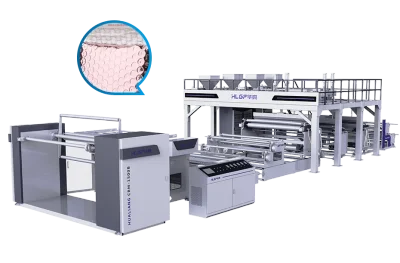
The quality of seven-layer bubble film depends heavily on the accuracy and stability of the production process. Modern bubble film manufacturing machines use advanced multilayer co-extrusion technology to precisely control each functional layer during production.
A seven-layer production line typically integrates multiple extruders, automatic material feeding systems, precision temperature control units, and advanced forming technology. Each extruder can process different polymer materials or formulations according to the required film structure, allowing manufacturers to achieve customized performance for different packaging applications.
The automatic gauge control (AGC) system is an important technology for maintaining consistent film thickness. By continuously monitoring production parameters and adjusting extrusion conditions in real time, the system helps maintain thickness uniformity within approximately ±3%, reducing weak areas caused by uneven material distribution.
For high-speed production environments, process stability is equally important. A reliable bubble film manufacturing machine uses an intelligent PLC control system to coordinate extrusion speed, heating zones, cooling systems, bubble forming units, and winding operations. This integrated control improves production consistency and helps manufacturers maintain stable output during continuous operation.
Temperature management is another key factor affecting bubble film quality. Precise heating and cooling control ensures proper polymer melting, stable bubble formation, and reliable layer bonding. This is particularly important when producing multilayer films with different material characteristics.
Improving Production Efficiency with Intelligent Bubble Film Manufacturing Machines
Modern packaging manufacturers face increasing demands for higher productivity, lower material waste, and consistent product quality. Advanced bubble film manufacturing machines are designed to support these requirements through automation and intelligent control.
Automated production systems reduce dependence on manual adjustments and allow operators to monitor key production parameters through an intuitive HMI interface. Functions such as recipe management, process monitoring, and automatic parameter adjustment help simplify operation and improve repeatability.
Energy efficiency is also becoming an important consideration in modern film production. Optimized extrusion systems, efficient heating technology, and improved motor control solutions help reduce unnecessary energy consumption while maintaining production performance.
The seven-layer structure also provides opportunities for material optimization. By assigning different functions to different layers, manufacturers can reduce unnecessary material usage while maintaining required strength and cushioning performance. This lightweight approach helps packaging producers reduce transportation weight and support more sustainable packaging development.
Applications of 7-Layer Bubble Film in High-Value Packaging Markets
Seven-layer bubble film is suitable for a wide range of protective packaging applications where reliability and consistency are essential. In the medical industry, it can be used for protecting diagnostic equipment, laboratory devices, and healthcare instruments during shipment.
In aerospace and electronics industries, multilayer bubble film helps protect sensitive components from vibration, impact, and surface damage. Precision manufacturing equipment, optical products, and industrial control devices can also benefit from advanced cushioning materials produced by high-quality bubble film manufacturing machines.
Other applications include export packaging, industrial equipment transportation, automotive electronic components, and valuable technical products that require enhanced protection during global logistics.
The flexibility of seven-layer bubble film allows manufacturers to adjust film thickness, bubble size, material composition, and mechanical properties according to different customer requirements.
Advanced Bubble Film Machines: Elevating Protective Film Reliability
High-performance protective packaging begins with reliable manufacturing technology. The production of seven-layer bubble film requires precise extrusion control, stable multilayer distribution, and advanced automation systems to achieve consistent quality.
Our bubble film manufacturing machines are developed to support manufacturers producing high-quality multilayer bubble film for precision instruments, medical equipment, electronics, aerospace components, and other demanding packaging applications. By integrating advanced co-extrusion technology, intelligent PLC control, accurate thickness management, and efficient production systems, our machines help customers improve productivity, reduce material waste, and manufacture protective films with reliable performance.
With a focus on equipment stability, production efficiency, and flexible film solutions, our bubble film manufacturing machines provide a strong foundation for companies looking to expand into high-value protective packaging markets and build long-term competitiveness in the global film industry.