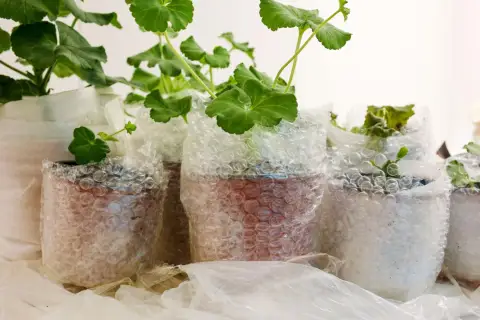
Agricultural production faces continuous challenges from changing weather conditions, especially during cold seasons when frost and low temperatures can threaten crop growth and nursery plant survival. For commercial growers, vineyards, greenhouse operators, and plant nurseries, maintaining a stable micro-environment around plants is essential to reduce winter damage and improve production reliability.
Bubble film has become an effective material solution for agricultural frost protection due to its lightweight structure, thermal insulation performance, and flexible application methods. Behind the production of high-quality agricultural bubble film, advanced bubble film manufacturing machines provide the precision, efficiency, and material flexibility required to meet the growing demand for professional plant protection materials.
Frost Protection Challenges in Modern Agricultural Production
Cold weather is one of the most unpredictable risks in agriculture. When temperatures drop rapidly, sensitive crops, young seedlings, and ornamental plants can suffer from frost damage within a short period. The formation of ice crystals on plant surfaces can interrupt plant metabolism, damage cell structures, and reduce future growth potential.
For vineyards and fruit orchards, frost during flowering or early growth stages may directly affect seasonal yields. In commercial nurseries, newly propagated plants and young trees often have limited resistance to extreme temperature changes, making additional protection necessary. Greenhouse growers also require insulation solutions to reduce heat loss during cold nights and maintain more stable growing conditions.
Traditional frost protection methods have been widely used, but many of them have limitations. Fabric covers and straw-based insulation materials may provide temporary protection but often require significant manual labor for installation and removal. These materials can absorb moisture, become heavy after rainfall, and create additional storage challenges between seasons.
Heating systems can maintain temperature levels in controlled environments, but they usually involve high energy consumption and are not practical for large outdoor planting areas. Conventional plastic films can reduce wind exposure but generally lack the internal insulation structure required for efficient thermal buffering.
As agricultural operations continue to expand, growers increasingly require protective materials that combine insulation performance, durability, easy installation, and cost efficiency. This demand has increased the importance of bubble film as a professional frost protection material.
The Role of Bubble Film in Agricultural Frost Protection
Bubble film provides a unique protective structure by creating thousands of independent air cells between two or more layers of plastic film. These trapped air pockets work as thermal barriers, reducing heat exchange between plants and the surrounding environment.
When used for greenhouse insulation, nursery protection, and vineyard applications, bubble film helps create a more stable temperature zone around sensitive plants. The air-cell structure slows down heat loss during cold periods while reducing direct exposure to freezing winds.
Compared with ordinary plastic sheets, agricultural bubble film offers additional cushioning and separation properties. The raised bubble structure creates a physical gap between the plant surface and external conditions, helping reduce the impact of frost, cold airflow, and direct contact with ice particles.
Bubble film is also highly adaptable for different agricultural applications. Large rolls can be cut into suitable sizes for covering greenhouse frames, wrapping individual plants, protecting graft unions, or insulating nursery containers. Its lightweight characteristics make installation easier, especially when compared with heavier protective materials.
Durable Bubble Film Solutions for Outdoor Agricultural Environments
Agricultural applications require materials that can withstand changing outdoor conditions. Continuous exposure to sunlight, temperature fluctuations, and humidity can accelerate the aging process of ordinary plastic materials.
High-quality agricultural bubble film is commonly produced with UV-resistant additives and antioxidant components to improve outdoor durability. These additives help reduce material degradation caused by ultraviolet radiation and extend the service life of the protective film.
For commercial growers, reusable performance is an important factor when selecting frost protection materials. Durable bubble film can often be collected, stored, and reused for multiple growing seasons, helping reduce long-term material costs.
The final performance of bubble film depends heavily on production accuracy. Stable thickness control, consistent bubble formation, and reliable layer bonding are necessary to ensure that each roll provides the expected insulation performance. This is where modern bubble film manufacturing machines become essential.
How Bubble Film Manufacturing Machines Improve Agricultural Film Production
Advanced bubble film manufacturing machines are designed to produce high-quality protective materials with consistent physical properties. Through precise extrusion technology, these machines enable manufacturers to create bubble films with improved strength, insulation ability, and processing flexibility.
Multi-layer co-extrusion technology is one of the key advantages used in modern bubble film production. By combining multiple functional layers, manufacturers can optimize different performance requirements within a single film structure.
For example, the outer layer can be designed to improve weather resistance and mechanical strength, while the middle layer supports stable bubble formation and insulation performance. The inner layer can enhance flexibility and improve bonding between different layers.
A 3-layer, 5-layer, or 7-layer bubble film production line allows manufacturers to select suitable configurations according to agricultural market requirements. Multi-layer structures are particularly beneficial for professional frost protection films because they provide better balance between durability, flexibility, and thermal insulation.
Precision Bubble Forming Ensures Stable Insulation Performance
The quality of agricultural bubble film depends largely on the accuracy of the bubble forming process. Uneven bubble size, unstable air cells, or inconsistent film thickness can reduce insulation efficiency and affect product reliability.
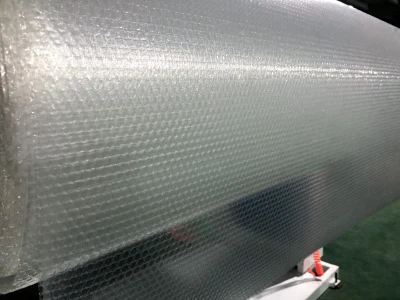
Modern bubble film manufacturing machines use precision temperature control systems, optimized extrusion designs, and advanced forming rollers to maintain stable bubble structures during production. The vacuum forming process creates uniform air cells, ensuring that each roll delivers consistent protection performance.
Stable bubble formation also improves the mechanical strength of the film. This is especially important for outdoor agricultural applications where materials must withstand wind, handling, and repeated installation.
Manufacturers using automatic bubble film machines can produce rolls with consistent dimensions and quality, helping agricultural suppliers provide reliable protection materials for different climate conditions.
Efficient Production Supports Large-Scale Agricultural Demand
The agricultural market requires large quantities of protective materials during seasonal weather changes. For bubble film manufacturers, production efficiency directly influences supply capacity and business competitiveness.
High-efficiency bubble film extrusion lines integrate automated control systems, precision winding units, and optimized material processing technology to improve production stability. Automatic winding and slitting systems help create standardized rolls that are easier to transport, store, and distribute.
Energy-efficient machine designs also help reduce production costs. Advanced heating systems, improved extrusion control, and optimized motor technologies allow manufacturers to achieve stable output while managing energy consumption.
For agricultural material suppliers, investing in reliable bubble film manufacturing equipment means the ability to provide consistent products during peak demand periods, including winter frost seasons and greenhouse preparation cycles.
Choosing the Right Bubble Film Manufacturing Machine for Agricultural Applications
Selecting suitable equipment depends on several production requirements, including film structure, output capacity, bubble size, raw material options, and automation level.
Manufacturers producing general agricultural protection film may choose flexible multi-purpose production lines, while companies supplying large commercial farms may require higher-output machines with advanced automation features.
Important factors to consider include:
- Required bubble film width and thickness range
- Number of extrusion layers
- Production speed requirements
- Compatibility with LDPE and recycled materials
- UV-resistant material processing capability
- Automatic winding and cutting functions
- Energy efficiency and maintenance requirements
A properly configured production line allows manufacturers to develop bubble film products that match different agricultural environments, from small nursery operations to large-scale greenhouse projects.
Reliable Bubble Film Manufacturing Machines for Agricultural Material Producers
The growing demand for efficient frost protection solutions has created new opportunities for agricultural film manufacturers. High-quality bubble film helps growers protect valuable crops, improve winter production stability, and reduce losses caused by unpredictable temperature changes.
Our bubble film manufacturing machines are designed with professional extrusion technology, multi-layer production capabilities, precise temperature management, and automatic winding solutions to help customers manufacture durable and high-performance bubble film for agricultural frost protection applications.
By providing stable production performance and flexible configuration options, our machines support nursery suppliers, greenhouse material producers, and agricultural film manufacturers in developing competitive protection solutions for global markets.