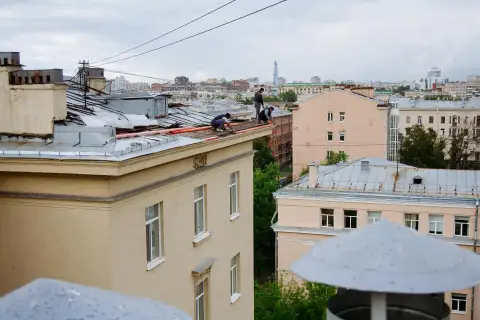
With the increasing demand for energy-efficient buildings, industrial warehouses, and large-scale manufacturing facilities, roof heat insulation has become an important part of modern construction design. Large roof areas are continuously exposed to sunlight, causing significant solar heat absorption and increasing the cooling load inside buildings. For factories, storage facilities, and commercial structures, selecting suitable insulation materials is essential for improving indoor comfort and reducing long-term energy consumption.
Bubble film insulation materials have gained attention in the construction industry because they combine reflective heat protection with air-layer insulation. Unlike traditional insulation products that mainly rely on thickness to reduce heat transfer, reflective bubble films use lightweight multi-layer structures to reduce radiant heat penetration. Behind the production of these high-performance materials, advanced bubble film manufacturing machines provide the precision and stability required for consistent insulation film production.
Challenges of Traditional Roof Insulation Materials in Modern Construction
Traditional roof insulation solutions, including fiberglass, rock wool, and foam-based materials, have been widely used in industrial and commercial buildings. However, as construction standards continue to improve, these materials are facing new challenges in terms of efficiency, installation convenience, and long-term performance.
One major problem is excessive heat absorption caused by direct solar radiation. Metal roofs, which are commonly used in warehouses and industrial plants, can reach high surface temperatures under strong sunlight. Without effective reflective protection, heat can transfer into the building interior, increasing the workload of air conditioning and ventilation systems.
Another limitation of traditional insulation materials is their weight and installation complexity. Thick insulation layers may require additional structural support, increasing transportation and construction costs. Some materials can also experience performance changes after long-term exposure to moisture, temperature fluctuations, or environmental conditions.
For building material manufacturers, producing insulation products with stable quality and reliable thermal performance requires advanced manufacturing technology. The production process must ensure consistent film thickness, strong layer bonding, and uniform air cell formation. These requirements have encouraged the development of high-precision bubble film manufacturing machines for insulation film production.
Reflective Lamination Technology Enhances Heat Reflection Performance
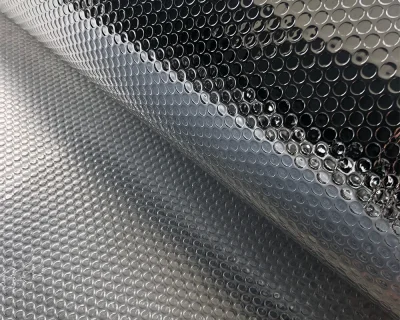
The performance of reflective bubble insulation film depends greatly on the quality of its laminated structure. A high-quality insulation film usually combines a reflective layer, polyethylene bubble layer, and protective layers to achieve better thermal resistance.
Modern bubble film manufacturing machines use advanced lamination systems to combine aluminum foil or reflective materials with polyethylene film. Through accurate temperature control and stable pressure adjustment, the equipment helps achieve strong bonding between different layers while maintaining surface quality.
Compared with manual or low-precision production methods, automated lamination technology provides better consistency throughout the entire production process. Stable bonding reduces the risk of layer separation and helps maintain the reflective performance of the insulation material during long-term application.
The reflective surface works by reducing the amount of solar radiation absorbed by the roof structure. When applied under metal roofs or within building envelope systems, reflective bubble insulation can help reduce heat transfer caused by radiant energy. For manufacturers serving hot climate regions, consistent lamination quality is an important factor in producing reliable insulation products.
Advanced bubble film manufacturing machines are designed to provide precise control over extrusion, heating, and composite processes, helping manufacturers produce insulation films with stable performance and improved market competitiveness.
Precision Bubble Forming Creates Effective Air Insulation Barriers
The air cells inside bubble insulation film play an important role in reducing heat transfer. These enclosed air chambers create a thermal barrier between the external environment and the indoor space, helping slow down heat conduction.
The production accuracy of bubble structures directly affects the quality of the final insulation material. Modern bubble film manufacturing machines use precision vacuum forming technology to create evenly distributed bubbles with stable dimensions. Consistent bubble size helps maintain uniform insulation performance across the entire roll.
During the extrusion process, accurate control of cooling, vacuum pressure, and film forming speed is essential. If bubble structures are uneven or unstable, the insulation performance and mechanical strength of the finished product may be affected.
Advanced production equipment helps manufacturers maintain better control over these key parameters. By producing uniform air cells and stable film structures, bubble film manufacturing machines support the development of lightweight insulation materials suitable for warehouses, workshops, agricultural buildings, and commercial construction projects.
Multi-Layer Bubble Film Structures Meet Different Insulation Requirements
Different construction applications require different levels of thermal protection, mechanical strength, and durability. To meet these requirements, manufacturers often develop multi-layer bubble insulation films with customized structures.
Three-layer and five-layer bubble films are commonly used for general insulation applications. These structures can combine reflective surfaces, bubble cores, and protective polyethylene layers to balance thermal performance and material strength.
For more demanding applications, multi-layer production technology allows additional functional materials to be integrated into the film structure. Reinforced layers can improve tensile strength, while protective layers can enhance durability during transportation and installation.
For example, large industrial roof projects may require insulation materials that can withstand handling during installation. A stronger composite structure helps reduce damage risks and improves the reliability of the final building insulation system.
The ability to produce different layer combinations depends on the flexibility of the production equipment. Advanced bubble film manufacturing machines provide manufacturers with adjustable production configurations, allowing them to develop insulation products for different market requirements.
Automatic Production Improves Efficiency and Product Consistency
For insulation material producers, stable production efficiency is essential to meet increasing market demand. Manual processes often result in inconsistent thickness, uneven bonding, and production fluctuations. Automated bubble film manufacturing machines help solve these problems by maintaining stable operating conditions throughout continuous production.
Modern equipment integrates technologies such as automatic temperature control, precise extrusion management, stable film pulling systems, and automatic winding units. These functions help improve production consistency while reducing material waste.
Wide-format production capability is also valuable for roof insulation applications. Larger rolls can reduce the number of joints during installation, helping improve overall insulation coverage and reducing potential weak points caused by excessive seams.
Sustainable Insulation Film Production Supports Green Building Development
Energy conservation has become a key focus in modern architecture. As governments and industries promote sustainable building practices, lightweight and efficient insulation materials are becoming increasingly important.
Bubble insulation films provide advantages such as low weight, convenient installation, and reduced material consumption. When produced with efficient manufacturing equipment, these materials can support environmentally responsible construction solutions.
Bubble film manufacturing machines allow producers to optimize material usage through accurate processing control. By maintaining stable film thickness and reducing production waste, manufacturers can improve resource efficiency while producing insulation materials with reliable performance.
The combination of reflective protection, air-layer insulation, and lightweight design makes bubble film a practical choice for various building applications. With continuous improvements in manufacturing technology, these materials are expected to play a larger role in energy-efficient construction.
Advanced Bubble Film Manufacturing Machines for High-Performance Insulation Film Production
The application of bubble film in roof heat insulation continues to expand as industries look for more efficient and practical building solutions. However, producing high-quality insulation materials requires reliable equipment capable of controlling extrusion, bubble forming, lamination, and winding processes with precision.
Our bubble film manufacturing machines are developed to help manufacturers produce stable and high-performance insulation films for construction applications. With advanced production control, flexible layer configurations, and efficient operation, our machines support the manufacturing of reflective bubble insulation materials used in industrial buildings, warehouses, and energy-saving construction projects.