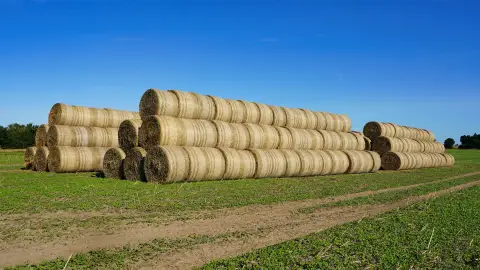
Reliable Agricultural Bale Wrapping Requires High-Performance Stretch Film Solutions
In modern agricultural production, bale wrapping has become an important process for protecting hay, straw, silage, and other forage materials during storage and transportation. As farms continue to move toward large-scale and automated operations, the demand for stronger, more stable, and more durable agricultural stretch film is increasing. The film must provide reliable wrapping performance while maintaining protection against moisture, air, sunlight, and mechanical damage in outdoor environments.
However, traditional agricultural packaging films often face limitations during practical applications. Single-layer films may struggle to achieve a balanced combination of cling performance, tensile strength, flexibility, and puncture resistance. During high-speed bale wrapping, insufficient film strength can lead to breakage, while poor adhesion may affect the sealing effect between film layers. These problems can increase material consumption, reduce wrapping efficiency, and create additional losses during storage.
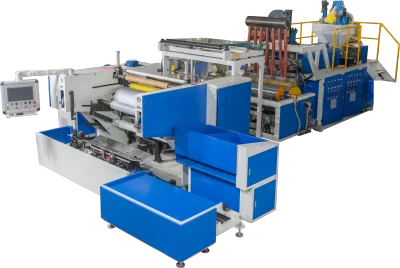
For agricultural film manufacturers, producing consistent and high-quality bale wrapping film requires advanced production technology. The 2-layer stretch film manufacturing machine provides an effective solution by using co-extrusion technology to produce agricultural stretch films with improved structural performance and customized layer functions.
Challenges of Traditional Bale Wrapping Film Production
Agricultural bale wrapping applications create higher requirements compared with general industrial packaging. After being wrapped around a bale, the stretch film needs to maintain continuous tension and create a stable protective layer. During storage, the film must withstand outdoor conditions such as sunlight exposure, temperature changes, rain, and physical impact.
One major challenge of traditional stretch film production is the difficulty of balancing different performance requirements within a single film layer. Bale wrapping film needs strong adhesion to keep multiple layers tightly bonded, but it also requires excellent elasticity to stretch around irregular bale surfaces. At the same time, the film must have enough toughness to resist punctures caused by sharp straw edges or rough handling.
Another challenge is maintaining stable film quality during continuous production. Uneven thickness distribution can influence stretching behavior and reduce wrapping consistency. When the film has weak areas, the risk of tearing increases during the wrapping process, especially when used with automatic bale wrapping equipment that applies controlled stretching force.
Outdoor storage creates additional requirements for agricultural stretch film. Without effective weather resistance, polymer materials may gradually lose flexibility after long-term exposure to ultraviolet radiation. Film aging can reduce sealing performance and affect the protection period of wrapped agricultural products.
These challenges require film manufacturers to adopt more advanced production methods that allow precise control of film structure, thickness, and material performance.
The Role of Stretch Film in Agricultural Bale Wrapping
Stretch film plays a critical role in maintaining the quality and stability of wrapped agricultural products. During bale wrapping, the film is stretched around the bale surface and relies on elastic recovery to generate holding force. This process helps maintain bale shape and provides a compact packaging structure for transportation and storage.
A high-performance agricultural stretch film provides strong layer adhesion to create a reliable sealing environment. The cling performance of the inner surface allows each wrapping layer to bond effectively, reducing the possibility of film separation during handling. This is especially important for silage applications where maintaining a stable low-oxygen environment supports better preservation conditions.
The mechanical strength of the film is also essential for protecting bales from external damage. A durable outer layer helps resist punctures, tears, and friction caused by transportation, stacking, and field handling. By improving the protective capability of the film, agricultural businesses can reduce the risk of damaged packaging and avoid unnecessary rewrapping operations.
In addition, stretch film with stable thickness and consistent elongation performance helps improve wrapping efficiency. Automated wrapping systems require film with predictable mechanical properties to maintain stable operation. Consistent film quality allows operators to achieve reliable coverage while reducing material waste.
2-Layer Co-Extrusion Technology for Advanced Agricultural Stretch Film
The 2-layer stretch film manufacturing machine is designed to produce agricultural stretch film with a functional dual-layer structure. Through co-extrusion technology, two different polymer layers are combined during production, allowing each layer to provide specific performance advantages.
The inner layer is mainly designed for high cling performance and stable adhesion. During bale wrapping, this layer directly contacts the bale surface and provides strong bonding between overlapping film layers. A properly formulated inner layer helps maintain wrapping tightness and supports efficient application on different types of bale wrapping equipment.
The outer layer focuses on durability and protection. By optimizing material toughness and mechanical strength, this layer improves resistance against puncture and tearing caused by external forces. This structure allows the finished film to achieve a better balance between flexibility and protection compared with conventional single-layer films.
The two-layer structure also provides manufacturers with greater flexibility in material selection. Different polymer combinations can be adjusted according to application requirements, allowing producers to develop films with specific characteristics such as higher cling force, improved toughness, or enhanced weather resistance.
This manufacturing approach helps agricultural film producers create more competitive products while maintaining stable production efficiency.
Precision Production Improves Film Quality and Application Performance
A reliable stretch film manufacturing machine is essential for producing agricultural films with consistent performance. Stable extrusion control, accurate temperature management, and precision die technology directly influence the final film quality.
During production, uniform thickness control helps ensure that every part of the film roll provides similar stretching performance. This reduces weak points and improves reliability during bale wrapping. For agricultural applications, consistent film thickness is especially important because uneven material distribution may affect both protection performance and material consumption.
The machine can also support different production requirements through adjustable process parameters. Manufacturers can optimize layer ratios, extrusion conditions, and film specifications according to different agricultural markets. This flexibility allows producers to supply films suitable for various bale sizes, wrapping methods, and storage environments.
In addition, stable production performance helps reduce waste during manufacturing. Lower defect rates, improved material utilization, and continuous operation capability contribute to more efficient film production and better cost control.
Improved Weather Resistance for Long-Term Agricultural Storage
Agricultural bale wrapping often requires outdoor storage for extended periods, making weather resistance a key performance factor. The 2-layer stretch film manufacturing machine supports the production of films with UV-resistant additives and durable polymer structures to improve outdoor performance.
UV stabilization helps slow down material degradation caused by prolonged sunlight exposure. This allows the film to maintain flexibility and mechanical strength throughout the storage period. For agricultural users, improved weather resistance provides more reliable protection against changing environmental conditions.
The multi-layer film structure also helps create a stronger moisture barrier. A well-designed agricultural stretch film reduces the risk of water penetration and helps protect the internal contents of the bale from external environmental influences.
By combining strong adhesion, mechanical durability, and weather resistance, two-layer stretch film provides a practical solution for demanding agricultural packaging applications.
Supporting Agricultural Packaging Growth with Stretch Film Manufacturing Equipment
As agricultural production becomes more efficient and technology-driven, the demand for reliable bale wrapping materials continues to grow. Film manufacturers need production equipment that can provide stable quality, flexible configurations, and efficient operation to meet changing market requirements.
Our 2-layer stretch film manufacturing machine offers an advanced production solution for companies focusing on agricultural stretch film applications. With co-extrusion technology, precise thickness control, and stable processing performance, the machine helps manufacturers produce films with excellent adhesion, strength, and outdoor durability.
By investing in advanced stretch film production equipment, manufacturers can improve product competitiveness, expand agricultural packaging applications, and provide customers with more reliable bale wrapping solutions. The combination of efficient manufacturing technology and high-performance film design makes the stretch film manufacturing machine an important choice for companies seeking long-term development in the agricultural packaging industry.