Understanding Silage Stretch Film Manufacturing Technology and Materials
2026-05-12
Preserving forage quality during ensiling is critical for minimizing dry matter loss and preventing spoilage. Modern silage stretch film acts as a high-performance barrier, solving the limitations of traditional single-layer films that often succumb to oxygen ingress and mold growth.
Multi-Layer Co-Extrusion Technology
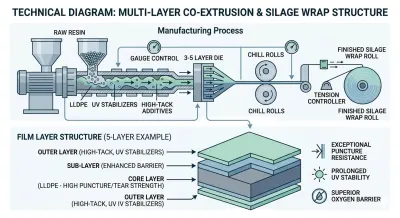
The engineering core of high-quality silage wrap lies in multi-layer co-extrusion. Using 2-5-layer stretch film extrusion machines, manufacturers can engineer specific functional properties into each micron of the film:
- Core Layers: Primarily composed of Linear Low-Density Polyethylene (LLDPE), providing the essential puncture resistance and tear strength needed to handle coarse forage.
- Outer Layers: Integrated with advanced UV stabilizers to protect against solar degradation and high-tack additives that ensure a hermetic, airtight seal.
- Barrier Performance: Multi-layer designs (especially 5-layer configurations) create a superior oxygen barrier compared to standard wraps.
The Manufacturing Process
The transition from raw resin to finished rolls requires specialized equipment to maintain consistent film density and elongation:
- Precision Extrusion: Specialized stretch film machines utilize multi-zone temperature control to melt and bond LLDPE and additives without compromising polymer integrity.
- Gauge Control: Automated systems ensure uniform thickness across the entire roll, which is vital for consistent film mileage and wrapping tension.
- Cling and Tensioning: The process optimizes the distribution of tackifiers, ensuring the film adheres perfectly to itself during wrapping to eliminate air pockets.
Benefits of Advanced Film Engineering
Technologically advanced silage films do more than just cover forage; they actively manage the preservation environment:
- Anaerobic Fermentation: By creating an oxygen-free seal, the film facilitates controlled fermentation, locking in essential starches, proteins, and fibers.
- Environmental Durability: Enhanced UV protection ensures the film remains stable under extreme weather conditions, preventing premature breakage.
- Optimized Forage Recovery: Superior puncture resistance reduces spoilage losses, ensuring a higher percentage of digestible nutrients for the herd.
- In conclusion, the synergy between multi-layer co-extrusion technology and high-grade LLDPE materials defines the performance of modern silage stretch film. Whether utilizing a 3-layer or a high-output 5-layer system, the goal remains the same: achieving a perfect oxygen barrier to protect nutritional value.