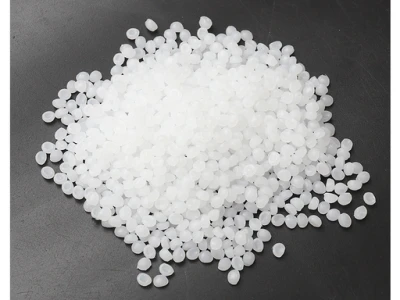
Achieving exceptional clarity, aesthetic appeal, and superior mechanical strength in a single roll of plastic packaging has always come down to one proven formulation choice: a strategic blend of LDPE, or low-density polyethylene, and LLDPE, linear low-density polyethylene. This is not a matter of technical preference so much as an industry standard, and it applies just as directly to a stretch film making machine wrapping heavy pallets as it does to a bubble film making machine producing cushioning for fragile goods.
The Compromise Single-Resin Production Keeps Forcing
Manufacturers relying on a single resin formulation are almost always making a tradeoff they would rather not make. Pure LDPE delivers outstanding clarity, high gloss, and a smooth, soft surface texture that customers respond to visually, and its excellent processability supports smooth, stable extrusion at high output rates. What it lacks is toughness, and a roll built entirely around LDPE tends to struggle against sharp edges, heavy loads, or the extreme stretching that industrial wrapping applications demand.
Pure LLDPE solves the strength side of that equation, offering exceptional toughness, superior tensile strength, and strong puncture resistance, but at the cost of the clarity and surface gloss that LDPE delivers so well. Equipment without genuine multi-layer co-extrusion capability is left choosing one property over the other, since blending both resins into a single homogeneous layer rarely captures the best of either one. That compromise shows up further downstream too, since uneven control over resin ratio and layer thickness weakens heat-sealing performance and moisture barrier properties, both of which matter directly for food-safe packaging and long-term protection of industrial goods.
Where the Right Resin Balance Actually Pays Off
These tradeoffs are not abstract, they show up in very specific ways depending on the application. Industrial pallet wrapping is a clear example on the stretch side of production, since a roll produced by a stretch film making machine needs to survive extreme stretching around heavy, sharp-edged loads without tearing partway through the wrap. LLDPE's tensile strength and puncture resistance are what make that possible, and its durability is also what allows manufacturers to downgauge, producing thinner, lighter rolls that hold their performance while cutting material consumption and per-unit cost.
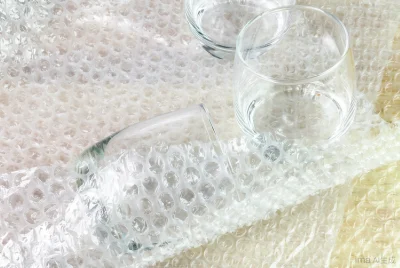
Food-grade and personal care cushioning tells a different story on the bubble side of production. A roll coming off a bubble film making machine for this kind of application needs to be clear enough for products to be visually inspected through the packaging, while also delivering the moisture barrier and heat-sealing reliability that food safety standards require. Clarity and barrier performance rarely come from the same resin at the same time, which is exactly why the LDPE-LLDPE combination matters so much in this segment specifically.
Engineering the Blend Layer by Layer
The real advantage of this pairing only shows up once LDPE and LLDPE are precisely engineered into separate layers rather than blended together and hoped for the best. On a state-of-the-art 3-layer or 7-layer production line, it becomes possible to build an LDPE-rich surface layer for clarity and sealability, supported underneath by an LLDPE-dominant core for maximum strength. That layered structure is what produces a finished roll that is both visually clear and genuinely durable, rather than a compromise sitting somewhere in between.
Our stretch film making machine platforms are built around exactly this kind of precision multi-layer co-extrusion, with die and layer-ratio control fine enough to shift the balance toward a thicker LLDPE core when the priority is puncture resistance under heavy pallet loads, or toward a more generous LDPE surface layer when clarity and cling performance matter more for the application. The same underlying principle carries over to our bubble film making machine lines, where multi-layer structures allow an LDPE-rich outer layer to deliver the transparency needed for product inspection while an LLDPE-supported core maintains the cushioning strength that protective packaging depends on.
Precision Layer Control Instead of Fixed Ratios
Getting this balance right consistently requires more than choosing the right resins, it requires control systems capable of holding a precise layer ratio across an entire production run. Both of our machine platforms are engineered with layer-ratio and thickness feedback systems that let operators adjust the LDPE-to-LLDPE balance to match a specific application rather than running a single fixed formulation regardless of what the order actually needs. A production run destined for heavy industrial pallet wrapping can be tuned toward a stronger LLDPE core, while a run destined for retail-facing cushioning packaging can be adjusted toward a clearer, glossier LDPE-rich surface, all without switching to a different machine configuration.
This kind of flexibility matters because customer requirements rarely stay static. A converter running a stretch film making machine one week for chemical drum pallets and the next week for lighter retail wrapping needs equipment that can shift its layer strategy accordingly, rather than being locked into whichever resin balance the line happened to be built around. The same logic applies to a bubble film making machine serving both food-contact cushioning and heavier industrial protective packaging within the same production schedule.
Turning Material Science Into Lower Production Cost
The downgauging advantage that LLDPE makes possible is where this material science translates into a direct cost benefit rather than just a performance one. Because LLDPE maintains strength even at reduced thickness, manufacturers running either of our machine platforms can produce thinner rolls without sacrificing the puncture resistance or cushioning performance their customers expect. Less resin consumed per roll means a lower per-unit material cost, and that saving compounds significantly across high-volume production runs, whether the output is stretch wrap for a logistics operation or cushioning rolls for an e-commerce fulfillment center.
Heat-sealing performance and moisture barrier properties benefit from the same layered approach. Both LDPE and LLDPE contribute reliable sealing and barrier characteristics, and when they are engineered into distinct layers through precise co-extrusion rather than blended indiscriminately, the finished roll holds those properties more consistently across an entire production batch. That consistency is exactly what food packaging customers and industrial buyers alike are checking for when they qualify a new supplier.
A Formulation Worth Building the Machine Around
LDPE and LLDPE have become the industry standard for a straightforward reason: together they deliver the clarity, strength, sealing performance, and barrier protection that no single resin manages on its own. Our stretch film making machine and bubble film making machine platforms are engineered specifically to make the most of that combination, using precision multi-layer co-extrusion and adjustable layer-ratio control to turn this proven material science into a finished product that holds up to real-world handling while still looking and performing the way customers expect. Getting the resin chemistry right only pays off when the equipment producing it is precise enough to put each polymer exactly where it needs to be, layer by layer, roll after roll.