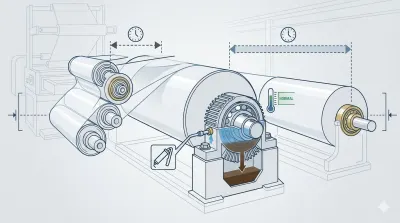
Warning Signs of Overheating Bearings & Lubrication Checklist for a Stretch Film Extrusion Machines
2026-07-01
High-speed film production demands seamless mechanical continuity. In continuous cast film production lines, stretch film extrusion machines operate under relentless thermo-mechanical stress. Among all critical components, the heavy-duty bearings inside the extruder drive, melt pump, and cooling roller assemblies bear the highest burden. Bearing failure due to friction-induced overheating remains a leading cause of unplanned manufacturing downtime. Recognizing early warning signs of thermal stress and implementing a structured preventative maintenance strategy protects your production capacity, limits component degradation, and safeguards your overall equipment effectiveness (OEE).
Critical Warnings of Thermal Breakdown in Stretch Film Manufacturing Lines
Mechanical friction inside a continuous extruder generates distinct indicators before catastrophic component failure occurs. Operational teams must monitor acoustic emissions and physical vibration patterns. A sudden shift to high-frequency metallic screeching indicates an immediate loss of oil film thickness between the rolling elements and the bearing raceways. This metallic contact generates excessive localized heat that alters the molecular structure of nearby plastic resins, causing localized melt fractures.
Thermal degradation of lubricant is another immediate symptom of an unbalanced extrusion system. When a bearing overheats, standard grease experiences rapid oil separation, leaking away from the housing and leaving behind a hardened, carbonized crust. This oxidized residue accelerates abrasive wear instead of minimizing it. Furthermore, severe thermal expansion inside the bearing housing alters the strict tolerances of the extrusion screw. This variance causes subtle melt pressure fluctuations, which degrade final film quality by introducing thickness variations and visible gels across the material web.
Technical Failure Modes of Conventional Film Extrusion Infrastructure
Traditional cast film manufacturing setups frequently suffer from a lack of structured, quantitative maintenance protocols. Many manufacturing facilities depend entirely on reactive maintenance, running components until they lock up completely. Standard machine frameworks lack integrated digital thermal tracking, forcing maintenance crews to rely on periodic manual inspections. By the time an external bearing block feels hot to the touch, internal material fatigue has already progressed past the point of repair.
Conventional designs also fail to distinguish between the varying mechanical demands of different equipment classes. Treating a high-speed line the same as a manual station leads to severe operational imbalances. Standard bearing blocks also feature weak sealing rings that cannot withstand the fine polymer dust common in plastic processing environments. This allows airborne particulate matter to infiltrate the grease reservoirs, turning high-grade lubricants into destructive abrasive compounds that destroy internal raceways.
Advanced Bearing Innovation and Premium Lubricant Compatibility
Modern high-performance stretch film extrusion machines integrate specialized component engineering designed to overcome these classic operational vulnerabilities. Next-generation bearing housings are precision-machined to accommodate specialized premium greases, such as high-temperature, lithium-complex, or advanced polyurea-based lubricants. These advanced lubricants are specifically formulated to maintain a stable, high-load working range from -20°C up to +150°C. This ensures a consistent, resilient elastohydrodynamic oil film that resists the severe radiant heat radiating from the extruder barrels.
Comprehensive Machine Engineering and Automated Thermal Management
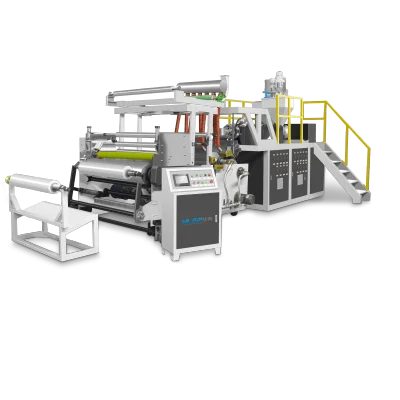
True operational reliability requires a fully integrated solution that connects individual components with global machine automation. Our advanced stretch film extrusion machines feature automated central lubrication units governed directly by the main PLC system. This automation removes human error by delivering metered, pressurized doses of fresh lubricant at precise time increments. By maintaining a perfect volumetric balance, the system avoids both under-lubrication friction and over-lubrication churning heat.
Systematic Lubrication Protocol for Extrusion Equipment
Implementing a standardized maintenance checklist ensures optimal performance for both a semi-automatic stretch film machine and a high-speed fully automatic stretch film machine. This systematic schedule must be integrated into daily plant operations to guarantee component longevity.
Standard-Duty Versus High-Speed Lubrication Intervals
- Semi-automatic stretch film equipment running under standard-duty cycles requires a complete bearing relubrication cycle every 500 operating hours to maintain critical oil film protection.
- High-speed fully automatic stretch film machinery demands a tighter maintenance schedule, requiring high-load bearing blocks to be serviced every 300 operating hours to counter intense shear forces.
Contamination Defense and Seal Integrity Validation
- Technicians must thoroughly clean all grease injection points and mechanical fittings prior to lubricant application to eliminate contaminant entry vectors.
- Maintenance teams must perform a complete flush of legacy, oxidized grease during service intervals to ensure only fresh compound fills the bearing cavity.
- Operational guidelines require a comprehensive quarterly inspection of all flexible lip seals and rigid labyrinth seals across the extrusion drive train.
- Hardened, brittle, or cracked sealing components must be replaced immediately to preserve the closed system and prevent polymer dust ingress.
Precision Mechanical Alignment Controls
- Mechanical alignment of the bearing housing must be verified following every major chill roll adjustment, gearbox rebuild, or T-die calibration procedure.
- Alignment tolerances must be held within strict parameters, as a minor 0.1 mm shaft misalignment generates extreme localized thermal stress under continuous load.
- Maintaining tight alignment limits is critical on a 3-layer stretch film machine utilizing high-speed synchronized turret winders to prevent harmonic resonance tracking back to the primary motor.
Driving Production Efficiency Through Engineering Excellence
Protecting your production line from bearing degradation requires a combination of strict operational discipline and advanced machine engineering. While a meticulous maintenance checklist protects individual components, choosing an expertly engineered machine eliminates structural vulnerabilities from your factory floor. Investing in our advanced extrusion machine prevents unplanned downtime, minimizes raw material waste, and delivers consistent roll profiles. Partnering with a manufacturer focused on precision engineering ensures your facility maintains a competitive edge in high-volume film production.