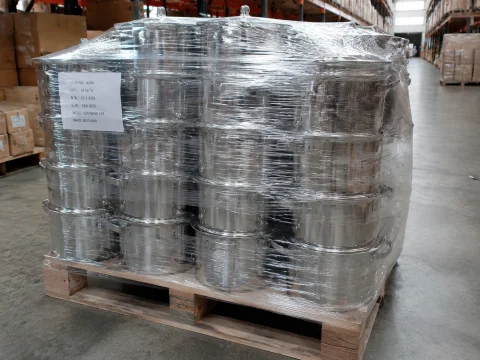
The global kitchen appliance supply chain requires packaging solutions that can withstand complex transportation conditions, including long-distance ocean freight, repeated loading and unloading, warehouse storage, and distribution operations. Products such as refrigerators, ovens, range hoods, dishwashers, and other kitchen equipment often feature large dimensions, uneven structures, sensitive surfaces, and valuable electronic components, making transportation protection a critical factor for manufacturers and exporters.
Traditional packaging films with limited strength and poor load stability may fail under harsh logistics conditions, resulting in product scratches, pallet instability, moisture exposure, and increased after-sales costs. As packaging requirements continue to evolve, advanced thin-film extrusion technology has become an essential solution for producing stronger, lighter, and more efficient protective materials.
A modern stretch film manufacturing machine enables manufacturers to produce high-performance stretch films through multi-layer co-extrusion technology, precise resin control, and stable production processes. By optimizing film structure, mechanical strength, and material consumption, these machines provide reliable packaging solutions that help kitchen appliance manufacturers improve transportation safety while reducing overall packaging costs.
Protective Packaging Requirements for International Kitchen Appliance Logistics
Kitchen appliances face multiple risks throughout international transportation. Unlike small consumer goods, large appliances usually require palletized packaging systems that must maintain stability during extended logistics cycles. The packaging film used for these applications needs to provide strong load containment, puncture resistance, and surface protection under different environmental conditions.
One major challenge is mechanical damage caused by product shape and transportation movement. Many kitchen appliances contain sharp corners, metal edges, or irregular structures that can create stress points on conventional wrapping films. For example, range hoods, built-in ovens, and stainless-steel appliances may puncture low-strength films during wrapping, handling, or transportation. Once the protective film fails, the packaged goods become more vulnerable to impact damage and surface defects.
Another concern is pallet stability during international shipping. Ocean freight environments involve continuous vibration, acceleration, and movement caused by vessel operation. If the wrapping film does not provide sufficient holding force, cartons or appliance units may shift on the pallet, increasing the possibility of collision and damage during unloading.
Environmental conditions also create significant challenges for kitchen appliance packaging. International shipments may pass through humid regions, coastal areas, and temperature variations that create condensation inside packaging systems. Moisture, salt spray, and prolonged exposure to unfavorable conditions can affect metal components, electrical parts, and product appearance. At the same time, friction between cartons, protective materials, and appliance surfaces may lead to scratches that reduce product quality.
Beyond protection performance, packaging manufacturers are also under pressure to reduce material consumption. Traditional thick films often require more resin to achieve acceptable strength levels, increasing packaging costs and transportation weight. For companies managing large export volumes, improving film efficiency without sacrificing performance has become an important part of sustainable packaging strategies.
Multi-Layer Co-Extrusion Technology Redefines Stretch Film Performance
The performance of modern stretch film depends heavily on production technology and material structure. A stretch film manufacturing machine equipped with multi-layer co-extrusion capability allows manufacturers to combine different polymer properties within a single film structure, creating packaging films specifically designed for various appliance applications.
For heavy and sharp-edged kitchen appliances, a 5-layer stretch film production configuration provides enhanced performance through functional layer distribution. The inner layers can be designed with improved tensile strength and puncture resistance, creating a durable structural core, while the outer layers can provide excellent cling performance to improve load stability. This structure is particularly suitable for large appliances requiring stronger containment during export transportation.
For medium-sized kitchen appliances, 3-layer stretch film solutions provide a balanced combination of strength, elasticity, and cost efficiency. This structure is widely used for products that require reliable wrapping performance while maintaining reasonable material consumption. Through precise layer design, manufacturers can achieve stable load retention without unnecessarily increasing film thickness.
For lightweight kitchen appliances, 2-layer stretch film solutions focus on material optimization and flexible packaging performance. By adjusting resin combinations and extrusion parameters, manufacturers can produce films with sufficient stretchability and holding force while reducing raw material usage.
The ability to customize film structures is one of the key advantages of advanced stretch film manufacturing machine technology. Instead of relying on one standard film specification, producers can develop different solutions according to appliance dimensions, weight, transportation distance, and packaging requirements.
| Film Structure | Recommended Applications | Key Performance Focus |
|---|---|---|
| 5-Layer Stretch Film | Heavy kitchen appliances, large appliances, sharp-edge products | High puncture resistance, strong load containment, excellent cling performance |
| 3-Layer Stretch Film | Medium-sized kitchen appliances, standard export packaging | Balanced tensile strength, elasticity, and cost efficiency |
| 2-Layer Stretch Film | Lightweight small appliances, flexible packaging applications | Lower material consumption, stable stretching performance, economical production |
Material Advantages of High-Performance LLDPE Stretch Film Production
Linear low-density polyethylene (LLDPE) remains one of the most important materials used in stretch film production because of its excellent flexibility, tensile strength, and stretch recovery characteristics. When processed through an advanced stretch film manufacturing machine, optimized LLDPE formulations can deliver improved pre-stretch performance and stronger load retention.
High-quality stretch film requires a balance between elongation and strength. Excessive stretching without sufficient recovery force may reduce package stability, while overly rigid films may increase material consumption and create wrapping difficulties. Through precise extrusion temperature control, screw design optimization, and stable layer distribution, modern production systems help manufacturers achieve consistent film properties.
Film thickness uniformity is another important factor affecting packaging performance. Advanced extrusion systems can integrate automatic control technologies to maintain stable thickness during continuous production. Uniform film quality helps prevent weak areas, improves packaging reliability, and supports efficient material usage.
In addition, manufacturers can adjust formulations according to different applications, including heavy-duty appliance transportation, warehouse protection, and export packaging. This flexibility allows stretch film producers to serve a wider range of customers while improving production efficiency.
Business Benefits of Advanced Stretch Film Manufacturing Solutions
Investing in an advanced stretch film manufacturing machine provides more than improved production capability. It creates measurable advantages across packaging operations, supply chain management, and long-term business development.
One important benefit is improved product protection during transportation. High-performance stretch films with strong puncture resistance and reliable holding force help maintain pallet integrity throughout logistics operations. Better packaging stability reduces the possibility of transportation-related damage and supports more consistent delivery performance.
Another major advantage is packaging cost optimization through film gauge reduction. Modern stretch film technology allows manufacturers to produce thinner films while maintaining required mechanical properties. Reduced material consumption can lower production costs, decrease packaging waste, and reduce transportation weight, supporting both economic and environmental goals.
Flexible production capability also helps companies respond to different appliance packaging requirements. By adjusting extrusion parameters, layer structures, and material combinations, manufacturers can produce films suitable for various product categories, from compact kitchen appliances to large household equipment.
For appliance manufacturers and packaging suppliers, this adaptability creates opportunities to improve packaging efficiency without changing existing logistics systems. A well-designed stretch film solution can support multiple product lines while maintaining consistent quality standards.
Enhancing Appliance Packaging Efficiency with Advanced Film Production Technology
The growing demand for safer, lighter, and more sustainable packaging has made advanced film production technology increasingly important for global appliance supply chains. A high-performance stretch film manufacturing machine provides manufacturers with the capability to produce customized packaging films that combine strength, flexibility, and material efficiency.
Through multi-layer co-extrusion technology, precise extrusion control, and optimized material processing, modern stretch film production systems help companies develop packaging solutions that meet the challenges of international transportation. From reducing material consumption to improving load stability, these machines support more efficient and reliable packaging operations.
As an experienced manufacturer of stretch film production equipment, we provide customized solutions based on customers’ production goals, film structures, and application requirements. With advanced machine design and professional technical support, our stretch film manufacturing machine helps packaging producers build competitive solutions for the global kitchen appliance market while achieving cost efficiency, transportation reliability, and sustainable development.