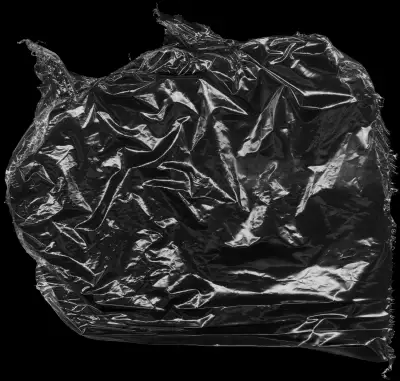
Film thickness uniformity is one of the most important quality indicators in stretch film production. For industrial packaging applications, consistent gauge control directly affects film strength, elongation performance, load stability, and material efficiency. Even small thickness variations across the film roll can influence puncture resistance, wrapping performance, and the overall reliability of the finished product.
Maintaining consistent film thickness during continuous production is one of the key concerns for stretch film manufacturers. Variations in extrusion output, cooling conditions, or film handling can directly affect the quality and performance of the final product. Therefore, a reliable stretch film manufacturing machine requires accurate coordination between the extrusion system, cooling unit, and web control process to ensure stable thickness throughout the production process.
Extrusion Output Stability and Screw Design
The extrusion system is the foundation of stretch film thickness control. During production, polymer materials such as LLDPE and LDPE are melted and conveyed through the extruder before entering the die head. The stability of this melt flow directly determines the uniformity of the final film.
The screw design, compression ratio, and plasticizing capability of the extruder all influence the consistency of polymer output. If the melt pressure fluctuates during extrusion, the amount of material delivered to the die may change, resulting in thickness variations along the machine direction.
A high-quality stretch film manufacturing machine uses optimized screw structures, stable heating control, and precise drive systems to maintain consistent melt delivery. This helps reduce thickness fluctuations and ensures stable production during long continuous operating periods.
Precise Control Between Extrusion Speed and Film Line Speed
Film thickness is determined by the relationship between extrusion output and production speed. When the amount of polymer entering the die and the speed of the traction system are not properly balanced, the film may become thicker or thinner than the target specification.
Modern stretch film production lines apply digital speed control systems to coordinate the extruder, casting section, and winding system. Closed-loop control technology continuously monitors operating conditions and maintains stable communication between different drive units.
By keeping extrusion volume and web movement synchronized, manufacturers can achieve more consistent gauge control while improving production efficiency and reducing unnecessary material consumption.
T-Die Performance and Cross-Web Thickness Uniformity
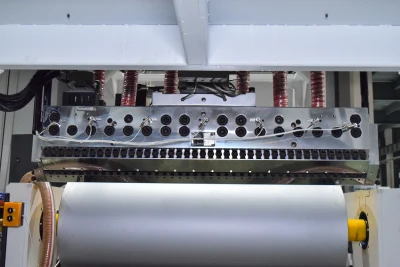
The extrusion die plays a critical role in controlling thickness distribution across the width of the film. During the casting process, molten polymer must be evenly distributed through the die lip before contacting the cooling roller.
Uneven die temperature, improper die adjustment, or unstable melt pressure can cause differences in polymer flow across the film width. These variations may create thicker or thinner areas that affect final film performance.
Advanced stretch film manufacturing machines can be equipped with precision T-dies and automatic thickness control systems. Thickness sensors continuously measure the moving film profile and provide feedback to the control system, allowing automatic adjustments to maintain more stable cross-web thickness.
Temperature Control During Extrusion and Cooling
Temperature stability is another important factor affecting film thickness consistency. Polyethylene materials are sensitive to temperature changes during melting and forming. Uneven temperature distribution inside the barrel, die head, or cooling section can influence melt viscosity and polymer flow behavior.
Multi-zone heating systems with PID temperature controllers help maintain accurate temperature conditions throughout the extrusion process. Each heating zone can be independently controlled to reduce temperature fluctuations and improve melt stability.
After extrusion, the cooling roller system rapidly solidifies the molten film. Efficient cooling helps maintain the film structure, stabilize thickness, and achieve consistent physical properties across the finished roll.
Mechanical Stability of Drive and Winding Systems
Mechanical precision also has a direct impact on film thickness consistency. The extruder drive system must provide stable torque to maintain consistent screw speed, especially during high-output production.
Any unexpected speed fluctuation from motors, gearboxes, or transmission components may affect extrusion output and create periodic thickness variations. High-quality motors, reliable transmission systems, and precise control components help maintain stable operation throughout continuous manufacturing.
The winding system also influences final product quality. Accurate tension control prevents excessive stretching or loose winding, ensuring that finished rolls maintain consistent appearance and performance.
Edge Stability and Film Width Control
During cast film production, the molten polymer naturally experiences edge contraction, commonly known as neck-in. If this effect is not properly controlled, it can reduce usable film width and increase trimming losses.
Industrial stretch film machines often use technologies such as vacuum boxes and air knives near the casting area to improve contact between the molten film and the cooling roller. These systems help stabilize the film edges, improve cooling efficiency, and maintain more consistent width throughout production.
Effective edge control not only improves material utilization but also supports more stable downstream converting and packaging operations.
Improving Film Quality Through Integrated Machine Design
Producing high-quality stretch film requires the coordinated performance of extrusion, temperature management, casting, traction, and winding systems. Thickness consistency is not determined by a single component but by the overall design and control accuracy of the complete production line.
With experience in stretch film equipment development and manufacturing, our team provides production solutions designed for different film specifications, output requirements, and application needs. Through optimized mechanical structures and advanced control systems, our stretch film manufacturing machines help customers improve product consistency, reduce material waste, and build reliable production capabilities.