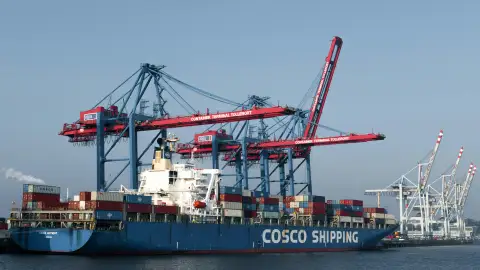
The global shipping industry requires packaging materials that can withstand long-distance transportation, variable weather conditions, and complex handling environments. During ocean freight, export cargo is exposed to continuous vibration, container movement, humidity fluctuations, salt spray, and extended storage periods. These conditions create higher requirements for stretch film performance compared with conventional warehouse packaging applications.
Traditional single-layer stretch films may provide basic load stabilization, but they often face limitations when used for heavy industrial cargo, metal components, machinery, and export pallets requiring long-term protection. To address these challenges, many packaging manufacturers are adopting advanced 3-layer co-extrusion technology produced by modern stretch film manufacturing machines.
By combining different polymer materials and functional additives within multiple layers, 3-layer stretch film provides improved puncture resistance, load retention, and environmental protection. This makes it an effective solution for demanding marine transportation applications where packaging reliability directly affects product safety and logistics efficiency.
Challenges of Traditional Stretch Film in Marine Transportation Applications
Ocean transportation creates a much more demanding environment than standard land-based logistics. Cargo may experience repeated mechanical stress during loading, unloading, and vessel movement. Continuous vibration and horizontal shifting inside containers can gradually reduce pallet stability if the stretch film cannot maintain sufficient holding force.
For heavy machinery, metal parts, and irregular-shaped industrial products, conventional stretch film may experience several common problems. Limited elastic recovery can cause the film to lose tension during long-distance transportation, increasing the risk of pallet movement. At the same time, sharp edges from wooden crates, steel components, or industrial equipment can easily damage films with insufficient puncture resistance.
Environmental exposure is another major concern. Export goods may remain in ports or container yards for extended periods before shipment or delivery. High humidity, salt-containing air, and ultraviolet exposure can accelerate material aging, reducing the mechanical properties of ordinary polyethylene films.
For corrosion-sensitive products such as steel components, automotive parts, and precision machinery, manufacturers often need additional protection methods, including anti-rust oil, VCI paper, or moisture barriers. Although effective, these additional processes increase packaging complexity, labor requirements, and material consumption.
How 3-Layer Co-Extrusion Stretch Film Improves Cargo Stability
A 3-layer co-extrusion stretch film manufacturing machine enables producers to design films with different functional layers, allowing each layer to perform a specific role within the final structure.
The outer layers are typically optimized for toughness, puncture resistance, and surface protection, while the core layer can be engineered for high elasticity and strong load retention. This layered structure allows manufacturers to achieve better performance compared with traditional single-layer films using the same overall material thickness.
During ocean transportation, the elastic recovery of the film helps maintain consistent wrapping force around pallets. When cargo experiences vibration or movement, the film stretches and recovers dynamically, helping reduce load displacement inside containers.
For heavy-duty export packaging, this improved containment force is particularly valuable for applications such as:
- Industrial machinery transportation
- Steel and metal component exports
- Automotive parts logistics
- Wooden crate packaging
- Large equipment protection
In addition, 3-layer structures provide greater flexibility for integrating functional additives. Manufacturers can incorporate UV stabilizers, anti-static additives, or VCI masterbatch solutions according to specific customer requirements, creating specialized stretch films for different transportation environments.
Co-Extrusion Technology Behind High-Performance Stretch Film Production
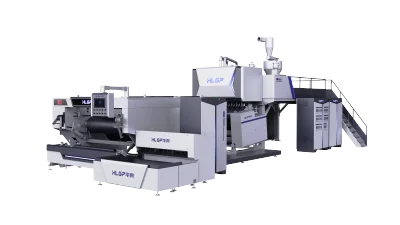
Producing high-performance stretch film requires precise control throughout the extrusion process. A professional stretch film manufacturing machine uses multi-layer co-extrusion technology, allowing different polyethylene materials and additives to be distributed accurately across the film structure.
The extrusion system typically includes precision-controlled extruders, automatic feeding systems, advanced T-die technology, and accurate temperature management. These components work together to ensure stable melt flow and consistent film thickness during continuous production.
For 3-layer stretch film production, the feedblock plays an important role in combining different polymer layers evenly. Proper layer distribution improves mechanical balance, allowing manufacturers to achieve higher strength and better stretching performance without unnecessary material thickness.
Modern extrusion lines can also integrate automatic thickness control systems. Through online thickness measurement and closed-loop adjustment, the machine maintains uniform gauge distribution across the entire film width. This helps reduce raw material waste while ensuring stable performance during high-speed wrapping operations.
Functional Additives Expand Stretch Film Applications in Export Packaging
Beyond mechanical strength, modern stretch films can be customized with functional additives to meet specific logistics requirements.
For example, UV stabilizers can improve resistance against sunlight exposure during outdoor storage or port handling. Anti-static additives may be applied for electronics or sensitive industrial products where electrostatic protection is required.
For corrosion-sensitive metal products, VCI (Volatile Corrosion Inhibitor) stretch film provides an additional protection option. By incorporating VCI masterbatch into the film formulation, the packaging material can release corrosion-inhibiting molecules within the enclosed packaging environment, helping reduce oxidation risks during long-term storage and transportation.
Compared with separate corrosion protection materials, functional stretch films can simplify packaging procedures by combining load securing and product protection into one solution.
Material Efficiency and Sustainable Packaging Advantages
The development of multi-layer stretch film technology also supports the global demand for more efficient plastic usage.
Through advanced co-extrusion design, manufacturers can optimize resin distribution and produce thinner films while maintaining required holding force. This process, commonly known as down-gauging, reduces material consumption without compromising packaging performance.
A modern stretch film manufacturing machine equipped with precise thickness control and optimized winding technology helps producers achieve:
- Lower raw material consumption
- Reduced packaging costs
- Improved roll consistency
- Higher production efficiency
- Better compatibility with automatic wrapping equipment
For international exporters and logistics companies, these improvements contribute to more efficient transportation operations and reduced packaging waste.
Engineering Requirements for 3-Layer Stretch Film Manufacturing Systems
Producing high-performance marine packaging film requires a reliable extrusion platform with precise control, stable operation, and flexible multi-layer capabilities. Our 3-layer stretch film manufacturing machines are designed to help film producers achieve consistent film quality for demanding applications such as export packaging, industrial cargo protection, and heavy-duty transportation.
Equipped with advanced co-extrusion technology, accurate thickness control, and efficient production systems, our machines provide manufacturers with the capability to develop customized stretch film solutions while improving production efficiency and reducing material waste. As global logistics continues to demand stronger and more sustainable packaging materials, our stretch film manufacturing machines offer a dependable foundation for producing high-value films that meet modern transportation requirements.