Deconstructing the Mechanical Design of High-Efficiency Bubble Film Extrusion Machines
2026-07-02
The global packaging sector faces pressure to deliver sustainable, lightweight, and high-strength protective materials. Among these, air bubble film remains a cornerstone for transit protection, driving machinery manufacturers to achieve extreme mechanical precision. For industrial buyers and manufacturing engineers, selecting an advanced bubble film extrusion line requires a deep look beneath the chassis.
Legacy Bottlenecks in Traditional Bubble Film Co-Extrusion Systems
Standard bubble film manufacturing equipment often struggles with mechanical limitations that restrict output quality and increase operational overhead. Traditional single-flight extrusion screws frequently fail to deliver a completely homogeneous polymer melt. This poor mixing leads to significant melt temperature fluctuations, causing inconsistent film thickness and unwanted gels or un-melted resin specks in the final product.
Downstream from the extruder, conventional die head designs aggravate these issues. Legacy center-fed or spider die configurations often contain internal dead zones where stagnant polymer degrades over long production runs. These outdated flow channels cause uneven melt pressure distribution, resulting in erratic gauge variation across the web. When the unstable film reaches the forming section, standard cooling rings cannot distribute air volume uniformly. This uneven cooling leads to premature bubble collapse, weak cushioning profiles, and slow production line speeds. Furthermore, traditional mechanical chain drives and manual friction clutches introduce excessive mechanical backlash and high maintenance costs, limiting long-term reliability.
Advanced Extruder Screw and Barrel Mechanics
To overcome these structural limitations, modern high-efficiency extrusion lines re-engineer the core melting mechanics using high-performance barrier screws and precisely engineered barrels. The processing section features a specialized barrier screw design that physically separates un-melted plastic pellets from the fully homogenized fluid melt along the length of the screw channel.
Precision Flow Mechanics in Center-Fed Co-Extrusion Die Heads
Achieving minimal cross-web gauge variation requires a die head engineered with advanced fluid dynamics. High-efficiency systems utilize multi-layer co-extrusion die heads featuring a customized coat-hanger internal runner layout. These internal pathways are developed using computational fluid dynamics (CFD) simulation software to eliminate internal dead spots and optimize shear rate distribution across all polymer layers.
The mechanical design incorporates independent, precision-machined flow spirals for each distinct material layer, allowing for the precise co-extrusion of structures like ABA or ABC films. Micro-adjustable die lips, controlled by high-tensile push-pull mechanical bolts, give operators the ability to tune the final film thickness with high accuracy. This precise control reduces cross-web thickness tolerances to less than ±3%, ensuring uniform material distribution across both the flat backing film and the raised bubble layers.
High-Velocity Dual-Lip Cooling Rings and Vacuum Forming Drums
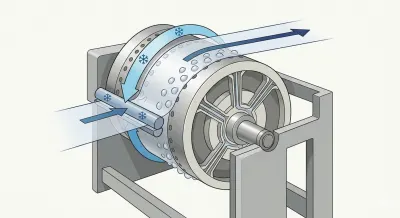
Transforming a flat, molten sheet of plastic into rows of distinct, pressure-resistant air pockets requires rapid, uniform thermal management. Advanced lines accomplish this by pairing a dual-lip high-velocity cooling ring with a precision-machined vacuum forming roller drum. The dual-lip cooling ring uses an internal aerodynamic chamber that directs a laminar, uniform blanket of chilled air across the extruded film right as it exits the die, stabilizing the molten web without causing surface wrinkles.
Synchronized Servo-Driven Tension Control and Automated Winding Units
At the terminal end of the extrusion line, the mechanical winding system must manage film tension perfectly to avoid stretching or distorting the finished bubble film. High-efficiency lines use fully automated, center-surface combination winders driven by independent AC synchronous servo motors. These systems replace old manual friction clutches with high-resolution load cells mounted on low-friction dancer arms, creating a highly responsive, closed-loop tension feedback loop.
The central control computer continuously calculates the changing roll diameter during winding, automatically adjusting the motor torque to maintain constant, low-level web tension. Dual-shaft turret winding assemblies feature integrated, pneumatic flying-knife cutting systems that execute automatic roll changes at full production speed. This design ensures cleanly cut edges, prevents inner-core crushing, and produces straight, neatly aligned rolls that are ready for immediate shipping.
System-Level Performance and Efficiency Advantages
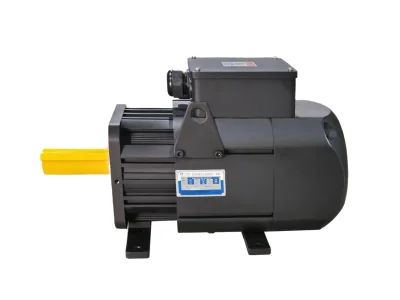
When these highly engineered components work together, they deliver significant improvements in production efficiency and product quality. Integrating direct-drive permanent magnet motors directly to the extruder screws eliminates the power losses typical of traditional gearboxes, reducing overall energy consumption per ton of processed material by up to 25%.
- Line Speed Enhancement: Production lines achieve reliable mechanical running speeds up to 60 meters per minute.
- Throughput Optimization: System design allows for a total output increase of up to 40% compared to legacy lines.
- Material Versatility: The processing components easily adapt to recycled PCR resins or biodegradable bioplastics without compromising bubble burst strength.
- Reduced Scrap Rates: High-precision thickness control and stable bubble forming reduce setup scrap and edge-trim waste to less than 2%.
- Uptime Maximization: Heavy-duty modular components and automated lubrication systems lower wear and extend scheduled maintenance intervals.
Investing in a well-engineered bubble film extrusion line goes far beyond simply buying large workshop machinery. By understanding the mechanical advantages of barrier screw mixing, CFD-optimized die heads, and precise vacuum forming systems, manufacturing companies can secure high-volume production, lower energy bills, and maintain consistent product quality run after run.