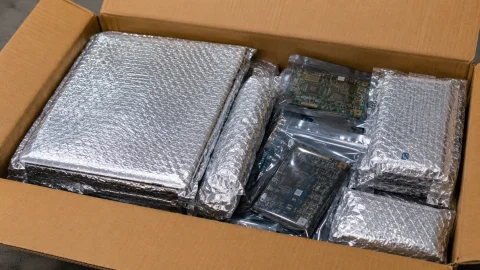
In advanced flexible packaging, bubble film serves as the core structural and cushioning layer within composite aluminum foil laminates. Modern bubble film manufacturing machines provide the critical precision required to extrude, form, and laminate multi-layer protective structures. By precisely controlling cell height, layflat uniformity, and layer distribution, these machines ensure total barrier integrity when bonding polyethylene or polyester skins to micron-thin aluminum foil.
Precise Low-Speed and Medium-Speed Solutions for Core Packaging
For targeted, small-scale applications such as pharmaceutical blister packaging, low-speed bubble film manufacturing machines deliver necessary thermal precision. Operating at a tight melt window between 165°C and 175°C, these systems prevent the scorching of the foil oxide layer during the extrusion of specialized low-density polyethylene blends. This meticulous thermal control maintains consistent bubble cell height within a strict tolerance of ±0.2 mm, successfully eliminating web stretching and seal-edge delamination during thermoforming.
When scaling up to high-speed lines for electronics packaging, medium-speed manufacturing configurations become vital. These machines integrate advanced internal bubble cooling and specialized chilled air rings to achieve throughputs of 80 to 100 kilograms per hour at rapid production speeds. By utilizing fine-thread die gap adjustments, the system locks in accurate cell heights to provide optimal cushioning without adding bulk. The enhanced cooling technology also directly addresses production defects, significantly reducing the occurrence of pin-holing in the adjacent aluminized foil layers.
Multi-Layer Co-Extrusion and Advanced High-Barrier Configurations
Mid-tier food and specialty laboratory pouch production heavily relies on multi-layer co-extrusion technology. Low-speed multi-layer configurations with compact extruders allow rapid material changes between different polymers, ensuring zero weld lines at the lamination interface for high-value medical packaging. For higher volumes, medium-speed multi-layer systems deploy sophisticated five-extruder setups to co-extrude critical barrier cores like ethylene vinyl alcohol between protective polyethylene skins. Integrated digital height sensors manage the bubble neck with extreme accuracy, preventing air gap collapse and subsequent barrier splitting under heavy pouch stress.
For industrial-grade foil wraps and heavy-duty agricultural packaging, high-speed multi-layer units act as the primary manufacturing workhorse. These robust systems maintain stable melt pressure fluctuations within 0.5% through centralized programmable logic controllers, standardizing bubble cell height across extra-wide dies. This consistent pressure regulation prevents uneven structural marks on post-laminated thick foils, guaranteeing that the finished composite material passes rigorous drop and structural stress tests.
Ultra-High Barrier Performance with Seven-Layer Technology
At the highest echelon of the industry, high-speed seven-layer bubble film manufacturing machines are essential for producing military-grade composite totes and critical pharmaceutical pouch stocks. Operating at high output capacities and wide layflat dimensions, these advanced lines seamlessly feed directly into solventless laminator systems. The sophisticated seven-layer stack enables the precise co-extrusion of polyamide tie-layers and specific sealants alongside the standard polyethylene base, right before the outer face undergoes foil lamination.
To maintain flawless operation over extended continuous production cycles, these elite machines incorporate servo-driven oscillating dies and internal bubble stabilizers to completely eliminate neck-in defects. The resulting multi-layer composite film delivers uniform bubble distribution across its entire width. This exceptional architectural uniformity enables the packaging material to achieve an oxygen transmission rate under 0.5 cubic centimeters per square meter per day, providing total water vapor resistance even in extreme high-humidity storage environments.
Conclusion
Selecting the appropriate machinery configuration—balancing precise layer counts, custom screw engineering, and advanced cooling mechanics—remains a fundamental requirement for manufacturing flawless composite aluminum foil packaging. Properly matching the extruder profile to specified barrier requirements completely resolves common delamination failures and secures long-term product protection.