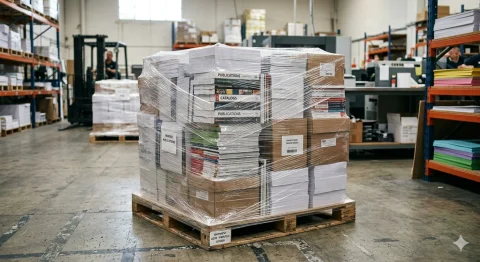
The printing industry requires reliable packaging solutions to protect high-value paper products, printed materials, and industrial media throughout transportation and storage. Products such as coated paper rolls, commercial printing materials, packaging boards, and large-format printed substrates are highly sensitive to moisture, dust, mechanical impact, and handling pressure during logistics operations. Any deformation, contamination, or surface damage can affect downstream processing efficiency and increase material losses.
Traditional packaging materials often struggle to provide stable protection for heavy paper products and long-distance transportation. Single-layer or basic multi-layer films may not offer sufficient puncture resistance, load stability, or moisture control for demanding applications. With the development of advanced co-extrusion technology, a 5-layer stretch film manufacturing machine enables producers to manufacture high-performance stretch films with customized layer structures, helping printing-related industries improve packaging reliability and reduce transportation risks.
Packaging Challenges for Printed Materials During Transportation and Storage
Moisture control is one of the most important requirements in printing material protection. Paper-based products naturally absorb moisture from the surrounding environment, especially during long-term storage or international transportation where temperature and humidity conditions may change significantly. Excessive moisture absorption can affect paper flatness, causing edge curling, dimensional changes, and difficulties during high-speed printing or converting processes.
For coated paper and premium printed materials, maintaining stable surface conditions is particularly important. Variations in humidity may influence coating performance, ink adhesion, and surface quality. Without suitable protective packaging, printed materials may experience quality issues after extended exposure to unstable environments.
Heavy paper rolls and stacked printing materials also create challenges for transportation safety. Industrial paper rolls can weigh hundreds of kilograms or several tons depending on their size and application. During truck transportation, container handling, or warehouse movement, loads are exposed to vibration, acceleration, and impact forces. If the wrapping film cannot provide sufficient holding force, pallet movement and load instability may occur.
In addition, printing materials often have sharp edges, uneven surfaces, or rigid packaging structures that can damage low-quality stretch films. Film punctures during wrapping or transportation may expose the product to dust and moisture, increasing the risk of outer-layer damage and product rejection.
Another challenge comes from modern automated warehouse systems. Many printing companies and logistics providers rely on barcode scanning and visual identification systems to manage inventory efficiently. Packaging films with poor transparency or inconsistent quality can make identification more difficult, reducing warehouse operation efficiency.
How 5-Layer Stretch Film Improves Printing Material Protection
A 5-layer stretch film manufacturing machine allows film producers to design different functional layers according to specific packaging requirements. Compared with conventional three-layer structures, five-layer co-extrusion technology provides more flexibility in material distribution, enabling manufacturers to optimize mechanical strength, elasticity, transparency, and barrier performance.
One of the key advantages of five-layer stretch film is improved moisture protection. By adding a dedicated functional layer within the film structure, manufacturers can optimize resistance against environmental moisture transmission. This helps create a more stable packaging environment for paper rolls and printed products during storage and transportation.
The multi-layer structure also improves film toughness and puncture resistance. Different polymer materials can be assigned to different layers, allowing the outer layers to provide surface protection while inner layers contribute to elasticity and strength. This balanced structure helps the film withstand contact with pallet edges, handling equipment, and transportation conditions.
For heavy printing materials, load containment force is another critical performance factor. During wrapping, stretch film applies tension around the product, creating a stable holding force that helps reduce movement between individual packages. A properly manufactured five-layer stretch film can maintain consistent tension and support safer pallet transportation.
The high elasticity of modern stretch films also helps improve packaging efficiency. Films produced with optimized resin combinations can achieve high stretch performance while maintaining sufficient strength. This allows packaging operators to reduce film consumption while maintaining reliable load stability, helping businesses control packaging costs.
Transparency is another important consideration in printing logistics. High-quality stretch film maintains good optical clarity, allowing warehouse workers and automated systems to identify labels and product information without removing the packaging. This improves inventory management efficiency while keeping products protected.
The Role of 5-Layer Stretch Film Manufacturing Machine Technology
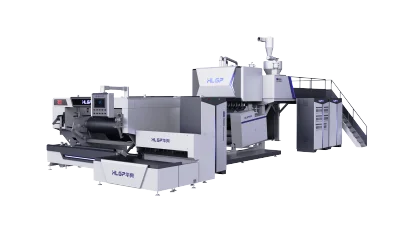
The performance of five-layer stretch film depends not only on raw materials but also on the precision of the production equipment. A high-quality stretch film manufacturing machine provides accurate control over extrusion, layer distribution, cooling, stretching, and winding processes, ensuring stable film quality during continuous production.
The five-layer co-extrusion system allows manufacturers to separately control each functional layer. For example, the outer layers can be designed for puncture resistance and surface protection, while the middle layers can focus on elasticity, toughness, or material optimization. This flexibility enables film producers to develop solutions for different printing applications, from lightweight printed products to heavy industrial paper rolls.
The extrusion system plays an important role in maintaining film consistency. Advanced screw designs, precise temperature control, and stable material feeding systems help ensure uniform melting and mixing of polymer materials. Consistent extrusion conditions contribute to stable film thickness and reliable mechanical performance.
The casting and cooling process is also essential for stretch film production. Accurate cooling control helps improve film transparency, flatness, and dimensional stability. For printing industry applications, these characteristics are important because packaging films must maintain both protective performance and visual inspection capability.
Modern production lines can also integrate automation systems for easier operation and quality management. Functions such as automatic thickness control, production parameter monitoring, and intelligent winding control help manufacturers maintain consistent output and reduce material waste during long production runs.
Expanding Opportunities with Advanced Stretch Film Production Technology
The demand for specialized packaging materials continues to increase as printing companies, paper manufacturers, and logistics providers require safer and more efficient transportation solutions. A 5-layer stretch film manufacturing machine provides film producers with the capability to enter higher-value packaging markets by producing films designed for specific industrial requirements.
Compared with standard stretch film production equipment, advanced five-layer systems offer greater flexibility in material selection and layer design. Manufacturers can adjust formulations according to customer requirements, including stronger puncture resistance, improved elasticity, enhanced transparency, or better environmental performance.
For printing industry customers, this means more reliable protection for valuable materials during storage and transportation. For film manufacturers, it creates opportunities to supply customized packaging solutions with higher added value and stronger market competitiveness.
Advanced Stretch Film Production Technology for Improved Packaging Performance
Producing reliable stretch film for the printing industry requires a combination of suitable material technology and precise manufacturing equipment. A professional 5-layer stretch film manufacturing machine helps manufacturers achieve stable production, accurate layer control, and consistent film performance for demanding packaging applications.
With advanced co-extrusion technology, optimized extrusion components, and intelligent production control systems, our machines are designed to help film producers manufacture high-quality stretch films that meet the requirements of modern industrial packaging. By improving production efficiency, reducing material waste, and supporting customized film development, our equipment provides a practical solution for companies looking to expand their stretch film product range and serve industries with higher packaging standards.