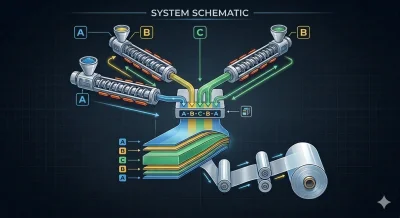
The multi-raw material feeding system is the core of the high-speed stretch film making machine, utilizing an advanced 3-screw co-extrusion setup. This configuration is specifically engineered to produce a high-performance 5-layer (A-B-C-B-A) structure, optimizing material usage while ensuring superior film integrity.
3-Screw Feeding & Layer Engineering
The production process begins with three independent extruders, each dedicated to a specific functional role within the 5-layer film:
- Extruders A & B (Skin & Sub-Layers): These two screws process the outer skin and intermediate sub-layers. They are typically used for high-clarity LLDPE and cling additives. This ensures the final film has excellent surface stickiness for pallet stabilization and superior transparency for barcode scanning.
- Extruder C (Core Layer): This screw processes the central core layer, which acts as the backbone of the film. By utilizing high-strength LLDPE or specialized resins, Extruder C ensures maximum tear strength and structural integrity, preventing film breakage during high-speed wrapping.
- 5-Layer Co-extrusion Feedblock: The molten materials from these three screws merge into a specialized feedblock that splits the streams into an A-B-C-B-A sequence. This creates a synergistic 5-layer profile that is significantly tougher than traditional monolayer or 3-layer films.
Technical Process Advantages
- Precision Material Distribution: The 3-screw system allows for a highly functional layer distribution. By separating the cling, strength, and elasticity components into distinct layers, the system achieves a performance profile that basic blends cannot match.
- Micron-Level Thickness Control: Integrated with the PLC control system, the feeding unit manages material flow with surgical accuracy. This ensures that even at high production speeds, each of the five layers maintains its designated thickness, resulting in a perfectly balanced film web.
- Optimized Resin Efficiency: The ability to isolate specific materials in the core or skin layers allows for film downgauging. Manufacturers can produce thinner films that maintain high puncture resistance, effectively reducing the total cost per roll.
- Sustainability & Recycled Content: The dedicated core-layer screw (Extruder C) is capable of processing high percentages of recycled resins. This allows the machine to produce eco-friendly films without compromising the optical clarity or stickiness of the outer layers.
- Stable & Low-Noise Operation: Designed for high-velocity output, the 3-screw configuration runs with lower noise and higher mechanical stability. This ensures consistent melt pressure, which is vital for maintaining a defect-free film surface.
- By transforming the stretch film making machine into a precision layering platform, this multi-material feeding system provides the technical foundation for modern, high-tension industrial wrap. It ensures that every roll meets the rigorous demands of automated logistics with unmatched reliability.