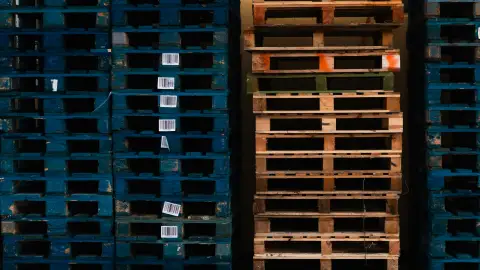
Heavy-duty pallet packaging requires higher levels of strength, stability, and material efficiency than standard wrapping applications. Industries such as construction materials, automotive components, chemical products, and industrial equipment often involve high-density loads that experience significant mechanical stress during storage, handling, and long-distance transportation.
Conventional single-layer stretch films may struggle to maintain sufficient holding force when used for heavy pallets with irregular shapes, sharp edges, or high product weight. To meet these demanding requirements, packaging manufacturers are increasingly adopting 3-layer co-extrusion technology. By using an advanced stretch film manufacturing machine, producers can manufacture multi-layer films with optimized strength, elasticity, and puncture resistance for industrial packaging applications.
Heavy-Duty Packaging Requirements for Industrial Pallet Stabilization
Securing heavy industrial pallets involves complex mechanical challenges throughout the logistics process. During transportation, high-weight loads generate continuous stress caused by vibration, acceleration, braking, and handling operations. If the stretch film cannot maintain sufficient tension over time, pallet movement may occur, increasing the risk of unstable loads and product damage.
Standard stretch films often have limitations when applied to demanding industrial packaging. Insufficient elastic recovery can cause the film to gradually lose tension after stretching, especially during extended transportation cycles. In addition, heavy machinery, metal components, and wooden crates may contain sharp corners or uneven surfaces that increase the risk of puncture and tearing.
Another challenge is packaging efficiency. To compensate for lower film strength, operators may apply additional layers or use thicker films, which increases material consumption and operating costs. On automated wrapping lines, inconsistent film quality can also result in frequent film breaks, production interruptions, and reduced packaging efficiency.
For these reasons, industrial packaging applications require stretch films with balanced mechanical properties, including high tensile strength, reliable elongation, and strong tear resistance.
Performance Advantages of 3-Layer Co-Extruded Stretch Film for Heavy Loads
A 3-layer stretch film manufacturing machine enables producers to create films with different functional properties across multiple layers. Instead of relying on a single polymer structure, co-extrusion technology allows each layer to contribute specific performance advantages.
The outer layer can be designed to provide stable cling performance and surface protection, helping the film maintain secure contact during wrapping. The middle layer typically focuses on strength and puncture resistance, improving the film’s ability to withstand sharp edges and mechanical impact. The inner layer can be optimized for elasticity and stretch recovery, supporting consistent holding force after application.
This layered structure provides better performance balance for heavy-duty pallet packaging. During transportation, the film can absorb minor movements and maintain wrapping pressure around the load, helping reduce pallet shifting caused by vibration or handling forces.
For applications such as metal products, construction materials, and industrial machinery packaging, three-layer stretch film offers an effective solution for improving load stability while maintaining efficient material usage.
Precision Extrusion Technology for Industrial Stretch Film Production
Producing reliable heavy-duty stretch film requires a stretch film manufacturing machine with accurate process control and stable multi-layer extrusion capability. The performance of the final film depends heavily on extrusion consistency, temperature management, layer distribution, and winding quality.
Modern three-layer extrusion lines use multiple extruders, precision feeding systems, and advanced T-die technology to control polymer flow and maintain uniform film thickness. Stable melt pressure and accurate layer distribution help ensure consistent mechanical properties throughout the entire film roll.
Temperature control is another important factor in stretch film production. Precise heating and cooling systems help maintain stable polymer processing conditions, supporting consistent film transparency, strength, and stretching performance.
Advanced production lines can also integrate automatic thickness monitoring systems and intelligent control interfaces. These technologies allow operators to monitor key production parameters, optimize machine adjustments, reduce material waste, and maintain stable output quality during continuous manufacturing.
Improving Material Efficiency Through Multi-Layer Film Technology
One of the key advantages of 3-layer co-extrusion technology is the ability to optimize material distribution within the film structure. By placing high-performance polymers in specific layers, manufacturers can improve film strength and functionality without simply increasing overall thickness.
Combined with accurate gauge control, modern stretch film manufacturing machines enable producers to develop thinner films with reliable load containment performance. This down-gauging capability helps reduce raw material consumption while maintaining the packaging performance required for industrial applications.
Enhancing Production Value with High-Performance Stretch Film Manufacturing
Investing in a high-performance stretch film manufacturing machine allows film producers to expand beyond standard packaging materials and develop specialized solutions for industrial markets.
Heavy-duty sectors such as automotive manufacturing, construction materials, chemical transportation, and export logistics require stretch films that provide consistent performance under demanding conditions. Manufacturers capable of producing reliable 3-layer stretch films can better support these applications with customized material structures and improved packaging efficiency.
A stable extrusion platform also helps producers achieve consistent roll quality, reduce production variation, and improve compatibility with automatic wrapping equipment. These advantages allow manufacturers to strengthen their market position while meeting the evolving requirements of modern industrial packaging.
Building a Reliable Production Platform for Heavy-Duty Stretch Film
Producing industrial-grade stretch film requires equipment designed for long-term operation, precise control, and flexible formulation options. A reliable stretch film manufacturing machine should include efficient extrusion systems, accurate temperature management, stable co-extrusion technology, and intelligent control solutions.
Our 3-layer stretch film manufacturing machines are developed to help producers manufacture high-quality industrial stretch films for heavy-duty pallet packaging, export transportation, and specialized logistics applications. With advanced co-extrusion technology, precise process control, and efficient production performance, our equipment provides a dependable foundation for manufacturers seeking to improve film quality, optimize material usage, and expand their product capabilities.