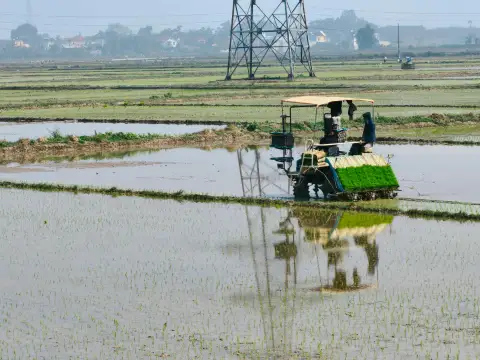
The global agricultural machinery market requires reliable transportation solutions to protect high-value equipment during domestic distribution and international export. Rice transplanters are precision agricultural machines that combine mechanical structures, planting systems, hydraulic components, and electronic control units. During long-distance transportation, especially under complex road conditions and ocean shipping environments, these machines may face continuous vibration, impact, humidity, and pressure changes that can affect their final performance.
For agricultural machinery manufacturers and exporters, selecting suitable protective packaging materials is essential to reduce transportation risks and maintain product quality. Advanced bubble film manufacturing machines provide an efficient way to produce customized multi-layer bubble film packaging materials with excellent cushioning, moisture resistance, and protective performance. By manufacturing high-quality bubble film designed for heavy equipment applications, companies can improve packaging reliability and reduce potential damage during global logistics.
Transportation Challenges of Rice Transplanters During Global Shipping
Rice transplanters are typically transported over long distances from manufacturing facilities to agricultural markets worldwide. Unlike ordinary consumer goods, these machines contain large metal structures, precision planting mechanisms, and sensitive electronic components that require additional protection during handling and transit.
During inland transportation, agricultural machinery may experience continuous vibration caused by uneven roads, especially when shipped through rural areas or regions with limited infrastructure. Low-frequency vibration between approximately 2–5 Hz can create repeated mechanical stress on machine components, gradually affecting connections, adjustment accuracy, and protective packaging performance.
Ocean transportation introduces additional challenges. Long-term exposure to high humidity, salt air, and temperature fluctuations can accelerate packaging deterioration and increase the risk of corrosion for unprotected machine surfaces. In addition, containers may experience repeated movement during loading, unloading, and sea travel, creating impact forces that require effective cushioning materials.
The planting system is one of the most sensitive areas of a rice transplanter. Components such as planting fingers and transplanting mechanisms require accurate movement coordination to ensure stable operation in agricultural fields. Even minor deformation or misalignment of these parts may influence planting consistency and reduce working efficiency.
Electronic control units and sensors are also vulnerable during transportation. Modern rice transplanters often use electronic systems for automatic depth adjustment, operation monitoring, and machine control. These components can be affected by shock, moisture, and electrostatic discharge, making anti-static and moisture-resistant packaging increasingly important.
Why Traditional Packaging Materials Are Not Enough for Agricultural Machinery Protection
Traditional packaging methods often combine wooden frames, corrugated materials, foam cushioning, and manual wrapping. While these materials can provide basic protection, they may have limitations when used for high-value agricultural equipment transportation.
Foam cushioning materials such as EPE or similar products provide impact absorption, but their performance may decline after long-term compression or exposure to humid environments. During extended ocean shipping, repeated pressure and moisture changes can influence their elasticity and reduce their ability to maintain stable cushioning protection.
Corrugated packaging components are widely used in logistics, but continuous vibration and stacking pressure may cause deformation or fatigue damage, especially when packaging heavy industrial equipment. For oversized machinery such as rice transplanters, achieving complete surface protection with traditional materials can also require complicated manual operations and additional labor costs.
Another challenge is packaging consistency. Manual wrapping methods may create uneven protection thickness, uncovered areas, or weak connection points. For manufacturers exporting large quantities of agricultural machinery, maintaining stable packaging quality is important for reducing transportation complaints and after-sales service costs.
Compared with traditional packaging materials, multi-layer bubble film produced by a modern bubble film manufacturing machine offers a more flexible and efficient protective solution. It can be customized according to equipment size, surface structure, and transportation requirements.

How Multi-Layer Bubble Film Improves Rice Transplanter Packaging Performance
Bubble film is widely recognized as an effective cushioning material because its air-filled structure helps absorb external impact forces and reduce direct contact between products and surrounding surfaces. For agricultural machinery packaging, advanced co-extrusion bubble film provides additional advantages through multi-layer material design.
A seven-layer co-extruded bubble film structure can combine different polyethylene materials to achieve balanced protection performance. The outer layer commonly uses durable LDPE materials, providing improved flexibility, tear resistance, and protection against friction caused by contact with metal edges or machine surfaces.
The middle layers can incorporate recycled LDPE materials to optimize packaging costs while maintaining suitable mechanical strength. This approach allows agricultural machinery manufacturers to improve material efficiency and support more sustainable packaging strategies.
The inner layer can be designed with virgin LDPE and functional additives, including anti-static additives, to provide additional protection for sensitive electronic components. This helps reduce the potential impact of electrostatic discharge on control boxes, sensors, and other electrical systems installed on modern rice transplanters.
Another important advantage of bubble film is its ability to provide large-area continuous wrapping. With wide-width production capabilities, bubble film can cover large machine sections including the chassis, planting unit, and control panel. This reduces the number of packaging joints and minimizes the risk of gaps or tearing during transportation.
Compared with separate cushioning materials, continuous bubble film wrapping provides a more integrated protective layer. It can be combined with other export packaging methods such as wooden frames, stretch wrapping, and moisture barriers to create a complete transportation protection system.
Advanced Bubble Film Manufacturing Machine Features for Agricultural Packaging Production
Producing reliable protective bubble film requires stable manufacturing technology and precise process control. A high-performance bubble film manufacturing machine allows packaging producers to manufacture different film structures according to the requirements of agricultural machinery manufacturers.
Modern production lines are available in various configurations, including two-layer, three-to-five-layer, and seven-layer co-extrusion models. Different machine speeds and configurations enable manufacturers to select suitable equipment according to production volume, product specifications, and market requirements.
For heavy equipment packaging applications, seven-layer bubble film machines provide greater flexibility in material combination. Multiple extrusion layers allow manufacturers to optimize the balance between impact resistance, flexibility, cost efficiency, and functional performance.
Temperature control is another critical factor affecting bubble film quality. Advanced machines are equipped with multi-zone PID temperature controllers that maintain extrusion temperature accuracy within approximately ±1°C. Stable temperature management helps achieve uniform material melting, consistent film thickness, and reliable bubble formation.
The winding system also plays an important role in maintaining finished roll quality. A friction-type unwinding and winding system can handle large-diameter rolls, such as 700 mm outer diameter rolls, while reducing tension fluctuations and preventing edge wrinkles. This ensures that produced bubble film remains easy to use during industrial packaging operations.
Cooling performance directly influences bubble stability and film appearance. High-efficiency cooling systems help maintain consistent bubble shape during production, even under challenging factory conditions with elevated ambient temperatures. Stable cooling improves production efficiency and supports continuous manufacturing for large-volume packaging orders.
Professional Bubble Film Manufacturing Machine Support for Agricultural Equipment Manufacturers
As agricultural machinery manufacturers continue expanding into international markets, transportation protection has become an important part of product quality management. Rice transplanters require packaging materials that can withstand vibration, humidity, impact, and long-distance logistics conditions while protecting both mechanical structures and electronic components.
Investing in an advanced bubble film manufacturing machine enables packaging producers to manufacture customized protective materials with consistent quality and reliable performance. From multi-layer co-extrusion technology to precise temperature control and stable winding systems, modern bubble film production lines provide an efficient solution for agricultural machinery packaging applications.
Our company provides professional bubble film machinery designed for different production requirements, including two-layer, three-to-five-layer, and seven-layer configurations. With advanced manufacturing technology and flexible customization options, our bubble film manufacturing machine helps agricultural equipment suppliers improve packaging efficiency, reduce transportation risks, and build more reliable export protection systems for rice transplanters and other valuable machinery. Contact us to develop a suitable bubble film production solution based on your packaging needs.