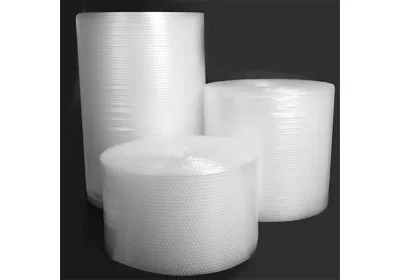
When evaluating air bubble film machines, production width is an important specification, but it is not the only factor that determines machine performance. Expanding from a 1600 mm production line to a 3000 mm system requires adjustments across the entire extrusion structure. Key components such as the screw, drive system, heating capacity, and machine frame must all be scaled to maintain stable operation, consistent film thickness, and reliable bubble formation.
The extrusion screw is the central component responsible for conveying, melting, and delivering raw materials to the die. For bubble film machines with widths between 1600 mm and 2000 mm, screws with diameters of 70–80 mm can provide balanced melt flow for standard production. When machine width increases to 2500 mm or 3000 mm, larger screws of 90 mm or above are required. Wider dies need a higher and more stable melt flow to maintain uniform thickness across the entire film width. A larger screw can deliver higher output at lower rotational speeds, which helps reduce shear heat and maintain stable melt quality during production.
A larger extrusion system also requires a more powerful and stable drive system. A 1600 mm machine typically operates with a motor in the range of 15–22 kW. For 3000 mm wide machines, motors between 37–45 kW are commonly used to support the higher material throughput. Modern film machines often use inverter-controlled AC motors, which provide stable torque and allow precise speed control. This helps maintain consistent extrusion pressure and stable material feeding when operating with wide T-dies.
Power consumption increases as machine width and production capacity grow. A compact bubble film machine may have a total installed power of around 150 kW, while large 3000 mm systems may exceed 300 kW. The additional energy demand mainly supports larger extrusion units, extended heating zones, and wider forming systems. Accurate temperature control and efficient heating systems help maintain stable processing conditions during long production cycles.
Machine structure also becomes more robust as the width increases. A typical 1600 mm machine may weigh around 9 tons, while a 3000 mm machine can exceed 14 tons due to reinforced steel frames and larger roller systems. The stronger structure helps maintain alignment across the full production width and reduces vibration during operation. Stable mechanical support allows the film to maintain consistent thickness and bubble structure across the entire width.
In wider machines, extrusion design is often optimized with higher screw L/D ratios, such as 30:1 or 34:1, to improve melt mixing and homogenization. Supporting systems such as automatic winding units and hydraulic screen changers help maintain stable operation during high-output production. These integrated systems allow wide-format bubble film machines to maintain consistent production efficiency and film quality.