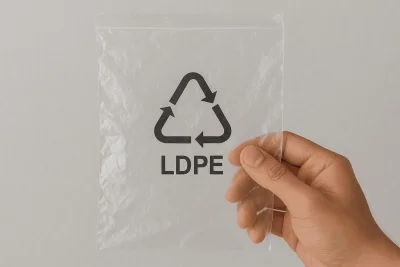
Raw material selection is critical to bubble film production, as it determines key downstream properties including optical clarity, softness, puncture resistance, and end-use roll perfermance. Low-Density Polyethylene (LDPE) and Linear Low-Density Polyethylene(LLDPE) remain the two dominant resins in the industry, and how an extrusion line blends and processes them directly impact product quality. We design our systems specifically to address this challenge, providing operators with the flexibility to process these resin formulations with high precision.
The Material Challenge Behind Consistent Bubble Film Production
Producing bubble film that performs well across diverse applications is a complex operational challenge. A single resin rarely delivers all required mechanical and optical propertise. LDPE alone is soft, clear, and easy to process, but lacks the mechanical strength required for demanding transport environments. LLDPE provides high tensile strength and puncture resistance, but impairs melt processing and optical clarity when unblended.
This creates a critical production challenge: combining two resins with different processing behaviors into a stable, repeatable bubble film without introducing batch-to-batch variation. Inconsistent metering or blending leads to fluctuations in gauge, tensile strength, and optical clarity from one roll to the next, and once post-consumer recycled polyethylene(PCR-PE) or functional additives like anti-static agents, color masterbatch, or slip agents enter the mix, the margin for error narrows further. A line that cannot maintain, repeatable control over multi-component formulations will produce bubble film with visible inconsistency, weak spots, or variable transparency.
These processing constraints compound when expanding to expand into more demanding applications. Food-contact packaging or elevated-temperature environments require increased rigidity from resins like HDPE, while emerging environmental requirements drive adoption of biodegradable resins such as PBAT and PLA. Each of these materials behaves differently during extrusion, and a production line optimized strictly for conventional standard LDPE and LLDPE blends lacks the operational window required to process alternative polymers efficiently.
The Role Bubble Film Plays Across Diverse Industrial Applications
Material properties derived from formulation engineering dictate end-use bubble film performance. In electronics packaging, anti-static bubble film protects sensitive components from electrostatic discharge (ESD) during transit, which depends on precise additive dispersion within the polymer matrix. In retail and consumer goods packaging, high optical clarity and softness, imparted primarily by LDPE, support product visibility and brand presentation.
For logistics, industrial packaging, and heavy-duty shipping, the puncture resistance and tensile strength imparted by LLDPE keep loads intact under compressive pressure, impact, and rough handling. Food-contact and temperature-sensitive applications rely on HDPE-enhanced formulations to maintain dimensional and structural stability at elevated temperatures. Regulatory mandates across global supply chains are also driving adoption of compostable bubble film formulated from PBAT or PLA to meet environmental standards.
Across all these applications, the finished bubble film's performance ultimately comes down to the production process. Precision material blending allows a single roll of bubble film to satisfy optical transparency and mechanical load requirements at the same time.
How Our Bubble Film Making Machine Handles Multi-Material Formulations
This is the problem our bubble film line is engineered to solve. Rather than relying on a single fixed formulation, our extrusion and metering systems maintain precise, repeatable control over LDPE and LLDPE ratios throughout a production run, enabling operators to optimize the clarity-to-strength balance required for specific applications. Consistent metering keeps gauge, transparency, and tensile properties stable from the first meter of a roll to the last, minimizing batch-to-batch variability.
Because our bubble film line is designed to accommodate a wider range of inputs, it also handles PCR-PE, HDPE, and functional additives without the instability that undermines less adaptable equipment. Anti-static agents, color masterbatch, and slip agents can be introduced in controlled proportions, supporting specialized product lines like anti-static bubble film for electronics packaging or branded colored bubble film for retail customers, without sacrificing the extrusion stability that keeps a production line running efficiently.
This same material flexibility extends to emerging biodegradable resins. As manufacturers incorporate PBAT- and PLA-based compostable bubble film into their product lineup, our equipment is built to accommodate these alternative materials alongside conventional polyethylene blends, eliminating the need for capital investment in separate production lines.

Why Material Adaptability Translates Into Commercial Advantage
For a bubble film manufacturer, the ability to process multiple formulations reliably on the same equipment has a direct impact on operational profitability. It reduces scrap rates from inconsistent blending, minimizes downtime spent transitioning between formulations, and provides operational flexibility to serve customers across electronics, retail, food-contact, and industrial packaging segments without maintaining separate production lines for each. It also enables rapid response to market demand for anti-static, colored, or compostable bubble film without retooling.
Our bubble film lines are engineered with these diverse production scenarios in mind, because the resin blend a manufacturer needs today is rarely the only one required in the future. A converter serving electronics customers may need to add a retail packaging line; a company using standard polyethylene blends today may require compostable options within a few years. Equipment that can only handle one narrow formulation forces manufacturers into capital expenditure for line replacements every time market requirements shift, while equipment built for material flexibility from the outset safeguards capital investment throughout its operational lifecycle.
Built for the Materials Your Bubble Film Actually Needs
The relationship between raw materials and finished product performance is fundamental to protective film functionality. LDPE contributes optical clarity and softness, LLDPE provides mechanical strength, and specialty resins and additives increasingly enable manufacturers to address market demands. Getting that blend consistently requires equipment engineered for precision and flexibility, rather than solely raw output speed.
Whether producing standard clear bubble film for retail packaging, anti-static bubble film for electronics, or compostable bubble film for sustainable applications, selecting the appropriate machine configuration ensures repeatable material performance. Precise formulation control remains essential for maintaining product quality across continuous production runs.