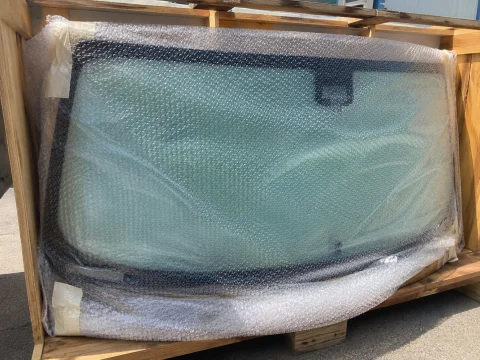
Automotive glass transportation requires a higher level of protection compared with many conventional industrial products. Windshields, sunroofs, side windows, and mirror components are manufactured with strict dimensional accuracy and surface quality requirements, but their large size, curved geometry, and fragile edges make them vulnerable during handling and long-distance transportation.
High-performance bubble film provides an effective cushioning solution for automotive glass applications. Behind this protective material, advanced bubble film manufacturing machines play a key role in producing consistent, durable, and customized packaging materials that meet the demanding requirements of modern automotive logistics.
Challenges in Automotive Glass Transportation and Packaging
Fragile Structure Creates High Transportation Risks
Automotive glass components are designed to meet strict safety and optical standards, but their physical characteristics create challenges during transportation. Windshields and panoramic sunroofs often feature large surface areas and complex curved structures, which require packaging materials with excellent shock absorption and pressure resistance.
Traditional transportation conditions can expose glass products to various risks:
- Mechanical impact during loading and unloading
- Continuous vibration during road and sea transportation
- Compression pressure from stacking
- Temperature and humidity changes during outdoor storage
Unlike ordinary packaging products, automotive glass cannot rely only on external protection. The packaging material must absorb external forces while preventing direct contact between glass surfaces and surrounding objects.
Limitations of Traditional Protective Packaging Materials
Many traditional packaging methods cannot fully satisfy the requirements of modern automotive glass logistics. Paper-based materials may provide basic separation but offer limited cushioning performance against sudden impacts. Foam materials can provide protection, but they often require more storage space and lack flexibility for different product shapes.
Low-quality single-layer bubble film also has limitations in demanding applications. Thin structures may experience bubble breakage under heavy pressure, reducing their ability to absorb impact during long-distance transportation. For large windshields and premium automotive glass components, insufficient tear resistance and inconsistent bubble formation may increase the possibility of damage.
Another challenge is supply flexibility. Automotive manufacturers and glass suppliers often require different packaging specifications depending on vehicle models, glass sizes, and transportation routes. Relying entirely on external packaging suppliers can make it difficult to quickly adjust material specifications, control costs, and maintain stable supply.
For these reasons, many companies are looking for more advanced protective packaging solutions supported by reliable in-house production capabilities.
The Role of Bubble Film in Automotive Glass Protection
Multi-Layer Cushioning Performance for Impact Protection
Bubble film has become an important protective material in automotive glass logistics because of its unique air cushioning structure. The air-filled bubbles create a flexible buffer layer that absorbs external forces and reduces the impact transferred to the glass surface.
Compared with simple wrapping materials, multi-layer bubble film provides enhanced protection through:
- Improved shock absorption performance
- Higher resistance against puncture and tearing
- Better cushioning stability during long-distance transportation
- Flexible adaptation to different glass shapes
For windshields, sunroofs, and side mirrors, bubble film can be customized with different thicknesses, bubble sizes, and layer structures to match specific protection requirements.
Customized Bubble Film Structures for Different Automotive Applications
Different automotive glass products require different levels of protection. Advanced bubble film production technology allows manufacturers to create materials with optimized structures for various applications.
Two-layer bubble film is suitable for smaller automotive components such as side mirrors and compact glass parts. It provides economical cushioning protection while maintaining flexibility and easy handling.
Three to five-layer bubble film is widely used for windshield packaging and standard automotive glass transportation. The multi-layer structure improves bubble strength and overall durability, making it suitable for applications involving frequent handling, forklift operations, and long-distance logistics.
Seven-layer bubble film is designed for high-demand industrial applications where stronger protection performance is required. The additional layers allow manufacturers to combine different material properties, such as enhanced toughness, improved puncture resistance, and better cushioning performance. This makes it suitable for large-scale automotive glass shipments and international supply chains.
Additional Protective Features for Automotive Glass Packaging
Modern automotive glass packaging often requires more than basic impact protection. Depending on customer requirements, bubble film can also provide additional functional advantages.
Anti-static bubble film helps reduce static electricity accumulation and minimizes dust attraction on sensitive glass surfaces. This is particularly important for OEM suppliers that require clean packaging environments and strict surface quality control.
Moisture-resistant structures provide additional protection during marine transportation, outdoor storage, or humid environments. By improving resistance against environmental conditions, bubble film helps maintain packaging performance throughout the entire logistics process.
Reinforced multi-layer designs also improve tear resistance, allowing packaging materials to maintain integrity during repeated handling and movement.
How Bubble Film Manufacturing Machines Improve Automotive Glass Packaging Production
Stable Film Quality Through Advanced Extrusion Technology
Producing high-quality protective bubble film requires precise control over the entire extrusion process. Industrial bubble film manufacturing machines are designed to maintain stable production performance through advanced extrusion systems, accurate temperature management, and optimized material processing.
Consistent film quality is especially important for automotive glass packaging because uneven thickness or unstable bubble formation may affect cushioning performance. Advanced production lines help manufacturers achieve:
- Uniform film thickness
- Stable bubble diameter
- Reliable layer bonding
- Consistent mechanical strength
Through multi-layer extrusion technology, manufacturers can combine different polyethylene materials and functional additives within one film structure. This allows the production of bubble film that balances flexibility, strength, and protection performance.
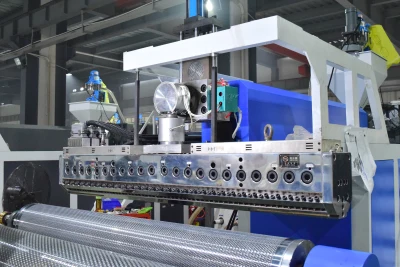
Efficient Manufacturing for Large-Scale Automotive Supply Chains
Automotive glass manufacturers and logistics providers often require continuous packaging material supply to support high-volume production. Industrial bubble film production equipment is designed for long-term operation, helping companies maintain stable output and reduce production interruptions.
High-speed production systems improve manufacturing efficiency while optimized extrusion control helps minimize material waste. This creates a more economical solution for companies that consume large quantities of protective packaging materials.
Producing bubble film internally also provides greater control over packaging quality. Manufacturers can quickly adjust film specifications, respond to changing customer requirements, and maintain consistent protection standards across different shipments.
Engineering Stronger Packaging Solutions for Modern Logistics Challenges
The safety of automotive glass transportation depends not only on packaging design but also on the quality and consistency of the protective material itself. Advanced bubble film manufacturing machines provide the technical foundation for producing reliable cushioning films with stable performance, customized structures, and efficient production capabilities.
With support for multi-layer extrusion technology, precise process control, and continuous industrial operation, our bubble film manufacturing machines help automotive glass suppliers and packaging manufacturers develop stronger protection solutions for modern logistics challenges. From standard windshield transportation to high-value automotive glass export packaging, our equipment enables businesses to produce high-quality bubble film efficiently while improving packaging reliability and reducing transportation risks.