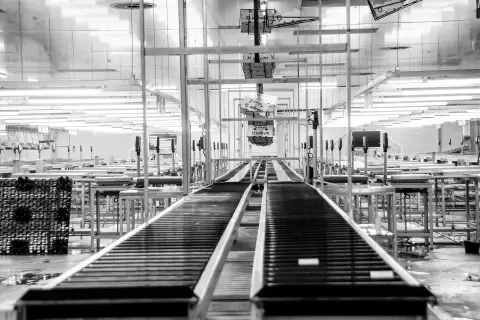
The rapid growth of automated logistics, intelligent warehousing, and high-speed pallet packaging systems has significantly increased the demand for higher-performance stretch film. In modern distribution centers and manufacturing facilities, automatic wrapping machines are required to operate continuously with high stability, while packaging materials must maintain consistent stretching performance, reliable holding force, and excellent protection under demanding working conditions.
Traditional stretch film solutions that were suitable for conventional manual or low-speed packaging applications are often unable to meet the requirements of modern automated packaging lines. During high-speed wrapping processes, the film is exposed to continuous tension, rapid pre-stretching, and repeated mechanical stress. Any instability in film structure, thickness consistency, or surface performance may result in film breakage, packaging failure, and production interruptions.
A 5-layer stretch film manufacturing machine provides an advanced production solution by combining multi-layer co-extrusion technology, precise thickness control, and functional layer design. Through optimized material distribution and stable extrusion performance, manufacturers can produce stretch films that are specifically designed for high-speed packaging applications.
Challenges of Traditional Stretch Film in High-Speed Packaging Applications
Film Breakage and Edge Curling During High-Speed Stretching
One of the most common problems in high-speed packaging operations is film instability during the stretching process. Automatic wrapping machines usually apply significant stretching force to improve load fixation and reduce material consumption. When traditional single-layer or low-performance films are exposed to excessive tension, uneven molecular orientation and internal stress concentration may occur.
These issues can cause film edges to curl, reduce stretching uniformity, and increase the possibility of continuous film breakage. Frequent film replacement not only affects packaging efficiency but also creates additional labor costs and unnecessary production downtime.
High-performance stretch film produced by a modern stretch film manufacturing machine is designed with improved layer structure and mechanical balance. The multi-layer construction allows different materials to contribute specific functions, helping the film maintain stable performance even under continuous high-speed operation.
Inconsistent Film Performance Reducing Packaging Efficiency
For automated packaging systems, film consistency is essential. Variations in thickness, insufficient tensile strength, or unstable surface properties can directly affect the wrapping process.
If the film is too sticky, it may create excessive friction between layers, causing difficulties during unwinding and reducing machine efficiency. If the film has insufficient cling performance, the wrapped layers may separate during transportation, affecting pallet stability.
High-speed packaging requires an accurate balance between cling and slip properties. The film must provide enough adhesion to secure the load while maintaining smooth movement through automatic wrapping equipment. Advanced five-layer co-extrusion technology enables manufacturers to precisely adjust surface characteristics according to different packaging requirements.
Limited Protection Performance for Heavy and Irregular Loads
Modern logistics involves a wide range of products, including metal components, construction materials, furniture, chemical containers, and industrial equipment. Many of these products have sharp edges, uneven surfaces, or heavy loading conditions that create additional stress on packaging materials.
Conventional stretch film may suffer from insufficient puncture resistance and tear strength when exposed to impact or friction during transportation. Once the film is damaged, the overall stability of the pallet load can be compromised.
A high-quality five-layer stretch film structure improves mechanical strength through functional material distribution, allowing the film to provide better protection while maintaining excellent flexibility and stretchability.
The Role of High-Performance Stretch Film in Modern Automated Packaging
Improving Load Stability Through Consistent Wrapping Force
In automated packaging environments, stable wrapping force is one of the most important performance factors. High-performance stretch film provides controlled elastic recovery, allowing the film to tightly secure products on pallets without excessive tension that could damage goods.
The consistent force distribution helps prevent cargo movement during storage, handling, and long-distance transportation. This is especially important for export packaging, warehouse logistics, and industries where product safety during transportation is a priority.
Optimizing Cling and Slip Balance for Smooth Packaging Operations
The surface performance of stretch film directly affects packaging efficiency. A well-designed film requires precise control of cling and slip characteristics to ensure that each wrapping layer bonds properly while allowing smooth film feeding.
Through advanced extrusion technology, a five-layer stretch film manufacturing machine can produce films with customized surface properties. The outer layer can be optimized for controlled friction, while the inner layer can provide reliable adhesion, creating a balanced structure suitable for high-speed automatic wrapping systems.
Reducing Material Consumption Through Thin and Strong Film Design
Modern packaging trends are moving toward lightweight and sustainable solutions. Instead of increasing film thickness, manufacturers are improving film strength through advanced polymer technology and multi-layer structures.
High-performance stretch films commonly used in industrial packaging can achieve excellent mechanical properties within thickness ranges of approximately 10–50 microns, depending on application requirements. By producing stronger films with reduced material usage, companies can lower packaging costs while improving operational efficiency.
How a 5-Layer Stretch Film Manufacturing Machine Enhances Film Performance
A-B-C-B-A Layer Structure for Improved Film Stability
A major advantage of a five-layer co-extrusion system is the ability to assign different functions to different layers. The symmetrical A-B-C-B-A structure improves film balance and helps reduce internal stress during stretching.
The central C layer works as the core performance layer, providing the main mechanical strength of the film. By incorporating high-performance polymers or modified resin materials, this layer improves tensile strength, puncture resistance, and overall durability.
The B layers act as transition layers between the core and surface layers. They help distribute stress more evenly throughout the film structure and improve the bonding performance between different materials. This design enhances tear resistance and supports stable stretching during automatic wrapping.
The A layers serve as functional surface layers. By adjusting material formulation, manufacturers can control cling performance, friction characteristics, and surface smoothness to meet different packaging applications.
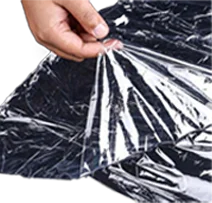
Precision Extrusion Technology for Consistent Film Quality
A reliable stretch film manufacturing machine requires precise control over the complete extrusion process. Advanced systems integrate accurate temperature management, optimized screw design, stable melt flow control, and precision T-die technology to achieve consistent film output.
For industrial applications, thickness uniformity is critical because automatic packaging equipment requires stable film tension and predictable stretching behavior. A well-designed extrusion system helps maintain consistent film quality throughout long production runs, reducing material waste and improving production efficiency.
Intelligent Control Systems for Stable Production Operation
Modern stretch film production lines increasingly adopt automated control technologies to improve reliability and productivity. PLC-based control systems, automatic temperature regulation, and monitoring functions allow operators to manage extrusion parameters more efficiently.
These intelligent systems help maintain stable production conditions, reduce manual adjustments, and support consistent output quality. For manufacturers producing stretch film for high-speed packaging industries, automation plays an important role in achieving long-term operational stability.
Advanced Five-Layer Co-Extrusion Technology for Stretch Film Manufacturing
The packaging industry continues to move toward higher automation, improved efficiency, and reduced material consumption. As high-speed wrapping systems become more common, the demand for stronger, thinner, and more reliable stretch film will continue to grow.
A 5-layer stretch film manufacturing machine provides manufacturers with the flexibility to produce advanced stretch film solutions through functional layer design, precise extrusion control, and optimized material utilization. It helps solve common challenges such as film breakage, unstable wrapping performance, and insufficient load protection in demanding packaging environments.
As a professional stretch film production equipment manufacturer, we provide advanced five-layer co-extrusion solutions designed for industrial packaging applications. With stable machine performance, accurate process control, and customizable configurations, our stretch film manufacturing machine helps customers produce high-quality stretch film products for logistics, manufacturing, export packaging, and automated wrapping systems.