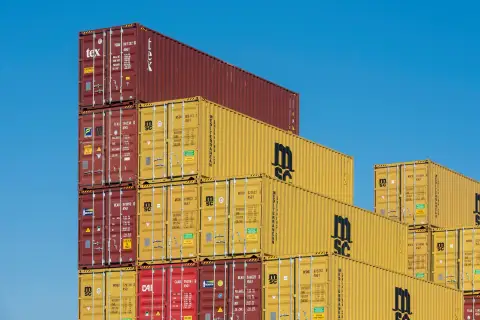
Export consolidation shipping involves mixed cargo, long-distance transportation, and complex loading conditions. Different products, such as cartons, metal components, and bagged materials, are combined in the same container, creating challenges in load stability, puncture protection, and packaging efficiency.
To meet these challenges, high-performance stretch film is required to secure irregular cargo, maintain wrapping force during transportation, and reduce material consumption. The 3-layer stretch film manufacturing machine enables manufacturers to produce multi-layer stretch film with excellent strength, flexibility, and durability, providing a reliable packaging solution for international logistics applications.
Packaging Problems in Export Consolidation Shipping
Export consolidation shipping requires higher packaging performance compared with standard pallet transportation. Since multiple types of goods are loaded together, differences in product shape, weight, and surface structure can create unstable pallet conditions. During ocean transportation, continuous vibration, container movement, and stacking pressure may cause cargo shifting and increase the risk of product damage.
Traditional stretch film often faces limitations in these environments. Low-strength film may not provide sufficient holding force for mixed cargo, while conventional structures can be easily damaged by sharp edges or irregular surfaces. Once punctured, the tear may continue spreading and reduce the overall stability of the wrapped pallet.
Long transportation cycles create additional challenges for packaging performance. During international ocean shipping, temperature changes, cargo settling, and repeated loading and unloading operations can gradually reduce wrapping tension. If the film cannot maintain stable elastic recovery, the wrapped load may become loose before reaching its destination.
Another important challenge is balancing protection performance and packaging cost. Exporters need materials that provide sufficient strength without unnecessary thickness. Excessively thick film increases material consumption and transportation costs, while low-quality thin film may fail to provide reliable load containment. Therefore, the market requires stretch film with optimized strength, stable performance, and efficient material utilization.
The Role of Stretch Film in Export Consolidation Shipping
Stretch film plays an essential role in securing mixed cargo during international transportation. By wrapping different products into a unified pallet unit, stretch film creates continuous compression around the load and reduces movement caused by vibration, impact, and stacking pressure.
For export consolidation applications, load stability is one of the most important requirements. High-performance stretch film must provide strong holding force while adapting to different cargo shapes and weights. The elastic recovery of the film helps maintain tension after wrapping, ensuring that pallets remain stable throughout long-distance transportation.
Puncture resistance is also critical when handling mixed cargo. Products such as metal components, machinery parts, and rigid materials may have sharp edges that create stress points during wrapping. Multi-layer stretch film provides improved tear resistance by optimizing material distribution across different layers, helping prevent local damage from spreading throughout the film.
In addition, stretch film supports more efficient container loading. Proper surface friction allows wrapped pallets to be positioned securely without excessive sticking or damage during handling. This improves space utilization inside containers and helps reduce logistics costs.
Advanced stretch film structures also enable downgauging. By improving film strength and performance, manufacturers can produce thinner films that maintain required containment force. This reduces plastic consumption while providing reliable protection for export packaging applications.
How 3-Layer Stretch Film Manufacturing Machine Improves Film Performance
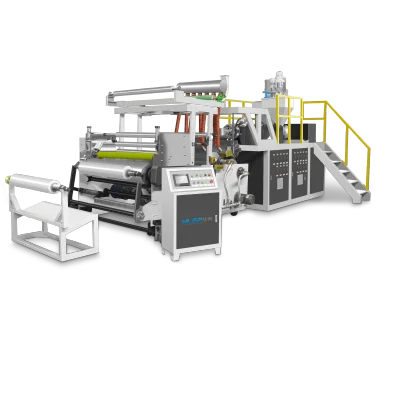
The 3-layer stretch film manufacturing machine provides an advanced production solution through multi-layer co-extrusion technology. Unlike conventional single-layer film production, three-layer extrusion allows manufacturers to design each layer with specific functions, creating stretch film with improved mechanical properties and packaging performance.
The core layer is mainly responsible for providing tensile strength, toughness, and load holding capability. This layer helps the film maintain strong wrapping force around mixed and irregular cargo. The outer layers can be optimized for cling performance, surface friction, and handling characteristics, ensuring smooth wrapping operations and stable pallet protection.
Precise extrusion control is essential for producing reliable stretch film. A professional stretch film manufacturing machine is equipped with accurate temperature management, stable material feeding, and consistent thickness control to maintain uniform film quality during continuous production. Even thickness distribution reduces weak areas and improves resistance against tearing and puncture during transportation.
The three-layer structure also provides greater flexibility in material selection and layer ratio adjustment. Manufacturers can optimize the film structure according to different customer requirements, including standard pallet wrapping, industrial packaging, and heavy-duty export transportation. This allows film producers to develop customized solutions for various logistics environments.
Another important advantage of the 3-layer stretch film manufacturing machine is its ability to support lightweight packaging production. Through optimized layer distribution, manufacturers can achieve high strength and excellent elongation with reduced film thickness. This helps customers lower raw material consumption while maintaining the required packaging performance.
Production Advantages of 3-Layer Stretch Film Manufacturing Machine for Packaging Manufacturers
For stretch film producers, investing in a 3-layer stretch film manufacturing machine provides greater production flexibility and market competitiveness. The equipment allows manufacturers to produce different grades of stretch film for various industries, including export logistics, warehouse packaging, industrial transportation, and supply chain applications.
Stable production performance is important for maintaining consistent product quality. Advanced extrusion systems, precise process control, and reliable operation help reduce production fluctuations and improve manufacturing efficiency. This enables producers to meet large-volume orders while maintaining stable film performance.
The machine also helps manufacturers respond to changing market requirements. As global logistics develops, customers increasingly require packaging materials that offer higher strength, lower consumption, and better transportation reliability. A three-layer stretch film production solution allows manufacturers to develop films with different thicknesses, performance levels, and application characteristics.
By producing high-performance stretch film efficiently, packaging manufacturers can provide more competitive solutions for international customers. The combination of improved film quality, reduced material usage, and flexible production capability creates long-term value in the global packaging market.
Reliable Stretch Film Production Solution for Export Consolidation Shipping
Export consolidation shipping requires packaging materials that can withstand mixed cargo conditions, long transportation cycles, and complex handling environments. High-performance stretch film provides essential protection by improving load stability, increasing puncture resistance, and maintaining wrapping force throughout international transportation.
The 3-layer stretch film manufacturing machine enables manufacturers to produce advanced multi-layer stretch film designed for these challenges. Through optimized layer structures, precise extrusion control, and efficient material utilization, this equipment provides a reliable solution for producing strong and cost-effective stretch film for global logistics applications.