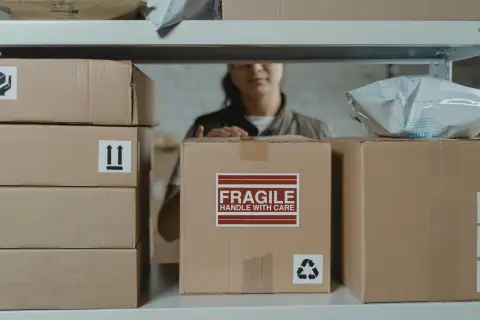
In modern supermarket logistics, pallet stability, packaging efficiency, and material optimization have become essential factors for maintaining smooth supply chain operations. From distribution centers to retail stores, products such as beverages, frozen food, dairy products, and daily necessities must withstand repeated forklift handling, long-distance transportation, and changing storage environments.
High-performance stretch wrap plays an important role in protecting these goods, while advanced stretch film manufacturing machine technology provides the production foundation for creating stronger, thinner, and more reliable packaging films.
Packaging Challenges in Supermarket Logistics
Supermarket supply chains operate under demanding conditions. A single pallet may experience multiple handling processes, including warehouse movement, loading, unloading, and final store delivery. During these processes, unstable packaging can lead to product shifting, damaged cartons, and increased logistics costs.
Traditional stretch films often face limitations when used for intensive supermarket distribution. Films with insufficient tensile strength may lose their holding force during transportation, especially when wrapping heavy products such as bottled drinks, canned food, and household goods. If the film cannot maintain consistent tension around the pallet, products may move during sudden braking or frequent route changes.
Cold-chain distribution creates additional challenges for packaging materials. Frozen foods, seafood, and refrigerated products are commonly stored and transported in low-temperature and high-humidity environments. Conventional films may become less flexible under cold conditions, resulting in reduced stretchability, weaker wrapping performance, and a higher possibility of film breakage during handling.
Another challenge is the increasing demand for lightweight and sustainable packaging. Supermarket logistics consumes a large amount of stretch film every day, making material efficiency an important consideration. Traditional production methods that rely on thicker films to achieve strength can increase plastic consumption and operating costs. Manufacturers now require advanced equipment that can produce thinner films while maintaining excellent mechanical performance.
Multi-Layer Technology Improves Stretch Film Performance
A modern stretch film manufacturing machine uses advanced multi-layer co-extrusion technology to produce films with customized properties for different supermarket applications. Three-layer and five-layer structures allow manufacturers to distribute different polymer materials precisely according to their functions.
In a typical multi-layer structure, the outer layers can be optimized for surface performance, transparency, and durability, while the middle layer provides enhanced tensile strength and puncture resistance. The inner layer can be designed with stable cling properties to ensure reliable adhesion during pallet wrapping.
This layer-by-layer material distribution allows manufacturers to produce films that provide better load containment without unnecessarily increasing thickness. For heavy supermarket pallets, reinforced middle layers help improve resistance against impact and tearing, while maintaining the flexibility required for efficient wrapping operations.
Compared with single-layer film production, multi-layer co-extrusion technology provides greater flexibility in material selection and performance adjustment. Manufacturers can optimize the film structure according to different applications, including beverage transportation, food distribution, and general retail logistics.
Advanced Five-Layer Stretch Film Production for Cold Chain Applications
Cold-chain logistics requires stretch film with stable performance under demanding environmental conditions. Five-layer stretch film machines are widely used for producing high-performance films suitable for refrigerated and frozen product transportation.
By combining different polyethylene materials, including high-performance LLDPE and metallocene-based resins, a five-layer stretch film manufacturing machine can produce films with improved elasticity, puncture resistance, and holding force. These material combinations help the film maintain flexibility even when exposed to low temperatures.
For supermarket distribution centers, this performance is particularly valuable because pallets often move between refrigerated storage areas, loading zones, and transportation vehicles. A high-quality stretch film must maintain sufficient cling and wrapping strength throughout the entire logistics process.
The precise extrusion control of advanced machines also ensures stable polymer distribution between layers. This consistency helps manufacturers achieve reliable film quality across different production batches, supporting supermarkets that require continuous and large-volume packaging supply.
Precision Thickness Control Reduces Material Waste
Material efficiency has become a key focus in modern packaging production. Advanced stretch film manufacturing machine systems are equipped with automatic thickness control technology to maintain consistent film gauge during high-speed production.
Automatic gauge control (AGC) systems continuously monitor film thickness and adjust production parameters when necessary. This helps reduce thickness variation, improve product consistency, and prevent excessive material usage.
For supermarket logistics, thinner stretch films with optimized mechanical strength can provide significant advantages. High-performance films can achieve the required load stability while reducing the amount of plastic used for each pallet. This not only lowers packaging costs but also supports sustainability goals by reducing overall material consumption.
Precise thickness control is especially important for manufacturers producing lightweight pre-stretch films. Even small variations in film thickness can affect stretching performance and wrapping efficiency. Stable production accuracy helps ensure that every roll delivers predictable performance on automatic and manual wrapping systems.
High-Efficiency Production for Modern Retail Operations
Supermarket supply chains require large volumes of stretch film with consistent quality. Advanced stretch film machines are designed for continuous production with improved automation, stable operation, and efficient energy management.
Modern equipment integrates technologies such as precise temperature control, optimized cooling systems, and intelligent production monitoring. These systems help maintain stable extrusion conditions and improve film transparency, surface quality, and mechanical properties.
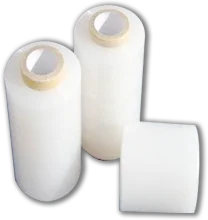
High-clarity stretch film is particularly useful in retail logistics because it allows warehouse operators to identify products and scan labels without removing the packaging. Clear film supports inventory management efficiency and improves visibility throughout storage and transportation processes.
In addition, reliable winding systems ensure that finished rolls maintain uniform tension and smooth surfaces. This improves transportation efficiency and provides better compatibility with different pallet wrapping applications.
Supporting Sustainable Supermarket Packaging Solutions
Sustainability is becoming an important consideration for global retail supply chains. Supermarkets and logistics companies are seeking packaging solutions that reduce waste while maintaining product protection.
Advanced stretch film manufacturing machine technology supports this goal by enabling the production of downgauged films with higher performance. Through optimized layer structures and improved stretching capability, manufacturers can produce thinner films that still provide strong load stability.
High pre-stretch capability, which can reach approximately 250% to 300% depending on film formulation and machine configuration, allows users to achieve better material utilization. The result is reduced film consumption per pallet, lower transportation weight, and improved packaging efficiency.
For manufacturers, investing in advanced stretch film production equipment provides the ability to meet changing market requirements, including lightweight packaging, recyclable material integration, and customized film solutions for different industries.
Enhancing Supermarket Logistics with Advanced Stretch Film Production Technology
The growing demands of supermarket logistics require packaging films that combine strength, flexibility, transparency, and sustainability. From heavy palletized goods to temperature-sensitive food products, the quality of stretch film directly affects transportation safety and supply chain efficiency.
A reliable stretch film manufacturing machine provides the technical foundation for producing high-performance stretch films through multi-layer co-extrusion, precise thickness control, efficient cooling systems, and intelligent production management. These technologies help manufacturers deliver consistent film quality while reducing material consumption and improving production efficiency.
Hualiang stretch film manufacturing machines are designed with advanced cast film technology and practical production solutions to meet the needs of modern packaging manufacturers. With stable performance, flexible layer configurations, and optimized production capabilities, Hualiang equipment helps customers produce high-quality stretch films for supermarket logistics, food distribution, and industrial packaging applications, creating greater value in today’s competitive packaging market.